


Your weekly sync on the pulse of the simulation industry
Industry News
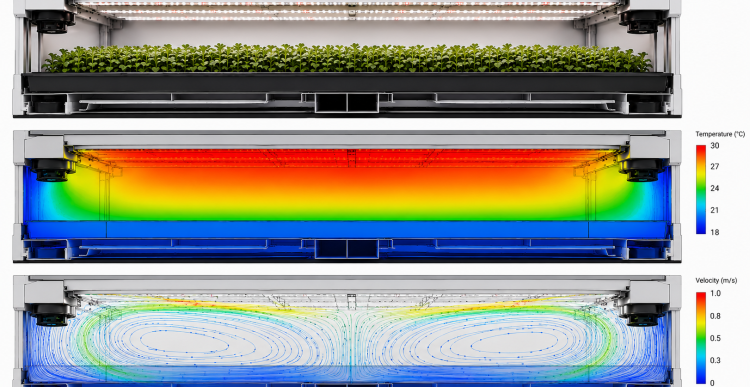
Intelligent Growth Solutions (IGS), a Dundee, Scotland-based agritech company specialising in indoor vertical farming, has adopted SimScale’s cloud-native CFD platform to simulate the internal environment of its Growth Tray with Lights (GTL). The GTL is the core growing unit within IGS’s Growth Tower, where LED bars provide light, HVAC-driven air is channelled through its structure, and nutrients are delivered directly to the plants. Since thermal and airflow behaviour emerges from multiple heat-generating components interacting simultaneously within a confined space, predicting performance analytically is challenging.
IGS used SimScale’s Conjugate Heat Transfer solver — integrated directly with its PTC Creo CAD workflow, avoiding the need for file conversions between CAD and simulation environments — to simulate and validate these conditions digitally, supporting a streamlined simulation workflow. Since any design change in vertical farming must clear a mandatory biological growth trial before reaching production, IGS used simulation to narrow down design decisions ahead of physical testing. The results closely matched physical test data, providing the team with a validated CFD model to assess component layout, airflow geometry, and thermal management strategies digitally before those trials begin.
Product News
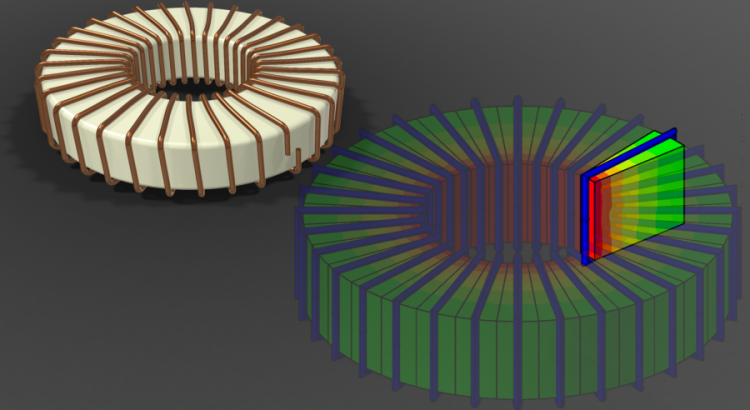
- Integral Method Enhancements for Electromagnetic Simulations
- Component-based Electric Machine Modeling

- New Solution App for In-Cylinder Flow Modelling
- Enhanced Off-Road Simulation in AVL VSM™
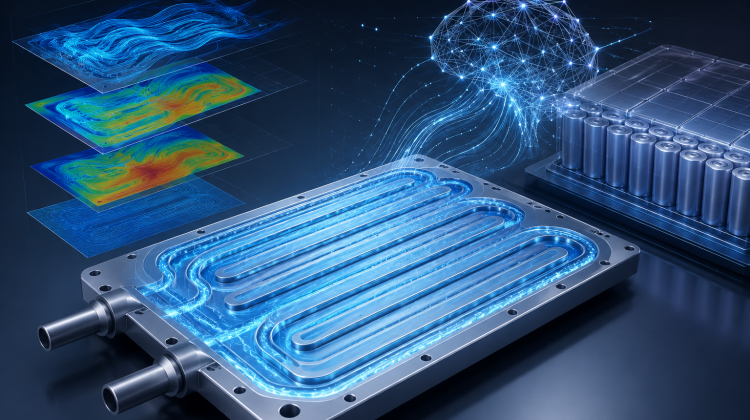
Physics AI for Cold Plate Cooling Channel Design
Geometry-Aware Architecture with Slice-Level Sensitivity
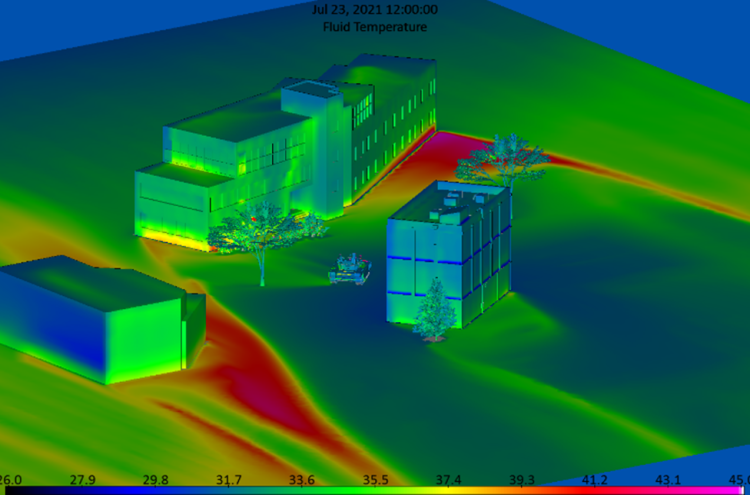
Cabin and Human Thermal Comfort Workflows
Defense Simulation & AI Dataset Capabilities

Arbe Robotics, uses Ansys simulation tools to support the development and validation of its high-resolution 4D automotive radar technology. The simulation environment aims to facilitate algorithm training, edge-case testing, and antenna design validation while reducing reliance on extensive real-world data collection for autonomous driving perception systems.
Click to read more..
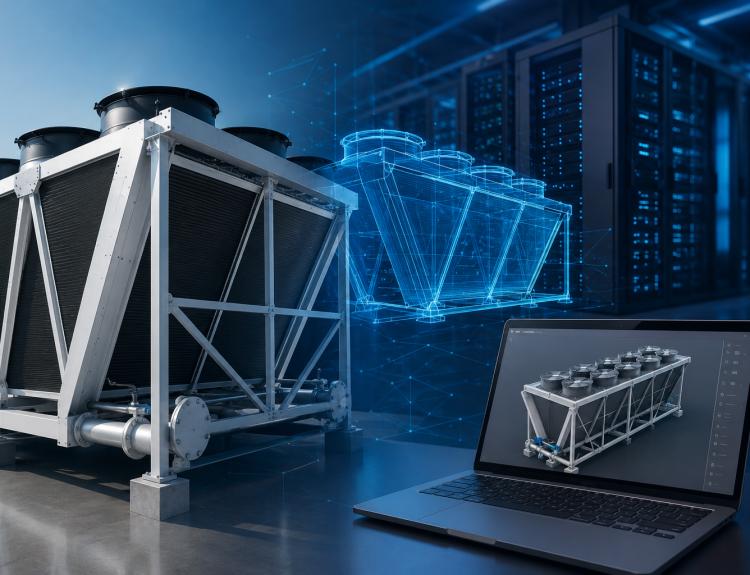
Dry Coolers, an industrial fluid cooling systems manufacturer, has selected GT-SUITE multi-physics simulation software to support its expanding data center product line, aiming to virtualize engineering workflows, validate cooling system performance earlier, and rebuild internal simulation competence through model-based engineering.
Click to read more..

Flexcompute has introduced an autonomous agent-driven workflow for photonic chip design that aims to generate, simulate, validate, and refine photonic devices through iterative design loops. The approach combines multiphysics simulation, fabrication-rule verification, and layout generation to produce fabrication-ready chip designs with limited human involvement.
Click to read more..

As AI factory racks generate extreme heat loads that conventional air cooling cannot manage, Taiwan’s ITRI partnered with Flotrend Corporation and used Siemens’ Simcenter STAR-CCM+ to simulate and compare single and two-phase immersion liquid cooling designs across multiple coolants, aiming to validate thermal management solutions while reducing physical testing dependency.
Click to read more..
Industry Events
This discovery training introduces ImSym, Keysight’s end-to-end imaging system simulation platform. Engineers will learn how to virtually prototype imaging pipelines, from scene and optics through detector and image signal processing, to evaluate real-world image performance earlier in the design process.
🗓️ June 30, 2026
🕘09:00 – 10:00 PDT
This webinar demonstrates how to build an automated multiphysics workflow for power converter busbars using PyAEDT. It showcases the integration of Ansys Q3D, Twin Builder, and Icepak to automate parasitic extraction, transient circuit simulation, and thermal analysis within a unified Python-driven workflow.
🗓️ June 30, 2026
🕚 11:00 – 12:00 EDT
As aviation shifts toward electrification, engineers face new challenges in propulsion, energy management, and system integration. This webinar highlights how simulation accelerates eVTOL and hybrid-electric aircraft development through multi-fidelity modeling, digital twins, integrated energy architectures, flight envelope validation, and advanced battery and fuel cell engineering.
🗓️ July 2, 2026
🕢 19:30 – 22:00 IST
Designing high-performance heat exchangers often involves lengthy CAD modeling, meshing, and CFD workflows. This webinar demonstrates how nTop streamlines the entire process by combining implicit modeling with integrated GPU-accelerated CFD. The webinar covers designing parametric TPMS-based heat exchangers, performing coupled thermal-fluid analysis without meshing, and using simulation insights to optimize performance through rapid design iterations.
In FOCUS
Company in Focus

Who they are
Dhruva Space is an Indian full-stack space-engineering startup headquartered in Hyderabad, India, with a presence in Graz, Austria. Operating in the NewSpace sector, the company specializes in providing end-to-end space infrastructure solutions. They streamline space access by offering everything from indigenous small satellite development and localized launch integration to ground station operations, removing standard entry barriers for global space missions.
Solutions & Technology
The company acts as a single-point infrastructure provider by integrating three core architectural segments:
- Space Segment: Modular, flight-heritage satellite platforms tailored for various payload configurations, ensuring structural reliability and optimal power profiles.
- Launch Segment: Specialized, space-qualified separation systems and deployers designed to interface natively with international launch vehicles to guarantee safe, precise satellite orbit injection.
- Ground Segment: Turnkey satellite tracking stations and ground software solutions developed to optimize mission control operations and ensure continuous data downlinking.
Applications:
Dhruva Space designs its space assets to support diverse orbital functions across commercial, civil, and defense industries:
- Earth Observation: High-resolution optical, multispectral, and hyperspectral imaging payloads for environmental telemetry, agricultural health charting, and planetary mapping.
- Global Connectivity: Direct-to-device communications, Internet of Things (IoT) network routing, and regional data relay capabilities.
- Scientific and Strategic Missions: Providing robust, space-qualified testbeds to space agencies, academic institutions, and defense entities looking to validate proprietary technologies in Low Earth Orbit (LEO).
Solutions Focus:
The company’s product line focuses on modular standardization to lower manufacturing cycles:
- P-Dot Satellite Platform: A highly compact CubeSat platform designed for short-turnaround validation missions and academic payloads.
- P30 Satellite Platform: A larger, robust satellite architecture optimized for heavier industrial imaging and persistent communication arrays.
- DSOD Deployer Series: Their proprietary line of satellite deployers (ranging across standard formats like 1U, 3U, 6U, and 12U variants) engineered to secure and safely eject multi-customer nanosatellite clusters during rocket staging.
Did you know?
In June 2022, IN-SPACe made history by granting its to Dhruva Space was one of the first companies in India to receive the first-ever private space regulatory approvals from the Indian National Space Promotion and Authorization Center (IN-SPACe) . This landmark decision allowed Dhruva Space to test and launch its indigenous Satellite Orbital Deployer (DSOD-1U) aboard ISRO’s PSLV-C53 mission and use ISRO’s rocket stage (POEM) for in-orbit experiments. 🌍✨
This marked the official opening of India’s space sector, ending decades of government exclusivity and welcoming private companies into the nation’s space journey.”
Technology Focus

Football, known as soccer in North America, is widely regarded as the world’s most popular sport, drawing billions of fans across the globe. Beyond the passion it ignites, the sport presents a fascinating study in physics — and SOLIDWORKS simulation tools aim to uncover exactly how the science behind the game works.
SOLIDWORKS explores three core areas of simulation in the context of football:
- Structural Simulation (FEA): Using Finite Element Analysis, SOLIDWORKS aims to understand how football materials respond to physical forces. By virtually comparing an old leather ball with a modern match ball under simulated kick forces, it highlights how material evolution has shaped better-performing equipment over time.
- Flow Simulation (CFD): Computational Fluid Dynamics is used to analyze football aerodynamics, including the famous “bend” seen in professional play. By examining panel shapes, seam depths, and surface textures, the simulation aims to explain how spin and trajectory are influenced, reducing the need for physical prototypes.
- Electromagnetic Simulation: With smart tracking technology now embedded in balls, wearables, and stadiums, SOLIDWORKS uses Electromagnetics Engineer, powered by CST Studio Suite, to analyze antenna signal performance inside match balls, even in large, crowded environments.
These simulation capabilities together paint a clearer picture of football — from the evolution of the ball’s materials, to the aerodynamic curve of a perfectly struck free kick, to the invisible electromagnetic signals tracking every moment of play.
What was once understood only through instinct and observation can now be examined, measured, and explained through virtual simulation. As technology continues to integrate deeper into the sport, simulation tools aim to bridge the gap between the science on the field and the engineering behind it — making the beautiful game even more fascinating to understand.