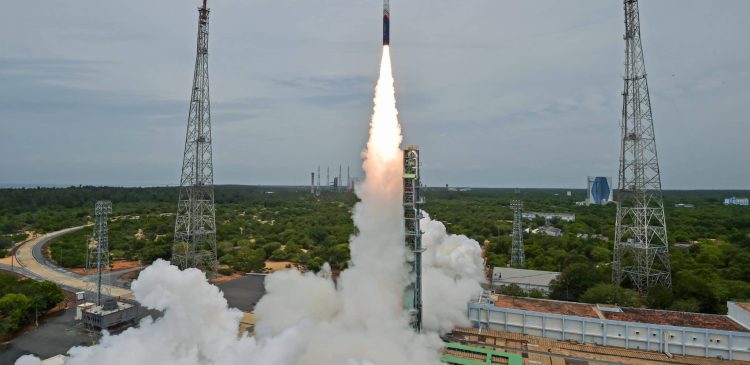
Skyroot Aerospace, an Indian space start-up, successfully launched its orbital rocket, Vikram-I, from the Satish Dhawan Space Centre in Sriharikota on July 18, 2026, at 12:05:30 PM, marking a landmark moment for India’s private space sector. This was the first time a private Indian company achieved an orbital launch from Indian soil, with the mission succeeding on its very first attempt. The achievement follows the Government of India’s space-sector reforms that opened the industry to private participation, enabling start-ups to design launch vehicles, satellites, and related space applications.
Vikram-I carried multiple payloads, including the SCOPE and Grahaa satellites, which were placed into Low Earth Orbit, along with additional payloads on the upper stage for in-orbit experiments. The rocket combines solid-fuel stages with a liquid-propellant upper stage powered by the RAMAN-I engine.
ISRO and IN-SPACe supported the mission with testing facilities, technical consultancy, safety oversight, and mission readiness reviews. This successful maiden flight stands as a proud and historic milestone for the nation, paving the way for similar private ventures and opening new doors to global commercial space opportunities.
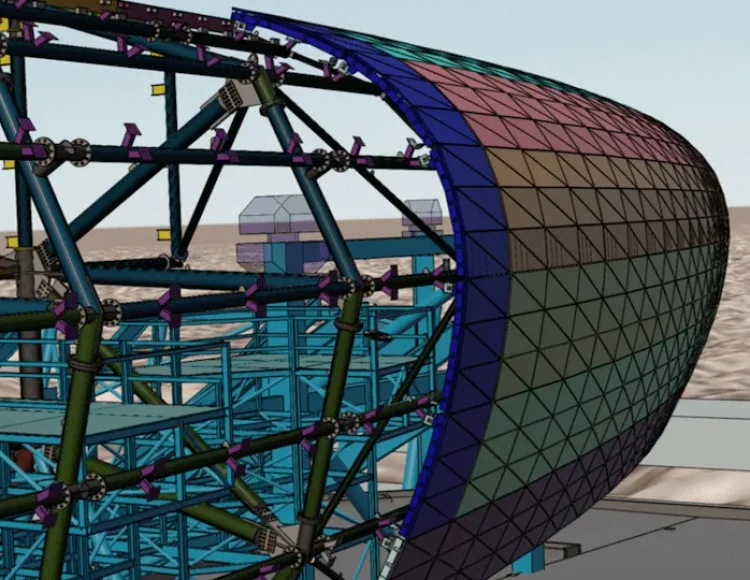
Prodtex used Dassault Systèmes’ 3DEXPERIENCE platform, CATIA and DELMIA to simulate façade installation for Everton’s curved Hill Dickinson Stadium. The simulation, supported by virtual reality reviews, aimed to identify access, ergonomic and safety risks before construction, informing equipment, tooling and installation planning decisions. Click to read more..
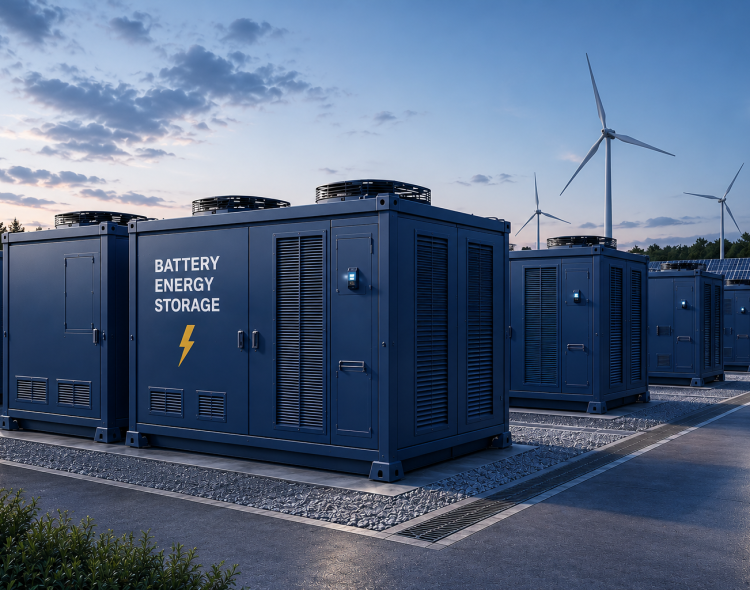
Gamma Technologies highlighted how physics-based simulation, using GT-AutoLion and GT-SUITE, aims to assess second-life EV battery health, predict aging behavior, and support their integration into data center energy storage systems, addressing thermal, safety, and reliability considerations. Click to read more..
GT India Tech Summit Chennai brings together engineers, simulation specialists, and technical leaders for a full day of applied learning and peer exchange. Sessions cover electrified powertrain development, battery simulation with GT-AutoLion, AI-driven workflows through GT Intelligence Studio, and thermal management, alongside hydrogen powertrains and cloud simulation.
📅 July 27, 2026 🕣 8:30 – 17:00 IST
📍 Trident Chennai | 1, 24, Grand Southern Trunk Rd, Kannan Colony, Meenambakkam, Chennai, Tamil Nadu 600027, India
Healthcare device design increasingly depends on precise optical modeling, from diagnostic imaging to wearable sensors. This webinar shows how Ansys Optics combines ray optics, wave optics, and multiphysics simulation to design and optimize imaging systems, biophotonic sensors, and laser-based therapeutic devices.
This webinar explores thermoplasmonic modeling of gold nanoparticles using COMSOL Multiphysics®. Dr. Dheeraj Pratap of IIT Delhi will discuss how ordered versus random nanorod aggregation affects light absorption and heat generation, and how these effects can be tuned toward the infrared therapeutic window for biomedical applications.
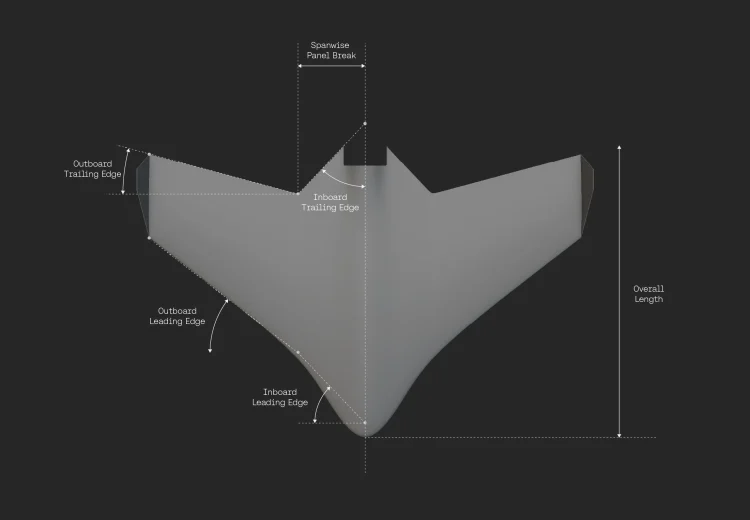
This webinar explores how CoTherm and MuSES accelerate synthetic data generation through rapid scene creation and image compositing. Attendees will learn techniques for building realistic simulation environments, generating high-quality datasets, and improving AI model development for defense and autonomous system applications.
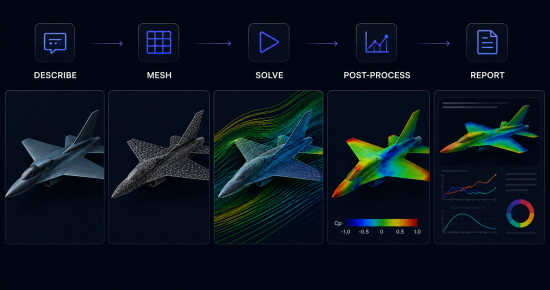
Navier AI is building an agent-driven engineering platform for hardware teams, starting with CFD. The company emerged from stealth in December 2024 with $5.6 million in seed funding, founded by Cameron Flannery and Evan Kay, whose backgrounds span aerospace engineering and advanced hardware development. Navier AI aims to automate repetitive engineering workflows using AI agents, enabling engineers to focus on design decisions and innovation rather than manual simulation setup.
Solutions & Technology
Navier’s platform runs on a family of engineering agents, each supervised by expert engineers:
Stokes: An aerodynamicist agent that reads geometry, builds meshes, configures solvers, and runs CFD, including supersonic flow regimes.
Stella: An agentic GNC and mission simulation platform that generates orbital and trajectory parameters, then compiles guidance logic into Rust-based flight software.
Ferro (beta): A structural analysis agent that evaluates stresses, material selection, and payload supports from aerodynamics.
Post-Processing Agent: Converts raw simulation output into actionable insight within minutes.
Automotive & Space Systems: Vehicle- and spacecraft-level aerodynamic and structural simulation.
Data Centers, Energy & Marine: Listed among Navier’s target verticals for CFD-driven flow analysis.
Did you know? Navier structures every job as a single pipeline — Describe, Mesh, Solve, Post-process, Report — so engineers get a reviewable plan before any simulation actually runs.”
Solutions Focus: Navier’s long-term focus is connecting aerodynamic analysis, structural simulation, and mission modeling within a single AI-assisted workflow — aerodynamic data from Stokes already feeds into Stella’s mission models and Ferro’s structural sizing, cutting the manual handoffs between disciplines that typically slow hardware programs down. Click to know more..
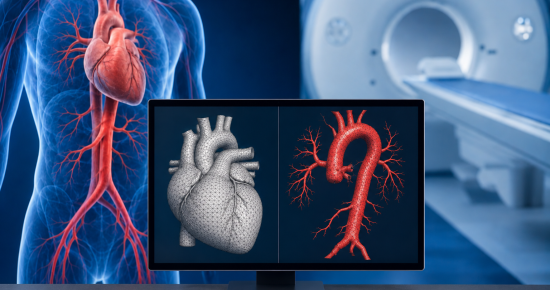
Researchers, primarily based at the University of California, Berkeley, have introduced MeshGrow, a framework designed to automatically construct patient-specific 3D models of the heart and its connected blood vessels using medical imaging data, such as CT scans. These models are used in cardiovascular research and have the potential to support patient-specific simulation workflows in clinical settings.
Traditionally, creating such models has relied heavily on manual work, where specialists manually segment and reconstruct the heart chambers and blood vessels. This process is time-consuming and can vary depending on who performs it, making it difficult to use across large groups of patients or in time-sensitive clinical situations. Existing automated tools have also typically focused on either the heart or the vasculature separately, rather than both together.
MeshGrow aims to address this by combining two machine learning techniques into a single workflow:
It first identifies and models the main chambers of the heart, including the aortic valve region, using a learned template-based approach.
It then uses this cardiac model to automatically locate the starting point of the aorta and trace outward to build the connected vascular network, including its branching arteries.
The two outputs are merged into one unified mesh with boundary surfaces suitable for computational fluid dynamics (CFD) and other cardiovascular simulations. The authors evaluated the framework using CT datasets and also demonstrated its use in running blood flow simulations, aiming to support more standardized and scalable cardiovascular modeling for research and clinical use.