
Your weekly sync on the pulse of the simulation industry
Industry News
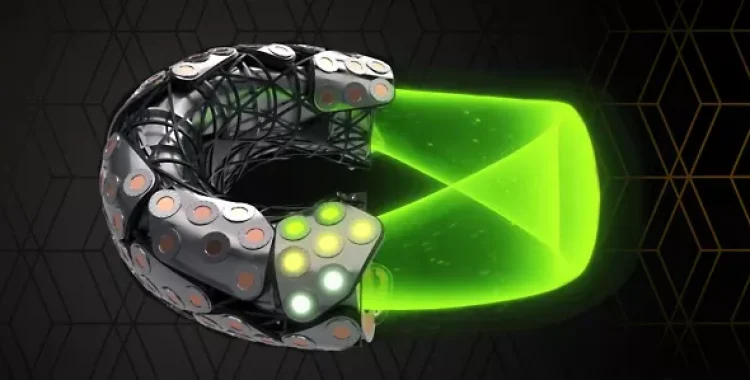
Thea Energy, a fusion energy company, is developing a stellarator, a magnetic confinement device that shapes plasma into a twisted, three-dimensional form to sustain fusion reactions. Unlike tokamaks, which rely on a large current running through the plasma, stellarators use magnetic fields alone to contain and stabilize it, which aims to reduce disruptions. To bring this design to life, Thea Energy is collaborating with NVIDIA, Ansys, Argonne National Laboratory, and Princeton Plasma Physics Laboratory to build a digital twin of its planned “Helios” power plant.
Within this collaboration, Ansys software plays a central role in the simulation process. The company uses Ansys Maxwell, an electromagnetic field solver, to model the magnetic fields generated by its flat, programmable coils. These results then feed into Ansys Mechanical, which assesses the structural and mechanical loads acting on the magnets. For the system’s high temperature superconducting magnets, the team pairs Ansys Icepak with Mechanical to simulate thermal behavior and the mechanical stress that cooling introduces.
Together, these simulations allow Thea Energy to test and refine its magnet designs digitally before physical fabrication, helping the company work through engineering challenges as it scales its manufacturing infrastructure and moves closer to realizing a functional fusion power plant.
Partnerships & Collaborations

Cadence has expanded its collaboration with HPE to advance digital twin-driven data center modernization for AI and HPC infrastructure. The partnership combines Cadence’s Reality Digital Twin Platform with HPE’s data center modernization expertise, aiming to improve planning, capacity utilization, energy efficiency, and lifecycle operations for AI-ready facilities.
Click to read more..
NVIDIA and SK hynix have entered a multiyear partnership to co-develop next-generation memory technologies for AI factories. The collaboration aims to support memory supply for AI infrastructure, personal AI and physical AI, while also using AI for semiconductor design, simulation and autonomous factory operations.
Click to read more..
Flownex has joined the US National Science Foundation’s Centre for Energy Smart Electronic Systems (ES2). The collaboration aims to align Flownex’s physics-based thermal-fluid simulation, controls integration, and digital twin expertise with ES2‘s research on data centre cooling, covering liquid and air cooling systems.
Click to read more..
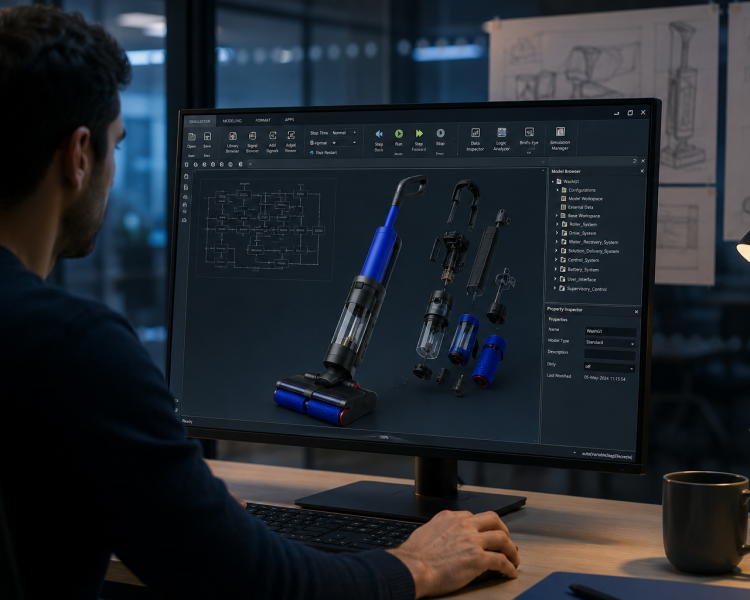
Dyson used Model-Based Design with Simulink and Simscape to develop its first wet floor cleaner, the WashG1. The approach aims to replace document-based workflows, enabling system simulation, generating embedded code, and supporting collaboration across engineering teams during product development.
Click to read more..
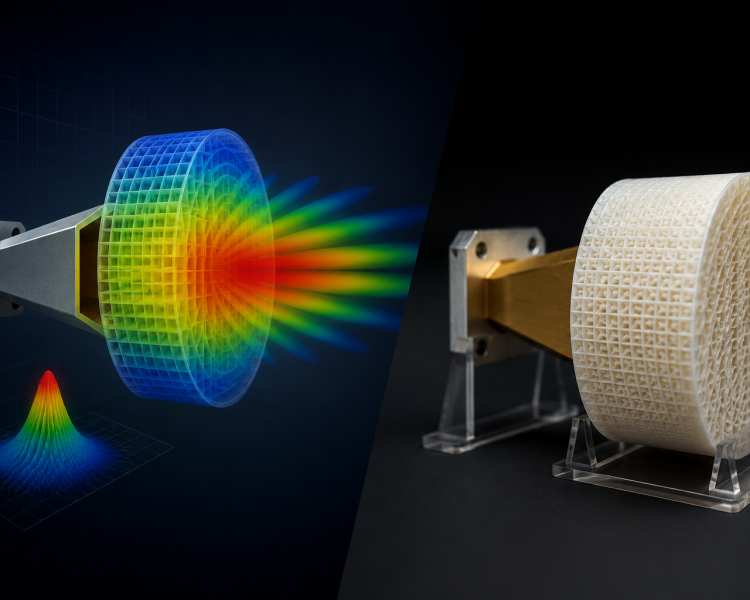
Fortify engineers used Nullspace’s electromagnetic simulation tools to model equation-based permittivity profiles for a cylindrical GRIN lens, aiming to enhance antenna gain and enable a more compact conical horn design, later fabricated through Fortify’s additive manufacturing workflow.
Click to read more..
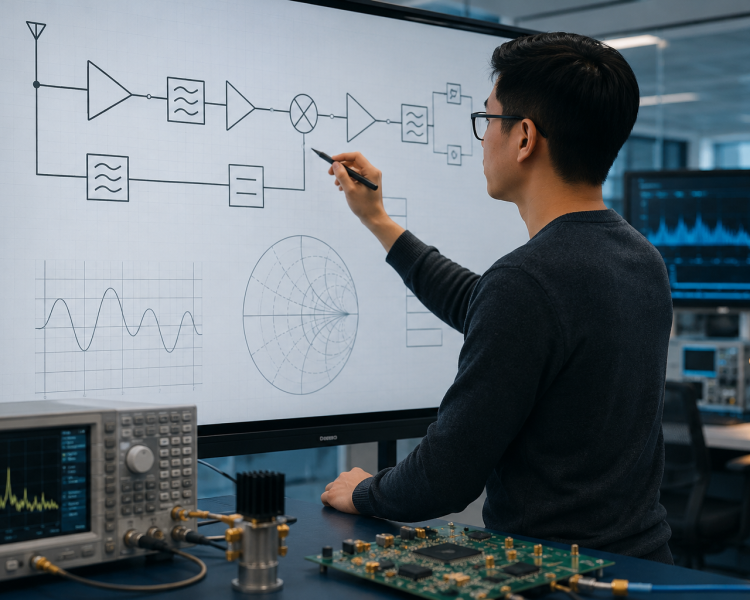
Keysight Technologies introduced a new capability in its RF Circuit Simulation Professional software that captures RF design decisions as an executable, editable workflow. It aims to preserve design expertise, generate reusable Python code, and support AI-driven RF design across major simulation environments.
Click to read more..
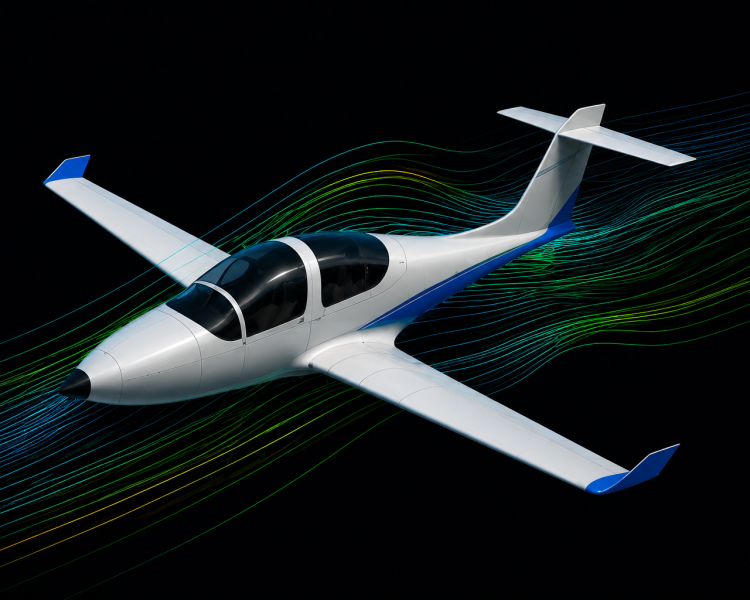
AURA AERO, a French aircraft manufacturer developing hybrid-electric and low-emission aviation programmes, has selected Qarnot, a sovereign low-carbon HPC cloud provider, to support CFD, aerodynamics, and design simulations for its aircraft development.
Click to read more..
Industry Events
As simulation becomes increasingly decision-relevant in railway engineering, this webinar explores how simulation credibility can be established and assessed, covering simulation purpose, target credibility, and verification and validation (V&V) under uncertainty to support railway approval and documentation.
🗓️ July 7, 2026
🕙 10:00 – 11:00 EDT
The session explores how Ansys HFSS supports high-fidelity electromagnetic simulation for RF, antenna, and PCB design, from initial modeling through signoff. Topics include building accurate HFSS models, assembling 3D components into complete RF systems, and using PyAEDT to automate repetitive simulation workflows and improve engineering productivity.
🗓️ July 7, 2026
🕛 12:00 – 15:00 EDT
Battery energy storage systems (BESS) pose serious fire and explosion risks when thermal runaway triggers rapid gas release inside enclosed spaces. This webinar shows how CONVERGE CFD models ventilation and deflagration scenarios in BESS installations, helping engineers evaluate gas accumulation, vent sizing, and explosion mitigation strategies, while validating predictions against real-world safety data to enable safer, more efficient battery storage designs.
🗓️ July 8, 2026
🕘 09:00 – 10:00 CDT
AI hype is outpacing hard data, leaving many product development and PLM leaders uncertain about their organization’s AI readiness. This webinar presents findings from CIMdata’s 2026 AI in PLM Global Study, led by Dr. Diego Tamburini, providing an evidence-based view of how industrial organizations are investing in, adopting, and preparing for AI. Topics include build-versus-buy strategies, organizational readiness, and emerging AI use cases.
🗓️ July 9, 2026
🕚 11:00 – 12:00 EDT
In FOCUS
Company in Focus
Who they are
BQP is a quantum-inspired simulation software company headquartered at the INSPYRE Innovation Hub in Syracuse, New York, with an additional office in Bengaluru, India. Founded by Abhishek Chopra (Founder, CEO & Chief Scientific Officer) and Rut Lineswala (Founder & CTO), the company was built to solve computationally intractable simulations by rewriting decades-old algorithms for today’s hardware, while staying ready for future quantum computers.
Solutions & Technology
BQP‘s flagship platform, BQPhy®, plugs into existing engineering workflows through MATLAB and Python, with no need to rearchitect existing systems.
It offers three solvers:
- Optimization Solver: powered by Quantum-Inspired Optimization (QIO) for large, complex design and combinatorial problems
- Physics-Based Solver: uses Hybrid Quantum-Classical Finite Element Methods and Quantum-Assisted PINNs for CFD and multiphysics simulation
- Data-Driven Solver: applies hybrid quantum machine learning to computer-vision tasks such as defect and anomaly detection
According to BQP, the platform delivers 10x faster results on today’s HPC infrastructure.
Applications:
- Aerospace & Defense: CFD, design optimization, and mission planning for mission-critical systems
- Semiconductors & Automotive: accelerating multiphysics simulation and design workflows
- Manufacturing: computer-vision-based defect and anomaly detection for quality control
Did you know?
The name BQP comes from “BosonQ Psi” — a nod to two ideas in physics. “Boson” refers to the boson particle and honors physicist Dr. S.N. Bose, while “Psi” (ψ) is the symbol scientists use to describe the state of a quantum particle.”
Solution Focus:
BQP‘s focus is on making quantum advantage usable today. Rather than wait for fault-tolerant quantum hardware, the company builds solvers that run on classical CPUs and GPUs now, while staying architecturally ready for quantum processors as they mature — letting engineering teams adopt quantum-ready workflows without overhauling their existing tools.
Technology Focus
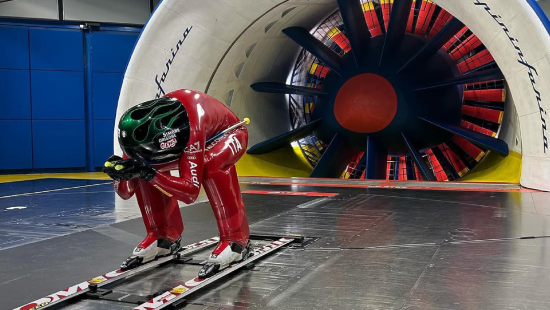
Speed skiing is one of the few winter sports where success depends mostly on minimising resistance through the air. As athletes push toward record-breaking speeds, aerodynamic efficiency plays an increasingly important role alongside skill and equipment.
A recent engineering study explored how computational fluid dynamics (CFD), combined with wind tunnel testing, can help refine a skier’s aerodynamic profile. The project used HELYX, an open-source CFD software, alongside experimental testing at the Pininfarina wind tunnel facility in Italy, reflecting a collaboration between Pininfarina and ENGYS, to study airflow around an athlete in the typical tuck position used during competition.
The process began with a detailed 3D scan of the skier, which was used to build an accurate digital model. CFD simulations were then run to understand how air moves around the body, identifying areas where turbulence and pressure build-up contribute to drag—particularly around the helmet, shoulders, and upper limbs.
A key part of the study involved adjoint analysis, a technique that helps engineers understand how small changes in body position or equipment shape affect aerodynamic drag. This insight guided practical suggestions, such as improving alignment between the knees and elbows, minimising gaps between the helmet and shoulders, and refining hand positioning.
The refined configuration was then evaluated using additional CFD simulations. The findings suggest that positional and equipment adjustments identified through this combined CFD and wind tunnel approach can meaningfully reduce drag.
This combination of digital simulation and physical testing gives athletes and coaches something rare in winter sports: a clear, visual understanding of exactly where and why drag occurs on the body. Rather than relying on instinct or gradual trial and error, adjustments to posture and gear can now be guided by precise airflow data—turning small tweaks in body position into a repeatable, evidence-based part of race preparation.
Click to read the original article..