
Your weekly sync on the pulse of the simulation industry
Industry News
Video courtesy: Nvidia
Before healthcare robots can safely interact with patients, they need to learn how the body responds: how tissue yields, instruments bend or slip, and imaging can be noisy or incomplete. Gathering this data in the real world is difficult, since anatomy varies and rare, critical scenarios rarely occur on schedule. To address this, NVIDIA has open-sourced Medical Physics Simulation, the first GPU-accelerated medical physics simulation framework of its kind, built within its Isaac for Healthcare platform on CUDA, Warp, Newton and Cosmos technologies.
The framework models anatomy, device contact, friction and sensor behavior, combining classical physics simulation with Cosmos-H Dreams, a generative AI capability that aims to model visual scene dynamics learned from procedural data. For example, developers can connect vascular anatomy, catheters and guidewires with simulated X-ray imaging to train robots using reinforcement learning, an approach designed to extend to other devices and anatomies as well.
Being open source, developers can study, adapt and build on the framework, which NVIDIA says supports transparency for regulatory review. Medical technology companies including CMR Surgical, Johnson & Johnson MedTech, XCath, Medtronic Structural Heart and Inner Logic are already applying it for surgical robotics, catheter navigation and building evidence to support regulatory approval.
Click to read more..
Product News
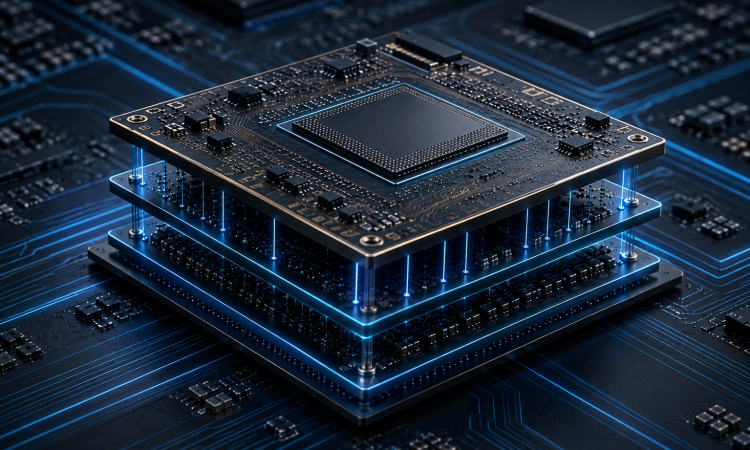
- Agentic AI for Packaging and PCB Design
- Continuous Multiphysics Co-optimization
- Automated Design Study Workflows
- Component-level Flow Separation Modeling
AI Agent Integration (Studio)
Enhanced GPU Solver Capabilities
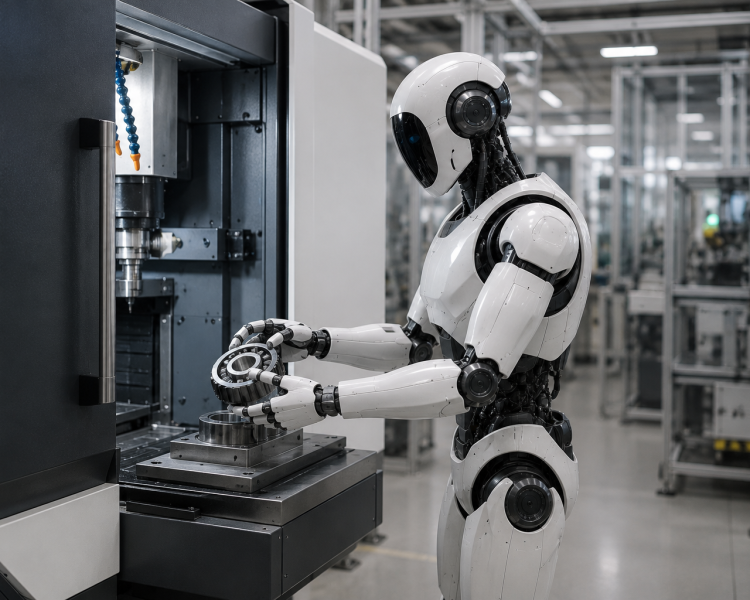
Schaeffler is developing components, assembly lines, and testing equipment for humanoid robot manufacturers, using Ansys simulation and NVIDIA Omniverse to train and refine robotic motion. The goal is to help robots work safely alongside human employees in factories, not replace them.
Click to read more..
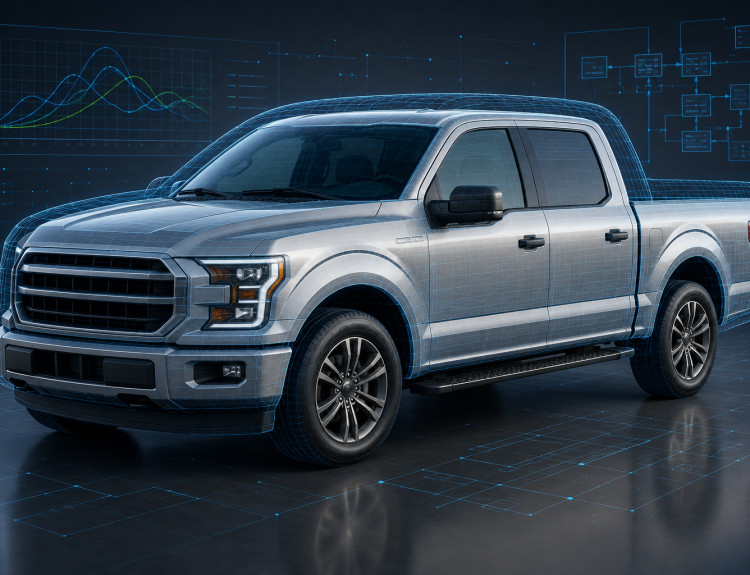
FEV used GT-SUITE simulation to assess multiple hybrid powertrain architectures for a pickup truck before prototype development. The study aims to support architecture selection by comparing fuel efficiency, emissions, performance, payload impact, and ownership costs through a validated modelling approach.
Click to read more..
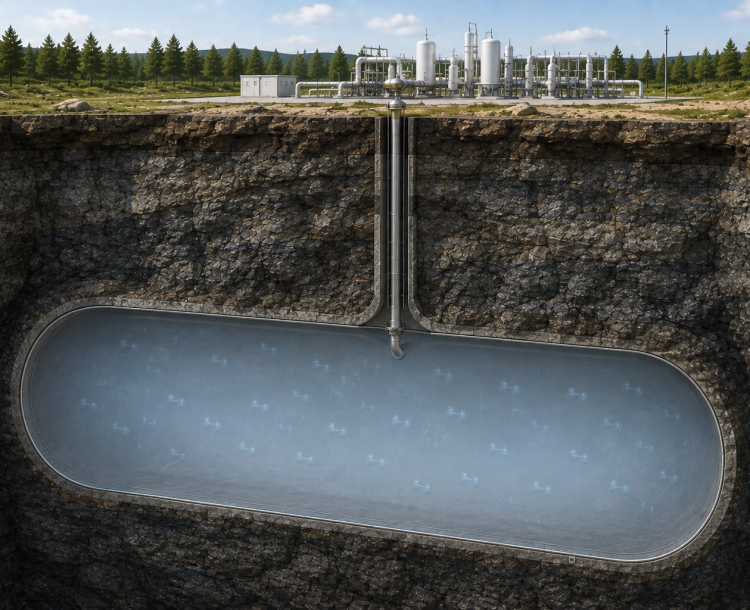
Comsol highlights a modeling framework, built with its Multiphysics software, that simulates how lined rock caverns respond to repeated hydrogen pressurization cycles. It captures how concrete cracking, rock fracture activity, and steel embrittlement develop together over time, helping assess long-term structural performance of underground hydrogen storage sites.
Click to read more..
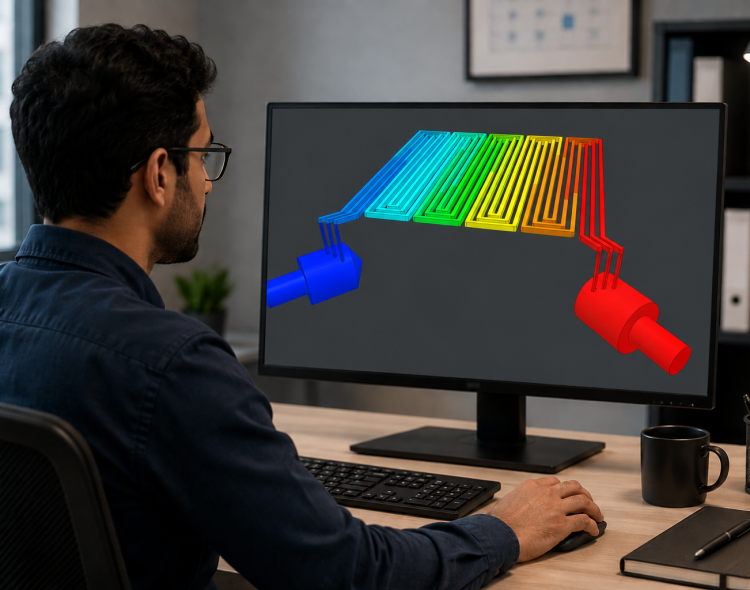
Hydrogen startup Fourier used SimScale’s cloud-based simulation platform to design a next-generation PEM electrolyzer stack. The tool aims to help engineers develop custom seal geometries and validate flow channel designs, reducing dependence on physical prototypes during development.
Click to read more..
Industry Events
This 18-minute webinar introduces COMSOL Multiphysics® through a thermal actuator example. It demonstrates how to build and solve a multiphysics model, convert it into a simulation app, and organize models and apps using the Model Manager.
📅 August 11, 2026
🕚 11:00 – 11:18 EDT
CadenceLIVE India 2026 brings together Cadence technology users, engineers, and industry experts for a day focused on electronic design and intelligent systems under the theme “Design for AI and AI for Design.” The event features keynote sessions, technical presentations, and discussions on trends shaping the semiconductor and electronics design industry.
📅 August 12, 2026
🕗 8:00 – 18:30 IST
📍 Sheraton Grand Bengaluru Whitefield Hotel & Convention Center
DO-254 governs the development of airborne electronic hardware, raising challenges around verification, traceability, and design assurance. This session shows how Model-Based Design addresses these challenges through early validation via simulation, co-simulation and verification techniques, and improved consistency between design and implementation.
📅 August 12, 2026
🕐 13:00 – 14:00 EDT
Traditional single-core workflows struggle to keep pace with complex optical systems that require high-fidelity models. This session covers how Zemax OpticStudio HPC parallelizes optimization, tolerancing, and non-sequential (NSC) ray tracing across multiple CPU cores, enabling faster design exploration without re-authoring existing models.
📅 August 13, 2026
🕘 9:00 / 14:00 EDT
In FOCUS
Company in Focus
Video courtesy: MinusZero
Who they are
Minus Zero is a Bengaluru-based startup building full-stack AI for ADAS (Advanced Driver Assistance Systems) and AD (Autonomous Driving) systems. Founded in 2021 by Gagandeep Reehal and Gursimran Kalra, the company aims to bring advanced autopilot technology to emerging markets like India, where driving conditions differ greatly from the developed markets most such systems are built for.
Solutions & Technology
Minus Zero replaces the modular self-driving stack with a single, self-supervised model trained end-to-end on real data.
- Data-driven & Self-Supervised: Learns from unlabelled data to generalise across rare, unstructured scenarios.
- Mapless Architecture: Works without HD maps, scaling easily to new roads.
- Imitating Human Decision Making: Learns from human driving behaviour, not fixed rules.
- Ability to Customise: Fine-tunes for new constraints, sensors, or vehicles without retraining.
Applications:
Minus Zero delivers its autopilot technology as ready-to-integrate software for vehicle manufacturers.
- Automotive OEMs: Provides a complete autopilot software stack for highway and urban driving assistance.
- Passenger Cars: Enables advanced autopilot using only cameras, keeping hardware costs low for mass-market vehicles.
- Commercial & Fleet Vehicles: Extends autopilot to trucks and fleets through OEM partnerships.
Did you know?
Minus Zero has been recognised with honours including the NASSCOM AI Gamechanger award, YourStory’s Tech30, and the E&T Innovation Awards, and has represented India’s autonomous driving ecosystem at global stages such as VivaTech and the World Self-Driving Congress in Dubai.”
Solutions Focus:
The company’s focus stays on data-driven scalability, building an indigenous full-stack platform spanning foundational models, simulation, on-board software, and a data toolkit to move autonomous driving from research to safe, real-world deployment.
Technology Focus

Image courtesy: Siemens
Behind every swirl of sauce in a tub of artisanal gelato lies a surprisingly tricky engineering problem: how do you make a machine replicate something that looks handcrafted? This was the challenge a premium Italian gelato maker brought to R&D CFD, a Modena-based engineering firm specializing in computational fluid dynamics.
The gelato itself, rich with ribbons of chocolate, strawberry, caramel and peanut butter, already tasted excellent. The issue was appearance. The original variegator, the equipment used to blend ice cream and sauce, had a complex internal design where the ice cream and sauce came into contact with screws, baffles and internal walls, making the swirl pattern harder to control while also exposing the mixture to air.
The team turned to Simcenter STAR-CCM+ software to study the problem, treating ice cream and sauce not as simple liquids but as thick, elastic, temperature-sensitive fluids with their own unique flow behavior. Using Simcenter HEEDS, they explored different nozzle geometries and sauce injection configurations digitally, aiming to find a design that consistently produced smooth, natural-looking swirls without building physical prototypes for each idea.
As a result, that simplified two-cylinder design is now running across the manufacturer’s production sites, quietly doing what years of adjusting screws and baffles never could: giving machine-made gelato the look of something scooped by hand.