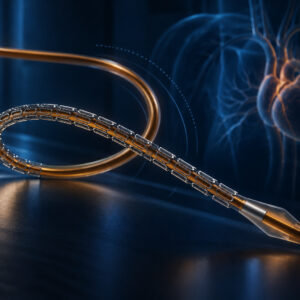
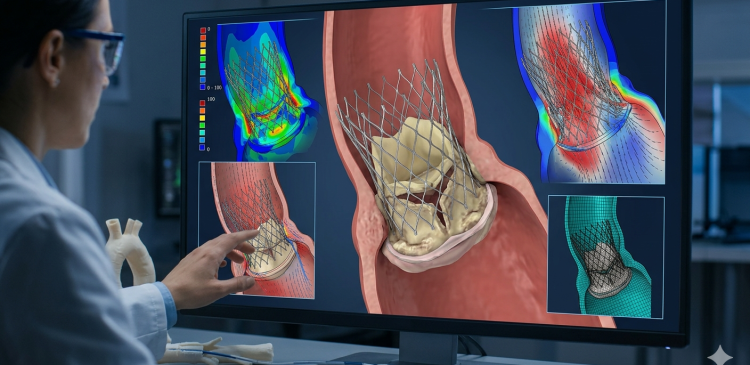
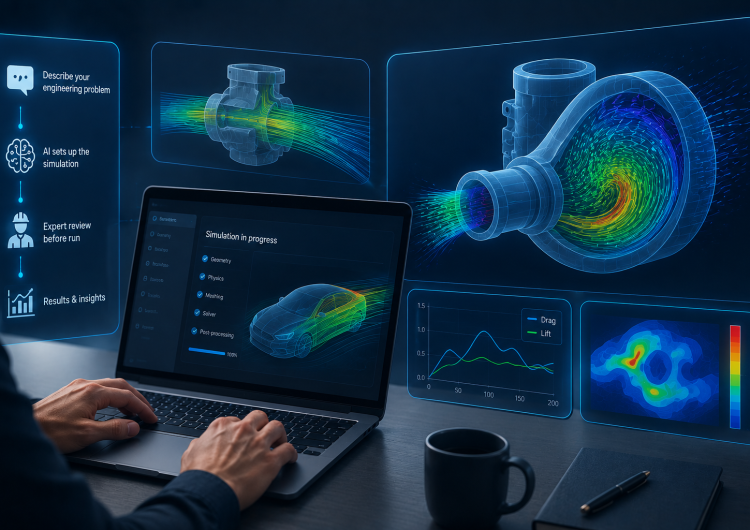
As catheter-based heart valve replacement procedures become more common, medical device companies are investing in technologies that can improve valve performance and durability. Medtronic, a medical technology company specializing in cardiovascular care, is using SIMULIA Abaqus finite element analysis software to study how transcatheter heart valves respond during compression, catheter delivery and expansion inside the heart. The simulations help engineers analyze mechanical stress, deformation and interaction between the valve frame, tissue leaflets and sutures under complex loading conditions. The digital models are being used to support device design, durability studies and engineering verification during the development of catheter-delivered heart valve technologies. Click to read the original article..
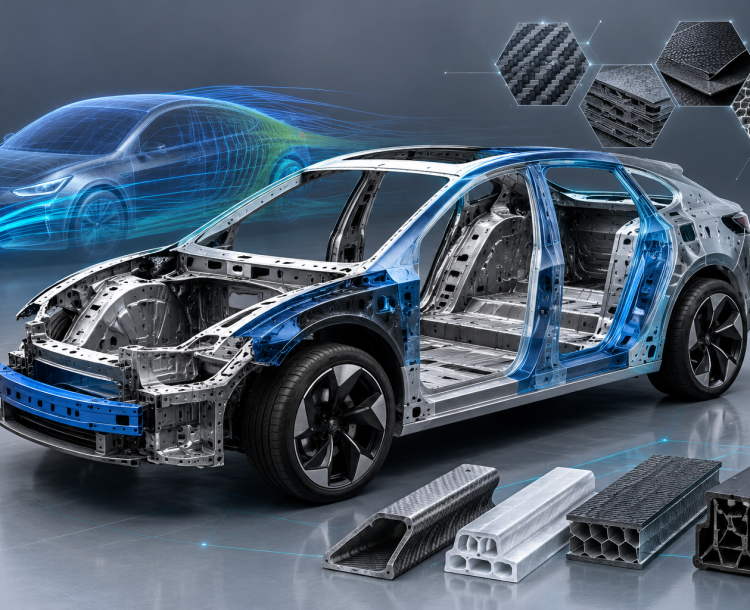
Automakers are increasingly replacing metal components with engineering plastics to support vehicle lightweighting and lower CO₂ emissions. Ansys Granta materials information software is being used alongside Kuraray’s GENESTAR™ PA9T heat-resistant polyamide resin to analyze stiffness, thermal resistance, and stress behavior of automotive cooling system components using virtual simulation during the development process. Click to read more..
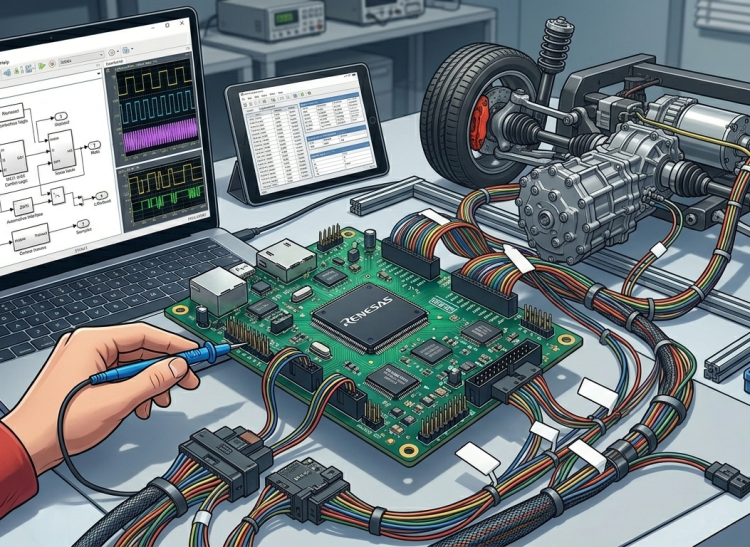
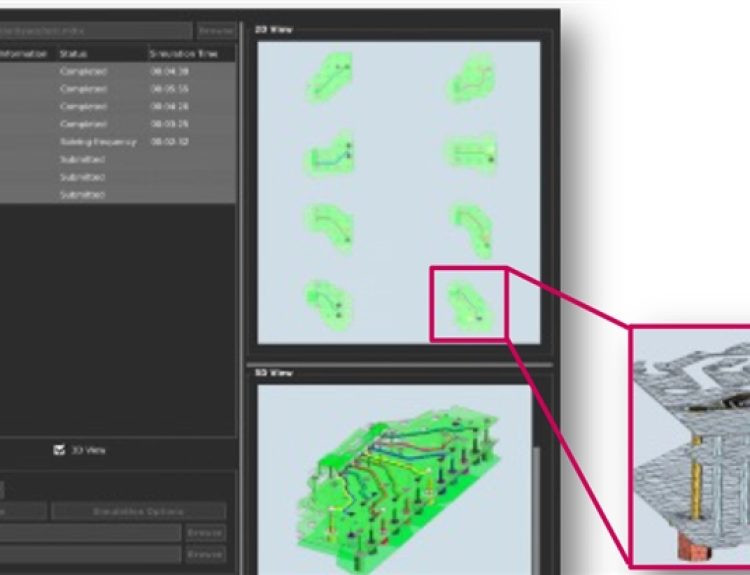
Cadence introduced Automated Channel Extraction (ACE) technology for its Clarity 3D Solver, designed to simplify SI/PI analysis for complex PCB, package, and 3D-IC designs. The technology aims to automate channel extraction and design partitioning, helping engineers handle large-scale electromagnetic simulations with reduced manual effort and more structured analysis workflows. Click to read more..
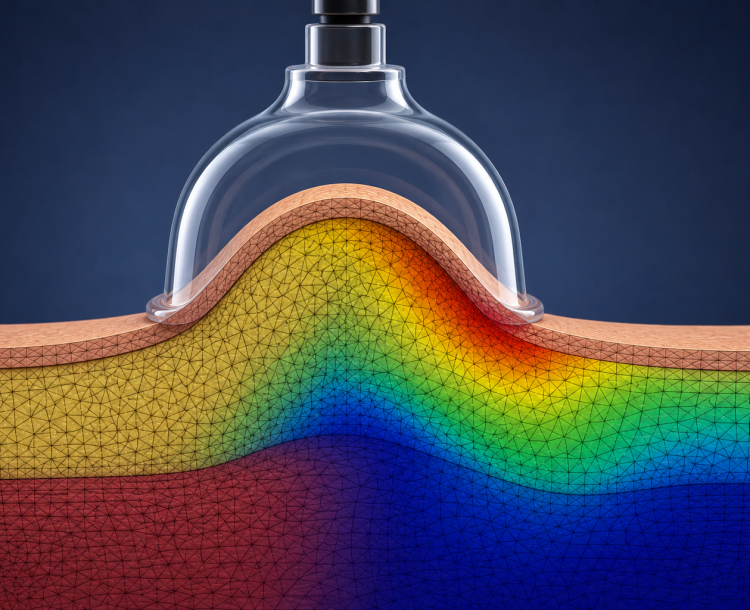
Researchers at the University of Massachusetts Lowell used COMSOL Multiphysics® to simulate tissue biomechanics during suction therapies such as cupping. The multilayered model covering skin, fat, and muscle tissues analyzed how suction pressure, applicator aperture size, and individual fat thickness influence stress distribution and deformation across tissue layers, supporting medical device design optimization. Click to read more..
Phaidra, in collaboration with CoreWeave, Applied Digital and NVIDIA, introduced an AI-based liquid cooling management approach for AI data centres. The system aims to predict and manage thermal fluctuations in high-density GPU environments by coordinating cooling, power and workloads in real time, supporting more stable operations and improved energy utilisation in AI infrastructure. Click to read more..
This webinar aims to address the challenge of managing data center cooling amid rising AI-driven thermal demands using Model Predictive Control (MPC). Join the webinar to explore:
Building data-driven thermal prediction models using the Reduced Order Modeler app
Designing multi-zone cooling controllers with Model Predictive Control Toolbox
Validating energy savings via closed-loop simulations with Simscape Fluids
This webinar aims to outline the Under-Relaxation Steady (URS) solver in CONVERGE, covering its methodology, convergence behavior, and variable-omega capability. It also discusses applications in steady-state CFD simulations, including conjugate heat transfer, turbomachinery, internal and external flows, wind energy, e-motor cooling, and combustion modeling.
This webinar aims to outline GPU-enabled CFD and multi-physics simulation approaches for automotive and off-road mobility engineering applications. Join the webinar to explore:
CFD workflows using Ansys Fluent, Rocky and FreeFlow
Applications including aerodynamics, thermal management and particle flow
GPU-enabled simulation strategies for continuum and free-surface flow studies
This 18-minute webinar aims to explore how COMSOL Multiphysics® can be used to model separated two-phase flows in microfluidic systems. It covers Level Set, Phase Field, and Moving Mesh methods for tracking interfaces between immiscible fluids, while addressing surface tension and contact angle effects through application examples and live software demonstrations.
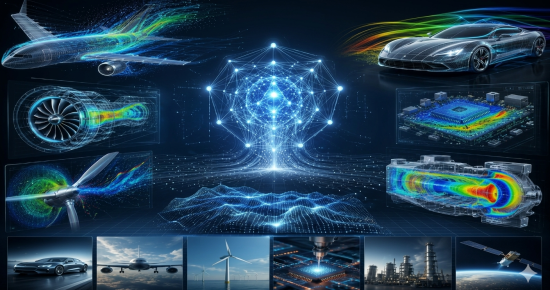
BeyondMath is a deep-tech startup dedicated to shifting the frontiers of engineering by replacing slow, costly, traditional numerical simulations with instant, AI-driven intelligence. Backed by top-tier venture capitalists, the company is built by an elite team of AI researchers and engineering experts.
Solutions & Technology
The core of BeyondMath‘s innovation is a Foundational AI Model of Physics.
Generalized Physical Intelligence: Unlike standard surrogate AI that must be trained from scratch on a narrow slice of a customer’s specific data, BeyondMath‘s pre-trained model has a generalized understanding of the fundamental laws of nature.
Multiphysics Capable: The platform breaks free from restricted, siloed engineering tools by seamlessly handling fluid, thermal, and structural physics within a single unified workflow.
Zero Data Dependency: Because the model natively understands physics equations right out of the box, it drastically reduces the massive data and retraining workloads required by traditional deep learning methods.
Applications:
BeyondMath scales across heavy, physical industries where traditional engineering simulation creates a critical bottleneck:
Automotive: Designing complex vehicle geometry (like optimizing EV underbodies) to extend battery range.
Aerospace & Defense: Optimizing next-generation drone propeller designs for quieter, longer flights, and simulating high-impact scenarios like blast wave propagation.
Energy: Discovering highly efficient wind turbine blade profiles to boost energy capture even in low-wind conditions.
Did you know? Traditional simulation tools use heavy brute-force math to solve complex physics equations grid-by-grid, taking hours or days. BeyondMath’s foundational physics engine bypasses this mathematical bottleneck, allowing engineers to visualize and iterate aerodynamics or thermal data at a fraction of the time.”
Solutions Focus: The primary focus of BeyondMath’s platform is to accelerate time-to-market and supercharge engineering productivity. Traditionally, running Computational Fluid Dynamics (CFD) or Finite Element Analysis (FEA) workflows required hours, days, or heavy reliance on expensive supercomputers. BeyondMath optimizes and automates meshing, validation, and post-processing, enabling engineers to run design variations nearly instantly, explore thousands of radical concepts in real-time, and cut compute costs enterprise-wide.
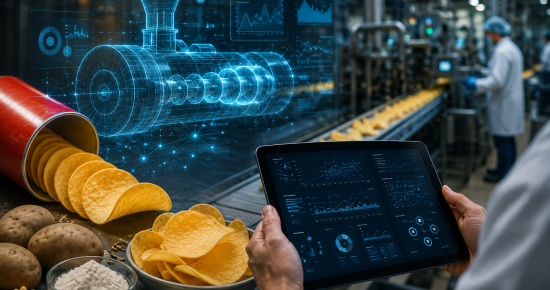
Pringles has spent decades perfecting one of the world’s most iconic snacks. But behind that satisfying crunch lies a surprisingly complex manufacturing challenge — dough that behaves differently every single day, depending on raw material variations, humidity, and protein levels. For years, experienced operators relied on instinct and process knowledge to keep production on track. When the line underperformed, pinpointing the exact cause was rarely straightforward.
That changed when Pringles partnered with Siemens and introduced a Digital Twin of the dough, a virtual model fed by real-time sensor data that uses models and simulations to recommend recipe and process adjustments. Operators receive data-driven recommendations to support process decisions, helping keep the line running with fewer stoppages and less waste.
But the transformation did not stop at dough. SIMATIC Energy Manager Pro now runs simulations to predict the next day’s energy consumption targets, addressing an important operational cost area. Meanwhile, Senseye Predictive Maintenance monitors equipment health through vibration sensors, replacing reactive fixes with intelligent, condition-based interventions.
Backed by the Siemens Xcelerator portfolio, Pringles aims to connect manufacturing, R&D, and engineering through a unified Digital Thread — turning what was once the art of making chips firmly into the science of it.