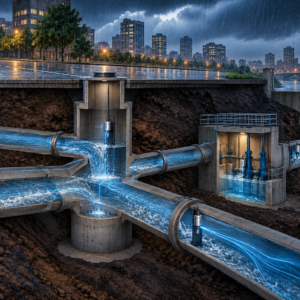
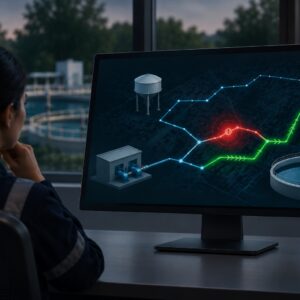

When a pipe breaks, utility teams may need to check SCADA readings, hydraulic models such as EPANET, and GIS maps separately. A digital twin aims to connect these sources into one view for investigating pressure, water-quality and leakage concerns.
For example, Nagpur combined these data sources through OpenFlows WaterSight, supporting simulations of pump failures and pipe breaks. In Nashville, Xylem Vue’s twin shows water age, pressure and source between sensors, and reportedly helped staff find a storage tank with high water age. Suspected leaks still need crews to confirm pipe routes and locations using acoustic correlators and ground microphones.
The Fluidit blog also covers DC Water preserving links between GIS, asset management and field applications for pipe replacement planning, with integrated hydraulic-asset modeling a future direction. It advises starting with one decision teams struggle to make. Overall, the blog presents digital twins as a way to give operations, engineering and field teams a shared picture for resilience planning.
Image generated by: ChatGPT