


Sewer networks are complex urban infrastructure, traditionally managed through periodic inspections, manual calculations and reactive maintenance, with limited visibility into what is happening inside the network. As cities expand, rainfall patterns intensify and regulatory scrutiny of combined sewer overflows (CSOs) increases, this gap is becoming more important.
Real-time sewer monitoring uses sensors at strategic locations, including junctions, pump stations and areas with higher overflow risk, to continuously measure factors such as flow, depth, water level, rainfall and water quality. The data is transmitted automatically to a central system.
As outlined by Fluidit, sensor data shows conditions at specific measurement points, while a physics-based hydraulic model can use this information to understand how water is moving across the wider network. Models based on the SWMM standard can also combine live network data with rainfall forecasts to project how the system may behave.
This supports:
- CSO monitoring and prediction, including estimating potential discharge volume and duration
- Testing pump and control changes virtually before implementation
- Early identification of anomalies that may indicate blockages, failures or illegal discharges
- Automated CSO detection, quantification and reporting
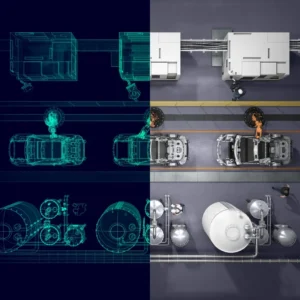
A sewer digital twin takes this approach further by continuously connecting the physical network with its digital model. Fluidit Storm is designed to support this transition by connecting hydraulic models with real-time data, allowing the model to reflect changing network conditions and support predictive simulations, CSO monitoring and operational decision-making. This creates a more current view of the sewer network, helping utilities understand not only where problems are occurring, but also how the network may respond to changing conditions.
Image generated by: ChatGPT