



Your bi-weekly sync on the pulse of the simulation industry
Industry News

When light itself becomes the building block of technology, precision isn’t optional—it’s everything.
Alcyon Photonics focuses on developing fabrication-ready photonic IP, including components like waveguides, couplers, and grating structures used in telecom, datacom, and emerging silicon photonics applications. Its goal is to ensure that designs are not just innovative, but also manufacturable and reliable at scale.
The challenge lies in the nature of photonics itself. At nanoscales, even tiny geometric variations, material inconsistencies, or temperature changes can drastically affect how light propagates. Traditional trial-and-error prototyping is costly, time-consuming, and often insufficient to capture these sensitivities.
To overcome this, the company uses advanced simulation tools from Ansys, specifically the Optics suite—such as FDTD for 3D electromagnetic simulation, MODE for waveguide analysis, and INTERCONNECT for system-level validation. These tools allow engineers to model light behavior across devices and entire photonic circuits under realistic conditions.
Additionally, GPU-accelerated computing enables faster optimization of complex structures like subwavelength gratings. By integrating multiphysics effects and system-level insights early in design, Alcyon reduces fabrication risks and ensures its photonic IP performs reliably in real-world environments.
Product News
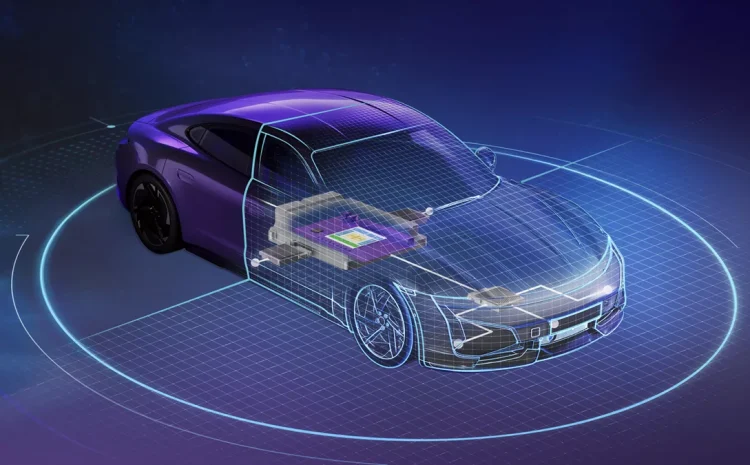
- System-level Virtual Prototyping
- Cloud-native infrastructure
- Open Ecosystem Integration
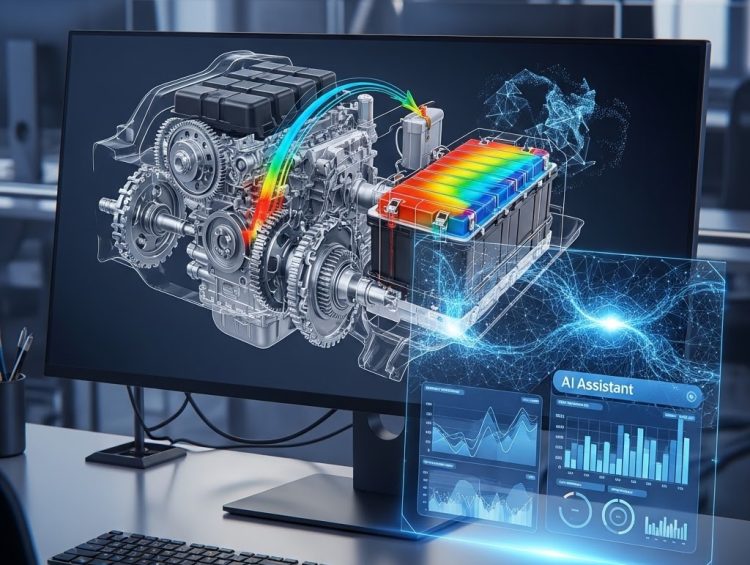
- AI.advisor Instant Support
- Native GT-SUITE UI Integration
- Natural Language Interface

- Native Cadence Cadence Virtuoso Studio Integration
- Unified Two-Way Workflow
- GPU Accelerated Simulation
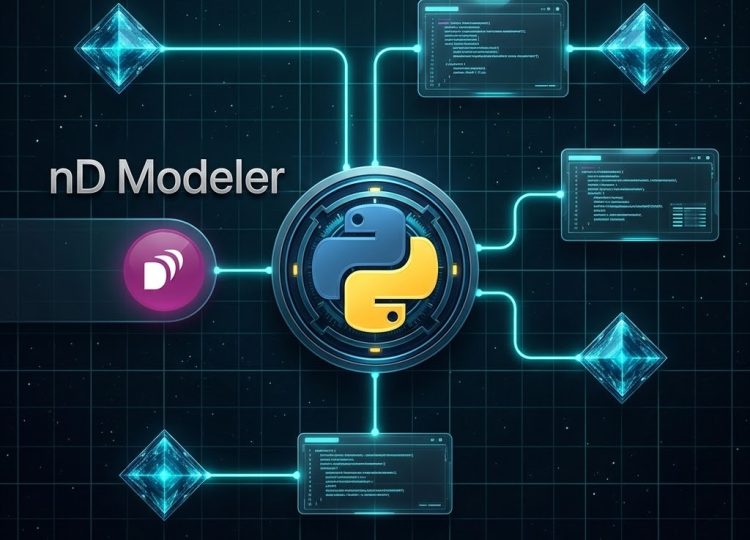
- AI/ML Model Training
- modeFRONTIER Integration
- Multi-Model Comparison and Selection
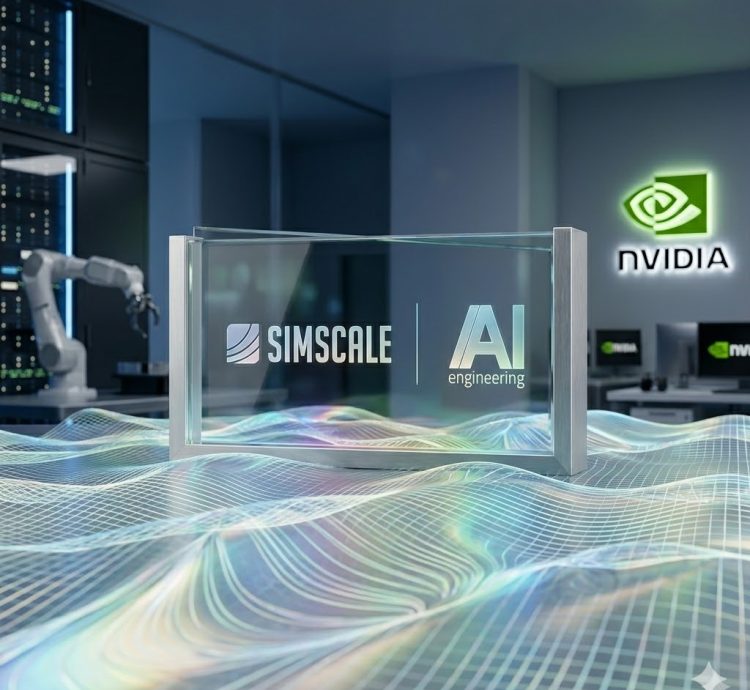
SimScale has partnered with AI Engineering GmbH to integrate the PAMICS meshless SPH solver into its cloud platform. The collaboration aims to eliminate meshing challenges in fluid simulations and enable scalable generation of high-fidelity data, supporting Physics AI workflows and the development of predictive digital twins using NVIDIA AI infrastructure.
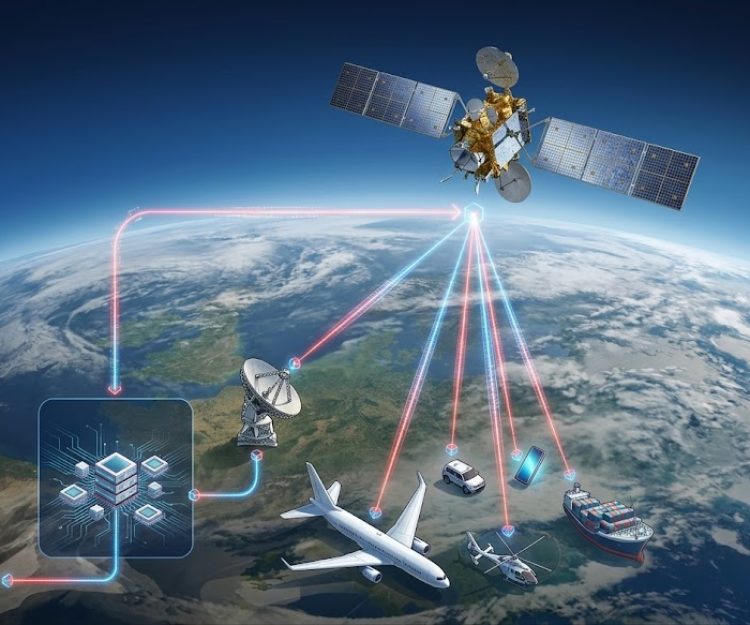
Airbus is developing the SpaceRAN demonstrator under its UpNext programme to explore extending 5G connectivity via satellites acting as space-based cell towers. The project focuses on software-defined satellites, regenerative payloads, and Open RAN interfaces, with ground testing followed by an in-orbit demonstration planned for 2027–28.
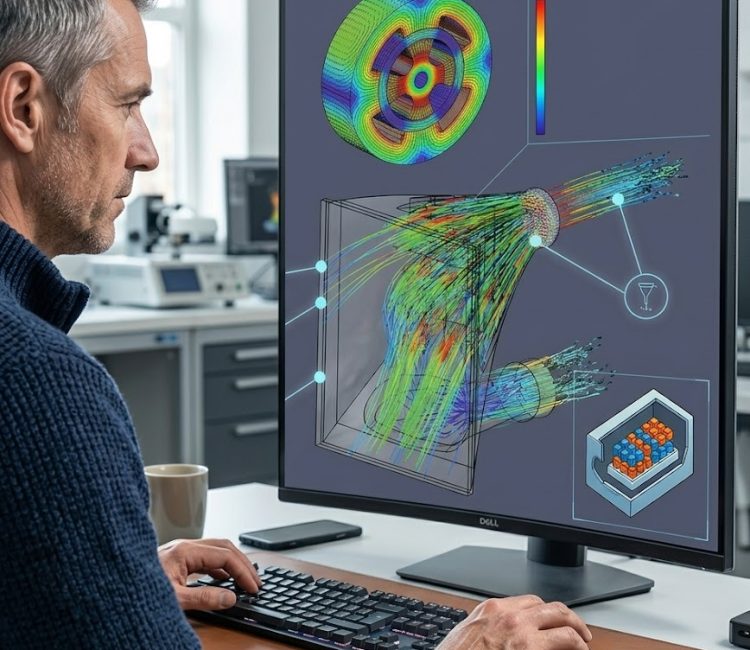
Magnoric develops magnetic refrigeration systems as a sustainable alternative to conventional gas-compression cooling. Using Altair SimLab, the company carried out coupled CFD and structural simulations of its active magnetocaloric regenerator (AMR). The tool enabled analysis of fluid flow, pressure drop, and mechanical behaviour, supporting design optimisation and reducing dependence on physical prototyping.
Click to read the original article..
ToffeeX has partnered with Excel3D to expand the adoption of physics-driven generative design in India. The collaboration combines ToffeeX’s design and simulation platform with Excel3D’s consulting, training, and product development capabilities, aiming to integrate thermal-aware generative design into engineering workflows and bridge the gap between innovation and real-world manufacturing across industries.
Industry Events
This webinar explores the vision and key enabling technologies shaping 6G wireless systems, including sub-THz communication, AI/ML, reconfigurable intelligent surfaces, and advanced waveforms. It outlines how MATLAB-based tools support modeling, simulation, and evaluation of these technologies, along with link-level analysis and RF impairment studies.
🗓️ April 10, 2026
🕒 15:00-16:00 IST
This workshop focuses on transforming medical imaging data into simulation-ready models using Simpleware tools for healthcare and biomedical applications. It covers:
- Extraction of patient-specific geometries from CT/MRI data
- Image segmentation and surface reconstruction
- Preparation of high-quality meshes for simulation
- Integration into engineering analysis workflows
The session highlights how such workflows support device design validation, clinical research, and patient-specific treatment planning.
🗓️ April 14, 2026
🕣 11:00-12:30 EDT
This webinar by COMSOL explores the design and optimization of semiconductor fabrication equipment (SFE), with emphasis on plasma-enhanced chemical vapor deposition (PECVD) reactors and multiphysics modeling. It covers:
- Application of fluid flow, heat transfer, and structural simulations in equipment design
- Key challenges in achieving process uniformity and reliability
- Role of multiphysics models in design validation, engineering decisions
🗓️ April 16, 2026
🕒 15:00-16:00 IST
This virtual summit focuses on the adoption of MODSIM (modeling and simulation) within the 3DEXPERIENCE platform. It highlights integrated design-simulation workflows, virtual twin experiences, and industry use cases demonstrating how organizations are aligning engineering processes, data continuity, and collaborative product development environments.
🗓️ April 21,2026
🕐 13:00-14:30 SGT
In FOCUS
Company in Focus

Who they are
Synera is an Germany based enterprise software provider transforming product development through its pioneering “Agentic AI Engineering Platform.” Originally founded in 2018 as ELISE by researchers Dr. Moritz Maier, Sebastian Möller, and Daniel Siegel, the company specialized in generative design and algorithmic engineering. Today, Synera bridges the gap between fragmented CAx tools by offering a low-code environment where human expertise is augmented by automated, “connected” workflows. With over 150,000 automation sequences already executed on its platform, Synera has become a strategic partner for global manufacturers seeking to scale their R&D capacity.
Solutions & Technology
Synera’s technology acts as a central integration layer for the modern engineering stack. Its node-based interface allows teams to build complex logic without manual programming.
Key features include:
Agentic AI Framework: Digital “AI agents” that assist in 24/7 simulation setups and design exploration.
Low-Code Automation Engine: Over 1,000 built-in nodes enable engineers to model design logic, not just geometry.
Extensive Connector Ecosystem: Deep integration with 76+ tools, including industry standards like Ansys, Abaqus, and major CAD systems.
Synera Run: Synera Run enables expert workflows to be shared and executed across teams through a simple web interface.
Applications:
Automated FE Analysis: Removing bottlenecks in structural simulation by automating meshing, load case assignment, and result verification.
Additive Manufacturing & Casting: Streamlining “design-for-manufacturability” by automating build job preparation and real-time cost estimation.
Automotive Optimization: Accelerating vehicle development cycles by managing interconnected workflows for weight reduction and thermal management.
Did you know?
Synera’s origins lie in bio-inspired research at the Alfred Wegener Institute, where its founders studied how DNA-driven rules create lightweight, resilient structures—later translating these principles into code to launch ELISE. (Evolutionary Light Structure Engineering).”
Solution Focus
The core mission of Synera is Engineering Autonomy. By replacing manual “data-drudgery” with automated digital threads, the platform allows engineers to model the reasoning behind a product, not just the part itself. This creates a self-updating ecosystem where a single design change instantly triggers updated simulations and reports across the entire tech stack—slashing development cycles and shifting the focus back to pure innovation.
Technology Focus
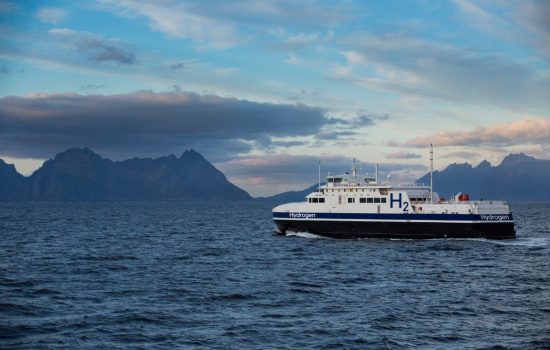
As hydrogen emerges as a promising marine fuel, its potential comes with an equally critical question—how do you design for safety when the risks are largely invisible?
This case study by Gexcon explores how advanced CFD simulations were applied to support the safe design of a hydrogen-powered passenger ferry during the Approval in Principle (AiP) phase. Given hydrogen’s high diffusivity, low ignition energy, and wide flammability range, traditional design approaches are not sufficient to fully capture associated hazards.
To address this, FLACS was used to simulate a range of accidental release scenarios, enabling a detailed understanding of hydrogen behaviour under realistic operating conditions. The study focuses on identifying potential risks and evaluating mitigation strategies early in the design process.
Key elements of the analysis include:
- Hydrogen dispersion studies: CFD simulations examined how leaked hydrogen disperses across enclosed and semi-enclosed ferry spaces, highlighting zones where gas accumulation could occur.
- Explosion and fire modelling: The software assessed ignition scenarios, flame acceleration, and overpressure effects, helping quantify potential consequences.
- Ventilation and layout assessment: Different design configurations were tested to understand how ventilation systems and equipment placement influence safety outcomes.
- Design-stage risk evaluation: Insights from simulations supported safer placement of hydrogen systems and informed protective measures.
By combining dispersion, fire, and explosion modelling within FLACS, the study illustrates how CFD enables a scenario-based, risk-informed design approach. It underlines the growing role of simulation in ensuring that hydrogen-powered vessels are not only efficient but also aligned with evolving safety expectations.