
Your weekly sync on the pulse of the simulation industry
Industry News
Allegro Energy is an Australian flow battery company, based in Thornton, New South Wales, that has developed a water-based microemulsion electrolyte of water, oil and surfactant. Its chemistry uses common raw materials instead of lithium or rare earths and is described as non-flammable and fully recyclable. The company manufactures at a Hunter Valley pilot facility and has deployed a commercial pilot at Eraring Power Station.
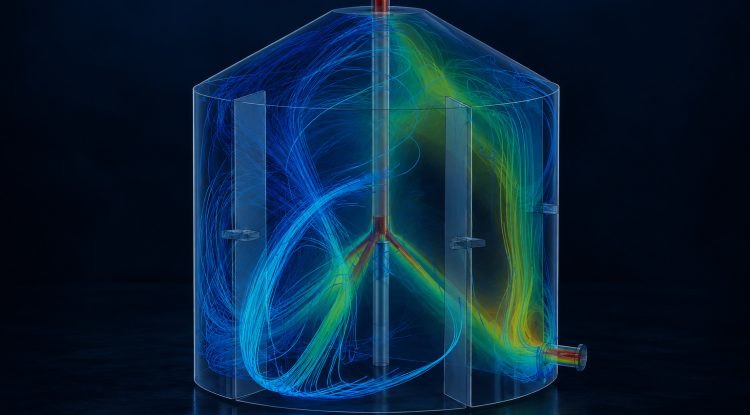
Earlier, the engineering team ran open-source computational fluid dynamics (CFD) on on-premises hardware, which limited simulation volume. Moving to SimScale’s cloud-native platform aims to remove that compute constraint.
For electrolyte tanks, multiphase CFD models the liquid together with nitrogen headspace, while liquid-only runs estimate residence time. Using SolidWorks models, engineers compare baffles, flow rates, and nozzle shape, depth and orientation before fabrication, since poor mixing can reduce usable capacity.
For the battery stack, parametric CAD varies channel width, depth, corner radii, bifurcations and inlets, alongside flow rates and felt compression ratios. The aim is to reduce pressure drop while spreading flow evenly across the membrane.
Allegro reports shorter tank design cycles and improved flow uniformity. For Allegro, simulation aims to keep every drop of electrolyte working, well before fabrication.
Partnerships & Collaborations

Formula E and COMSOL announced a multiyear partnership, making COMSOL the Official Multiphysics Partner of the ABB FIA Formula E World Championship. The partnership comes as the GEN4 car debuts in 2026–27 and COMSOL Multiphysics v2027 releases this fall.
Click to read more..
Gexcon and CH-IV International formed a strategic alliance, building on their existing collaboration to combine engineering, process safety and risk assessment expertise. It aims to support safer facilities across project lifecycles and compliance with requirements, including FERC and DOT PHMSA.
Cick to read more..
Modelon has signed a value-added reseller agreement with Simetrix Digital Technologies. SimetrixDT will offer Modelon Impact and the Data Center Library, aiming to help regional data center teams design, test, and operate cooling and infrastructure systems with greater confidence.
Click tor read more..
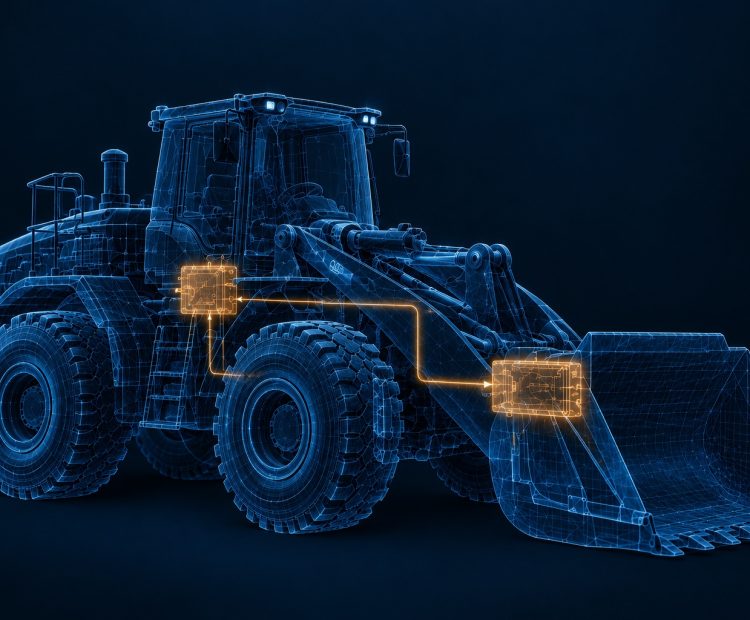
Liebherr uses Ansys SCADE to develop embedded software for machines such as excavators and cranes, establishing a unified, modular approach to simulation and software development across departments. It is evaluating Scade One as a successor, which aims to support more complex designs through enhanced graphical modelling.
Click to read more..
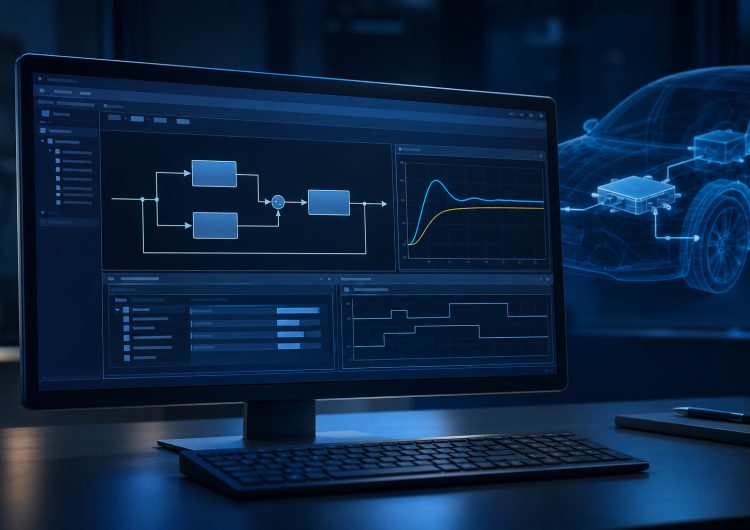
MathWorks has expanded the TÜV SÜD certification of MATLAB, Simulink, Stateflow and System Composer to cover generic AI tool classification guidance under the automotive standard ISO 26262. It aims to support agentic AI use in safety-critical workflows with traceability and compliance.
Click to read more..
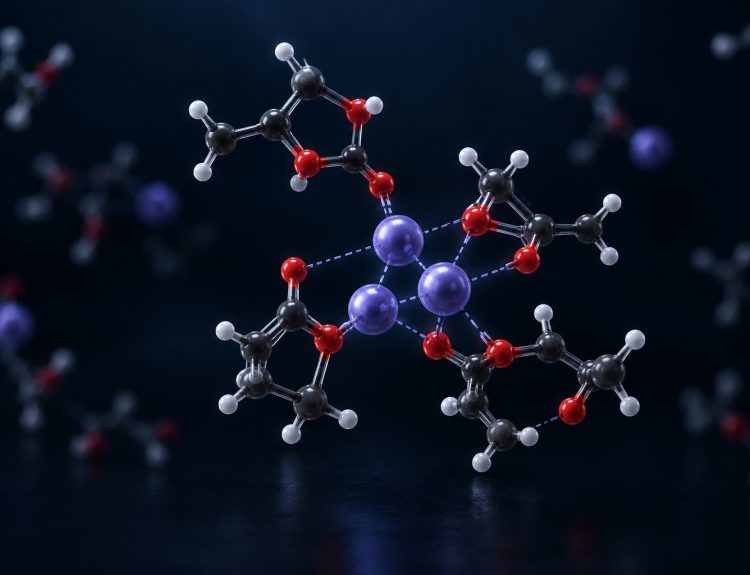
Schrödinger, Columbia University and the New York Structural Biology Center published Nature research showing lithium ions in battery electrolytes form clusters without anions. Experimentally validated simulations suggest these clusters help form the protective anode film, aiming to guide electrolyte design.
Click to read more..
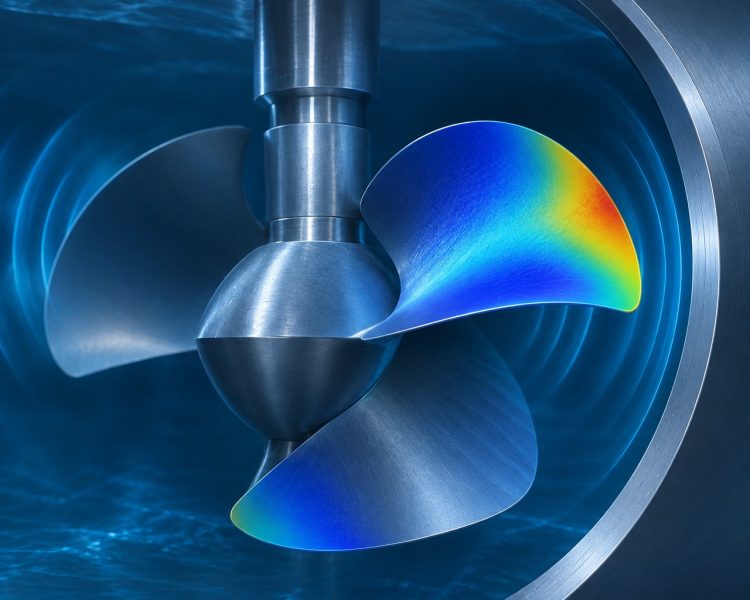
COMSOL demonstrates acoustic–structure interaction simulation of Kaplan turbine blades, examining how surrounding water and the gap between the blade and pipe wall influence vibration and natural frequencies. The study highlights how restricted water pressure equalisation affects blade vibration.
Click to read more..
Industry Events
As battery energy density rises, thermal runaway remains a critical safety challenge. This webinar, hosted by AVL and CMT (Universitat Politècnica de València), explores thermal runaway testing, detection and mitigation approaches, and introduces AVL ThermOS™, a pseudo-adiabatic calorimeter system for comprehensive thermal runaway investigations in battery cell development.
🗓️ November 10, 2026
🕞 15:30 – 16:30 IST
Fluid-carrying medical devices such as blood pumps, dialysis systems and drug-delivery devices must deliver reliable flow performance. This live webinar shows how SIMULIA Fluids helps engineers investigate flow behavior, pressure distribution and geometry changes before physical testing, with practical CFD workflows for comparing design variants, medical-device examples and Q&A.
🗓️ November 10, 2026
🕡 18:30 – 19:30 IST
Extended reality is creating new challenges for engineers delivering immersive, high-performance visual experiences. This webinar explores integrated simulation workflows, from initial design concept to system validation, and shows how optical modeling, virtual prototyping and digital engineering technologies help reduce design risk and shorten development cycles for XR display designs.
🗓️ November 12, 2026
🕙 10:00 – 11:00 PST
Physics AI models often struggle to generalize across different simulation meshes and real-world engineering workflows. This webinar introduces Luminary-SMART, a mesh-independent architecture for Large Physics Models, exploring its scalable model capacity, benchmark performance, inference speed and ability to learn underlying physics for production engineering applications.
🎥 Available On Demand
In FOCUS
Company in Focus
Who they are
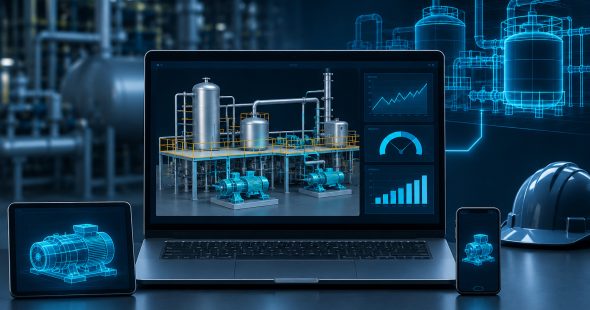
Cloudworx is an Indian digital twin company based in Meerut, Uttar Pradesh, led by Founder/CEO Yuvraj Tomar and Co-Founder/CTO Kaushik Bharadwaj. The company describes its Process Twin Platform as the first browser-based platform of its kind, enabling teams to build and monitor digital twins of their processes without GPU servers.
Solutions & Technology
The platform brings CAD, IoT and operations data into one browser tab and offers five capabilities:
- Real-Time 3D Control: Monitor any asset from any device.
- Predictive Maintenance: Flags anomalies before equipment fails, helping reduce unplanned downtime.
- Performance Optimization: Finds bottlenecks and compares runs against historical baselines.
- Scenario Simulation: Tests layout, throughput and process changes in the twin first.
- Sustainability & ESG: Tracks carbon, energy and CSRD metrics automatically from twin data.
Applications
Cloudworx twins serve manufacturing, logistics, energy, water and utilities, marine and ports, and built environments, with deployments at Bosch, ABB and Apollo Tyres.
Did you know?
Founder Yuvraj Tomar was named to the inaugural Forbes Asia 30 Under 30 list, and Cloudworx holds a US utility patent valid through 2035.”
Solutions Focus
Cloudworx takes CAD, BIM or scan files and live IoT, MES and SCADA feeds, compresses the geometry with its patented engine, links assets to real-world data and streams the twin to any browser before the customer’s team takes over. Cloudworx aims to make plant-scale digital twins lightweight, accessible and ready to run on everyday devices.
Technology Focus
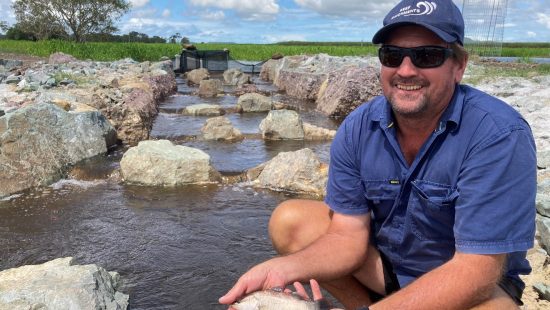
Fish ladders are structures that help migrating fish pass over or around obstacles such as dams, culverts, and waterfalls. Designing them is challenging because water velocity, flow, and turbulence may need adjustment for each fish species, age group, and site, while budget, regulatory, and time limits also apply.
One example comes from a coastal ponded pasture restoration project in Central Queensland, Australia. Catchment Solutions LLC of Mackay worked with Brisbane-based Forward Hydro to develop a rock ramp-style fishway that aims to improve connectivity between saltwater habitats and freshwater wetlands, which many fish species travel between during their life cycles.
The fishway needed to cross a drop at the wetland outlet, so a natural rock ramp with lateral ridges and pools was used. Between pools, a nursery slot of staggered steps, each slightly lower than the next, aims to provide a shallow film of flow, while rough concrete forms lower-velocity zones for weaker swimmers.
Forward Hydro used CFD modeling, through FLOW-3D HYDRO, to assess the hydraulic performance of this innovative design. A larger model examined flow across multiple pool sections, while a finer model studied the nursery slot against fish burst speed, burst length, and critical swim speed.
Simple meshing let the team capture rock and slot details without reconfiguring the mesh each time. Monitoring reported by Catchment Solutions showed many fish, including postlarvae and juveniles, ascending the fishway. Insights from the modeling may guide future designs, showing how engineering and ecology together can open pathways for even the smallest fish.