

Designing a combine harvester involves several engineering challenges, from maintaining a comfortable cabin to ensuring efficient crop separation and reliable gearbox operation. Engineers use simulation to understand how components behave under operating conditions and identify potential design issues before the machine reaches the field.
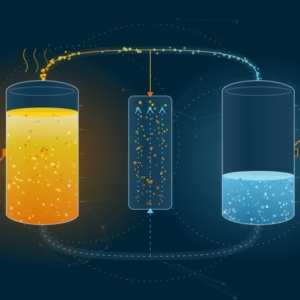
The Siemens article uses a fictional harvester development project to illustrate a common challenge in engineering: simulation results can take weeks or days to arrive, limiting their usefulness during design decisions. In the example, cabin thermal comfort analysis takes several weeks, while particle separation, fuel tank sloshing and gearbox lubrication studies also require days to complete.
The article introduces Simcenter Unlimited, an on-site simulation appliance equipped with eight NVIDIA GPUs. It combines GPU-native solvers in Siemens Simcenter software, including Simcenter STAR-CCM+ and Simcenter EDEM. The turnkey system requires no additional computing infrastructure and keeps simulation data within the organisation.
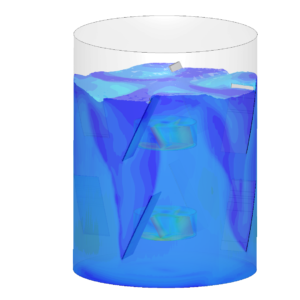
The approach aims to reduce simulation turnaround from weeks to overnight results, hours or even minutes, depending on the application. Computational Fluid Dynamics (CFD) examines cabin airflow and thermal comfort, the Discrete Element Method (DEM) studies crop movement and separation, while Smoothed Particle Hydrodynamics (SPH) analyses gearbox lubrication. Fuel tank simulations investigate sloshing, structural stress and baffle design.
Automated design exploration and sensitivity studies help evaluate separator geometry, tank baffles, gearbox materials and cabin design. The harvester example describes improvements in grain separation, reduced tank stress and cooler gearbox operation.
Ultimately, the article highlights an important shift: simulation can inform engineering decisions while designs are still evolving, rather than simply documenting them afterwards.
Click to read the original article..
Image courtesy: Siemens