
Speed skiing is one of the few winter sports where success depends mostly on minimising resistance through the air. As athletes push toward record-breaking speeds, aerodynamic efficiency plays an increasingly important role alongside skill and equipment.
A recent engineering study explored how computational fluid dynamics (CFD), combined with wind tunnel testing, can help refine a skier’s aerodynamic profile. The project used HELYX, an open-source CFD software, alongside experimental testing at the Pininfarina wind tunnel facility in Italy, reflecting a collaboration between Pininfarina and ENGYS, to study airflow around an athlete in the typical tuck position used during competition.
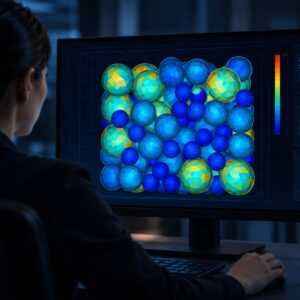
The process began with a detailed 3D scan of the skier, which was used to build an accurate digital model. CFD simulations were then run to understand how air moves around the body, identifying areas where turbulence and pressure build-up contribute to drag—particularly around the helmet, shoulders, and upper limbs.
A key part of the study involved adjoint analysis, a technique that helps engineers understand how small changes in body position or equipment shape affect aerodynamic drag. This insight guided practical suggestions, such as improving alignment between the knees and elbows, minimising gaps between the helmet and shoulders, and refining hand positioning.
The refined configuration was then evaluated using additional CFD simulations. The findings suggest that positional and equipment adjustments identified through this combined CFD and wind tunnel approach can meaningfully reduce drag.
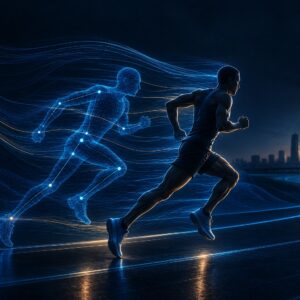
This combination of digital simulation and physical testing gives athletes and coaches something rare in winter sports: a clear, visual understanding of exactly where and why drag occurs on the body. Rather than relying on instinct or gradual trial and error, adjustments to posture and gear can now be guided by precise airflow data—turning small tweaks in body position into a repeatable, evidence-based part of race preparation.
Image courtesy: Simone Origone