

A modern race car is a system of systems, with powertrain, energy storage, cooling, chassis, tires and aerodynamics influencing one another. Yet lap time still depends on the driver, among the hardest elements to simulate. With testing so costly, an inaccurate driver model can weaken predictions for lap time, tire use, energy consumption and setup sensitivity.
A Siemens article explains why existing approaches struggle:
- PID-based drivers follow a predefined trajectory and speed profile, with limited look-ahead and frequent manual retuning.
- Quasi-static tools estimate theoretical limits.
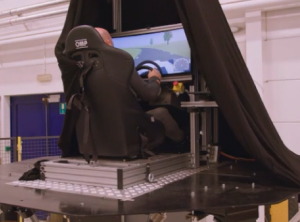
- Human-in-the-loop simulators need scarce expert drivers and cannot run quicker than real time.
Its answer, the Simcenter Amesim Advanced Virtual Driver Model, treats the driver as a human digital twin: an optimization agent working in closed loop with a complete race car digital twin. That vehicle twin covers:
- Powertrain, including combustion engine, electric motor, gearbox, inverter, battery and thermal management
- Braking with regeneration, suspension, chassis and tires
- Aerodynamics and the track environment
Nonlinear Model Predictive Control looks ahead to decide steering, throttle and braking, balancing reference tracking, energy use and lap time within vehicle and track limits. A method called RESAFE/COL is reported to speed up this computation versus state-of-practice MPC methods and allow deployment on target hardware. Autocalibration tunes the driver for each vehicle, track and condition, with validation reportedly extracting up to half a minute from a lap versus the initial reference.
The model also adapted to wet weather by finding a new line for reduced grip, and supports overtaking simulations at very high speeds. With an open, FMI-compatible architecture for offline, real-time and embedded use, it works as a loop: the driver shapes the car, and the car shapes the driver’s next decision.
Image courtesy: Siemens