


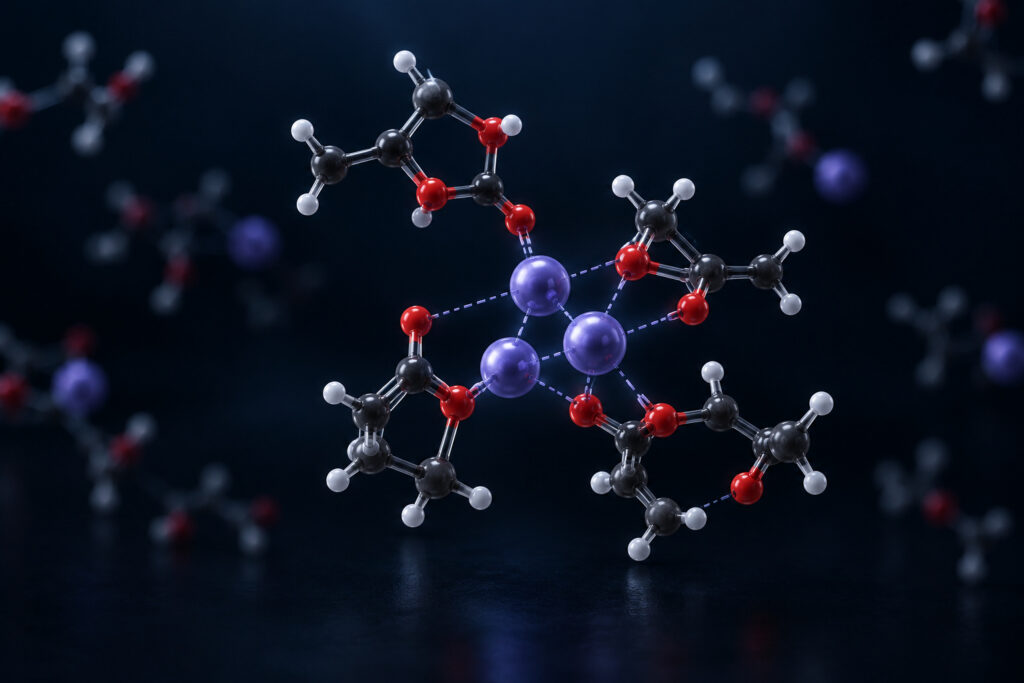
Lithium-ion battery electrolytes affect conductivity, stability, and the protective film that influences battery lifespan and safety, yet detailed understanding of their atomic-level structure has remained limited. Researchers from Schrödinger, Columbia University, and the New York Structural Biology Center used Schrödinger’s machine-learning force field to run molecular dynamics simulations of these electrolytes. They found that lithium ions often form clusters coordinated by ethylene carbonate solvent molecules without anions, challenging the assumption that lithium ions stay mostly isolated.
The simulations matched experimental data, including NMR spectra, density, viscosity, conductivity, and diffusion. Quantum chemical calculations suggest these clusters may be intermediates in forming the solid electrolyte interphase on the anode. Published in Nature, the work aims to support predictive electrolyte design. Schrödinger’s announcement notes the research is ongoing with Gates Ventures support.
Image generated by: ChatGPT