


Your bi-weekly sync on the pulse of the simulation industry
Industry News

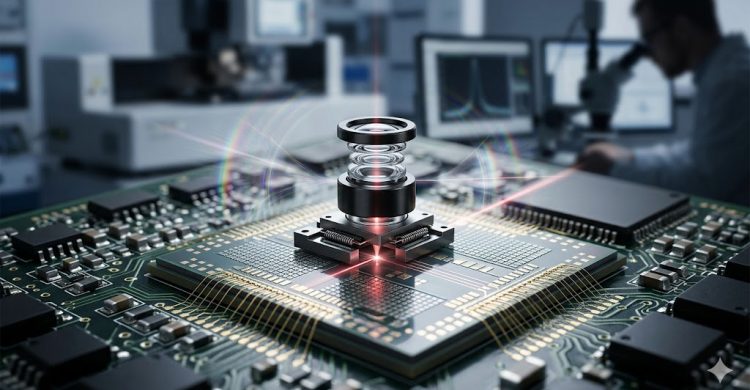
The optical world is undergoing a profound transformation. Smartphone cameras are getting thinner, augmented reality headsets are shedding weight, and automotive sensing systems are shrinking to fit within tighter spaces. Behind all of this lies one critical enabler, the miniaturization of optical components such as lenses, beam shapers, and sensors.
Miniaturizing optical components introduces a new class of engineering challenges. At the nanoscale, engineers face tighter tolerances, complex light-matter interactions, and the need to rethink both materials and manufacturing processes. Metalenses, for instance, depend on precisely arranged nanostructures where even minor variations in height, radius, or spacing can alter how light is transmitted and phased. Traditional physical prototyping struggles to keep pace with these complexities, making sophisticated simulation tools essential.
Ansys Lumerical FDTD software aims to rigorously model how light interacts with subwavelength nanostructures such as meta-atoms, using methods including finite difference time-domain and coupled-wave analysis. Ansys Zemax OpticStudio software then seeks to evaluate how those nanoscale components perform within a complete optical system, helping engineers identify potential misalignments or performance degradation before manufacturing begins. Ansys Speos further supports real-world lighting and system-level optical behavior analysis.
Beyond design, Ansys and Moxtek have collaborated to develop a Process Design Kit that integrates FDTD and OpticStudio software directly with Moxtek’s nano-fabrication environment. It incorporates fabrication rules and validated component libraries, helping engineers anticipate manufacturing challenges such as corner rounding and pitch shifts early in the design phase narrowing the gap between simulated and fabricated performance and reducing production costs.
Click to read the original article..
Product News

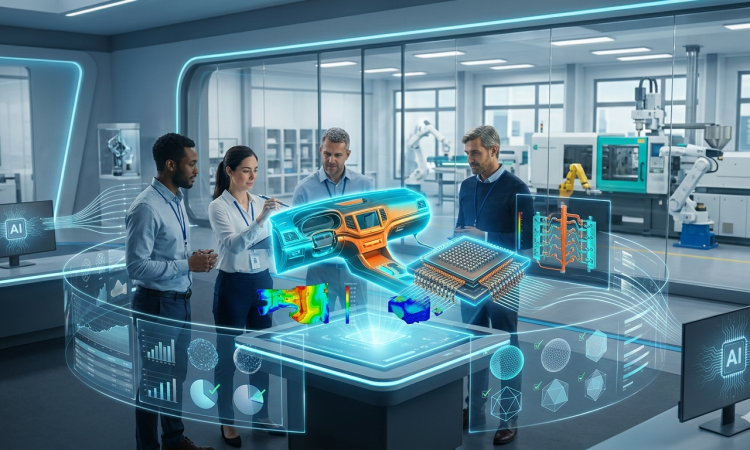
- Digital Twin & Advanced Molding Simulation
- A.O.I. Framework
- Next-Generation Hot Runner, Multi-Cavity Analysis
- Advanced IC Packaging & Hybrid Technologies

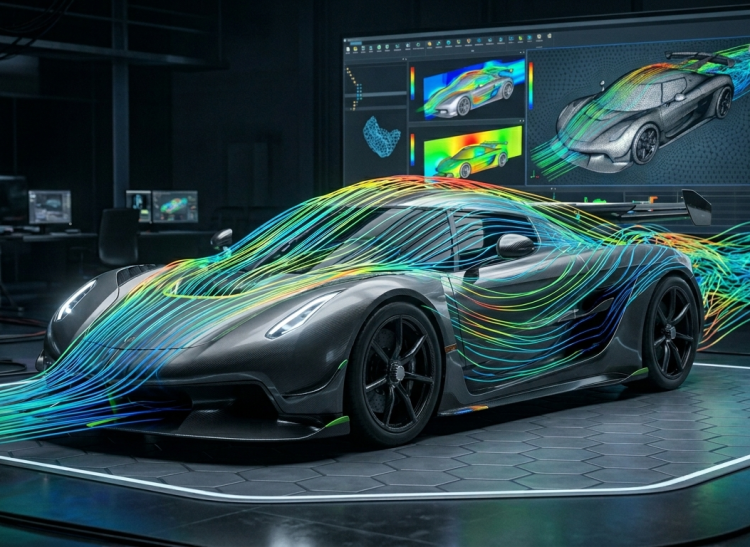
- Multi-Physics Workflow with Modular Modelling Environment
- Enhanced Mesh Control and Meshing Performance
- Post-Processing and Analysis

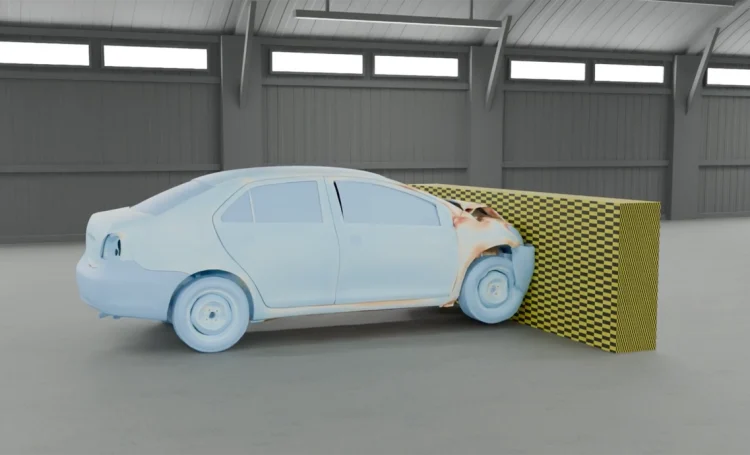
Geometry-aware physics AI model
Full-vehicle and full-field crash prediction
Transfer Learning & Compounding Knowledge


- Embedded, domain-specific AI
- Step-by-step workflow assistance
- Context-aware model and component discovery

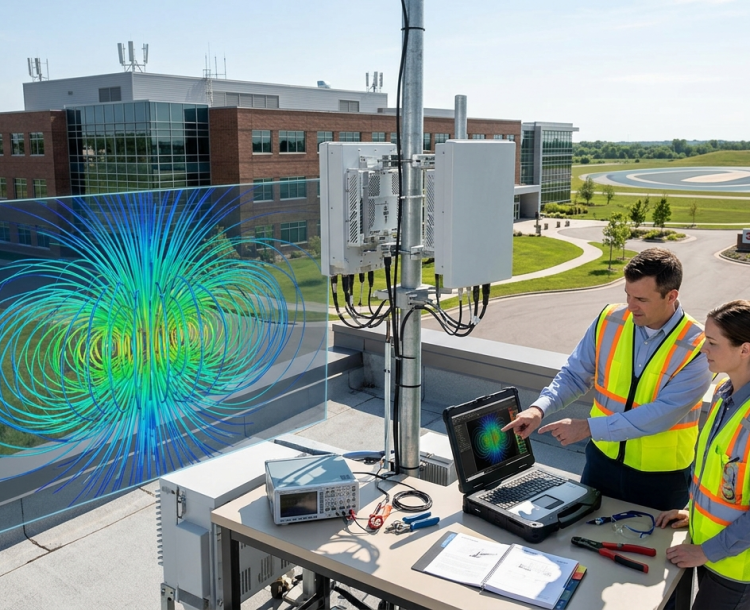
3M is exploring advanced communication technologies by using SIMULIA’s CST Studio Suite to simulate millimeter wave behavior for emerging 6G needs. The approach enables evaluation of materials, antenna designs, and environmental factors before prototyping. It also supports development of low-loss, thermally efficient materials to address signal performance, interference, and infrastructure limitations in high-frequency networks.
Click to read more..

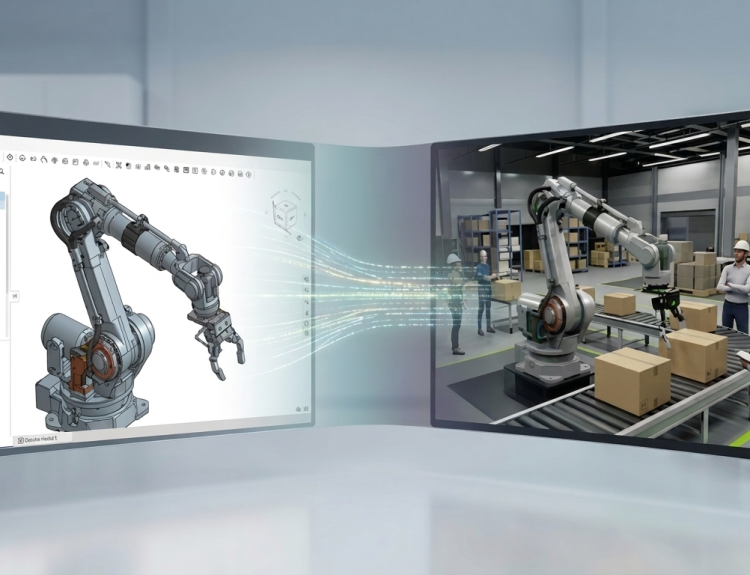
PTC has announced a workflow connecting its cloud-based CAD platform, Onshape, with NVIDIA Isaac Sim, unveiled at NVIDIA GTC 2026. The integration aims to eliminate manual steps in moving robot designs from CAD to simulation, with design updates in Onshape automatically reflecting in Isaac Sim. Built on AWS, it also supports AI-based robot training via NVIDIA Isaac Lab.
Click to read more..
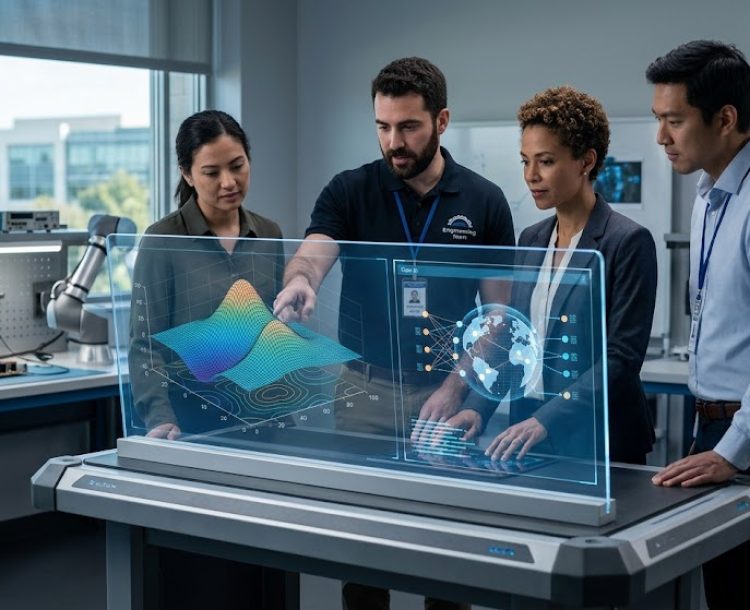
MathWorks has joined the EDGE AI FOUNDATION, a global non-profit organization aimed at advancing energy-efficient AI for edge devices. The collaboration aims to help engineers use MATLAB and Simulink to train, integrate, and deploy AI models on embedded hardware across industries including automotive, aerospace, and industrial automation, with support for system-level simulation and safety-critical verification.
Click to read more..
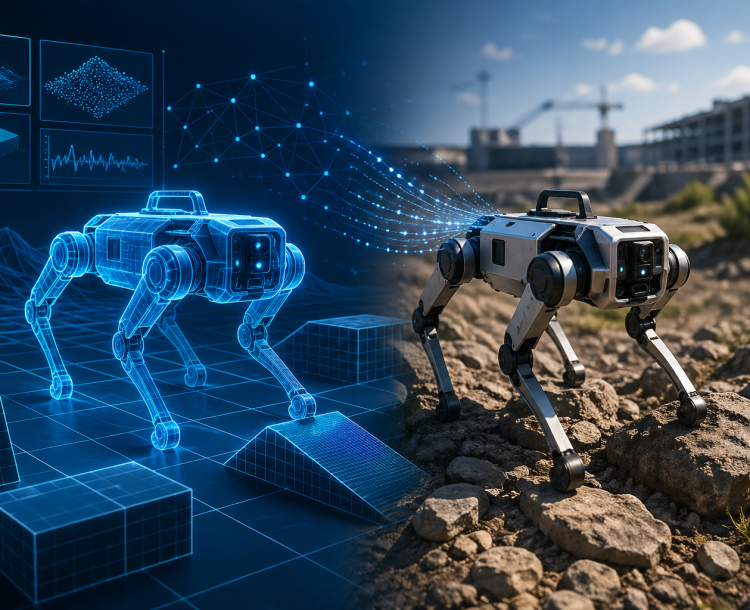
Siemens’ Simcenter Engineering Services, in collaboration with EPFL’s Automatic Control Laboratory, aims to transform autonomous robot training by combining simulation with real-world data. Using Simcenter Amesim digital twins, robots undergo virtual training across varied terrain, weather, and lighting conditions. A minimal amount of real-world data aims to fine-tune robot behavior, significantly reducing physical testing risks and costs.
Click to read more..
Industry Events
This session outlines how simulation-driven engineering supports the development of hydrogen-based energy systems and e-fuels, with a focus on integrating renewable energy and enabling decarbonization pathways. Join the webinar to explore:
- Role of green hydrogen in energy transition & large-scale storage
- Engineering of electrolyzers and integration into energy systems
- CO₂ capture approaches, including direct air capture, for e-fuels
- Simulation-led design, layout, and optimization across applications in industry, transport, and power generation
🗓️ May 7, 2026
🕘 09:00 – 11:50 CEST
This webinar focuses on equation-based modeling in COMSOL Multiphysics, outlining how users can define and solve custom equations within a multiphysics framework. It aims to cover integrating user-defined PDEs with built-in physics interfaces such as structural mechanics, electromagnetics, and heat transfer, while also presenting formulation approaches through examples like convection–diffusion.
🗓️ May 12, 2026
🕑 14:00 – 14:45 CEST
This session explores lithium-ion battery thermal runaway through combined experimental studies and CFD simulations. It examines gas generation, venting, and thermal behavior across different cell types, comparing results to validate modeling approaches. Attendees will gain insight into representing internal reactions and ejection processes, supporting early-stage development of predictive thermal runaway models.
🗓️ May 13, 2026
🕘 09:00 – 10:00 CDT
This webinar focuses on integrating model-based systems engineering with simulation workflows to enable traceable verification and validation. It outlines how requirements, system models, and simulation data can be connected within a unified digital thread.
Join the webinar to explore:
- Linking SysML models with simulation for requirement verification
- Tool synchronization and workflow automation
- Maintaining traceability and version control across systems
- Practical use of the MBSE plugin in engineering contexts
🗓️ May 14, 2026
🕢 19:30 – 20:00 IST
In FOCUS
Company in Focus

Who they are
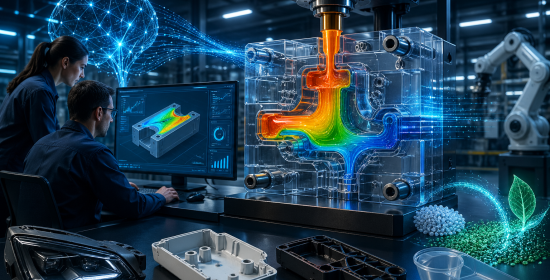
Headquartered in Aachen, Germany, SIMCON is a specialist software company with a singular focus: helping engineers master plastic injection moulding simulation, a mission it has pursued with quiet precision for over 35 years. What started as academic research has evolved into a globally trusted software platform, with over 12,000 injection moulding projects delivered and a customer roster that includes Bosch, Continental, L’Oréal, Roche, and TE Connectivity. SIMCON is not a broad-spectrum CAE vendor, it is a deep specialist, and that focus is its greatest strength.
Solutions & Technology
SIMCON’s product portfolio is compact but powerful:
- Cadmould Flex: The flagship simulation platform for filling, packing, warpage, and cooling analysis built for precision and practical usability by plastics engineers.
- Cadmould Viewer: A free tool that allows anyone on the team to open, view, and review Cadmould simulation results, no licence required.
- Cadmould AI Solver: An AI-based solver for instant simulation results during rapid design iteration currently in preview.
- Simulation as a Service: For teams without in-house simulation resources, SIMCON’s own engineers handle the analysis on demand.
Applications:
- Automotive & Mobility: Passenger cars, commercial vehicles, and EVs covering dashboards, bumpers, under-the-hood components, door panels, interior trims.
- Healthcare & Medical: Medical devices, diagnostics equipment, pharmaceutical packaging, biocompatible plastic components.
- Electronics & Semiconductors: Consumer and industrial electronics, connectors, PCB encapsulation, and semiconductor chip encapsulation.
- Consumer Goods & Packaging: Food & beverage containers, cosmetics packaging, household items, personal care products.
- Aerospace & Defence: Lightweight interiors, seals, and high-performance plastic parts for aviation and military applications.
- Industrial Equipment & Machinery: Moulds, tooling, robotics, and mechanical components for demanding industrial environments.
- Optics & Light Systems: Lenses, light guides, LED lighting, AR/VR optics, and automotive headlamps.
- Advanced Materials & Sustainability: Bioplastics, recycled materials, lightweight composites.
Did you know?
Most simulation tools are built for specialists. SIMCON flipped that assumption — Cadmould Flex was deliberately designed so that a plastics engineer, not a simulation expert, can run a full filling, packing, and warpage analysis without needing a dedicated CAE team behind them.”
Solution Focus
SIMCON’s mission is straightforward — eliminate the costly guesswork in plastic part development. By combining physics-accurate simulation with AI-driven optimisation, the platform helps manufacturers bring products to market faster, reduce material waste, and get their mould designs right the first time all within simulation, before production ever begins.
Click to know more..
Technology Focus

As AI workloads and high-performance computing surge, data centers are battling one of their most complex engineering challenges yet — heat. Conventional cooling approaches are being pushed well beyond their design limits, compelling the industry to rethink thermal management entirely. Gamma Technologies addresses this in a recent blog by Nils Framke, exploring how digital twin technology and AI-driven control aim to reshape how data centers handle heat.
Traditional conventional computer room air-conditioning (CRAC) based systems built around raised floors and cold/hot aisle configurations struggle with modern heat loads. Conventional Proportional-Integral-Derivative (PID) controllers compound this further, falling short when dealing with the nonlinear dynamics and multiple interacting thermal variables inherent in complex cooling environments. Passive, refrigerant-based Rear Door Heat Exchanger systems emerge as a compelling alternative using phase-change technology and gravity-driven refrigerant circulation to capture heat directly at the rack level. However, realizing their potential demands intelligent, anticipatory control.
GT-SUITE’s digital twin framework aims to address this through three integrated capabilities:
- Physics-based modeling of liquid cooling loops, vapor compression cycles, and air handling units within a single platform, accurately capturing two-phase flow, refrigerant evaporation, condensation, and gravity-driven circulation
- ML Assistant generated NARX metamodels that capture cooling system dynamics including interactions between chiller valve positions and fan speeds over time running significantly faster than full physics simulations, making them viable for real-time
- Model Predictive Control (MPC) flexible deployment exports as C code for embedded hardware or C MEX files for MATLAB/Simulink, enabling MIMO Nonlinear MPC systems to transition seamlessly from virtual testing to real-world commissioning
This end-to-end approach additionally aims to support predictive maintenance, fault detection, and Pareto-based trade-off analysis across capital expenditure, operational expenditure, and cooling capacity shifting data center operations from reactive maintenance toward genuinely predictive thermal management.