


Your bi-weekly sync on the pulse of the simulation industry
Industry News
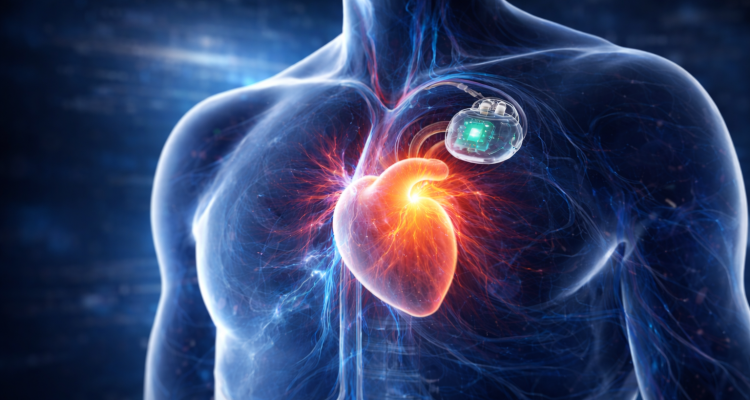
German medical technology startup Celtro is working on battery-free medical implants that harvest electrical energy directly from biological cells in the human body. In conventional pacemakers, the battery is a major component, which can make the device larger and may require replacement surgeries when the battery depletes. Celtro’s approach replaces chemical batteries with semiconductor technology capable of harvesting and managing energy at the nanowatt level, enabling smaller implants and potentially reducing surgical interventions.
To develop the specialized chip required for this technology, Celtro designed a digital IP core using several Cadence tools. The Spectre Simulation Platform was used for analog simulations of the chip, while the Xcelium Logic Simulator supported mixed-signal verification of the design. The Genus Synthesis Solution handled logic synthesis, and the Innovus Implementation System was used to generate the chip layout. Finally, the Tempus Timing Solution performed timing analysis and sign-off to ensure reliable operation of the ultra-low-power chip used in the implant.
Product News
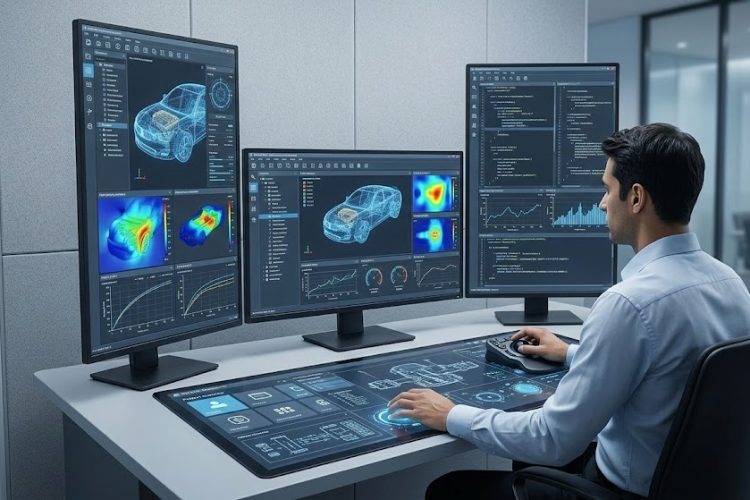
- Unified Synopsys–Ansys Joint Workflows
- Agentic AI Engineering Capabilities
- Advanced Digital Twin & Fusion Modeling

- GPU-Accelerated Thermal Simulation
- Embeddable White-Label SDK
- Built-in 1D Fluid Network Solver
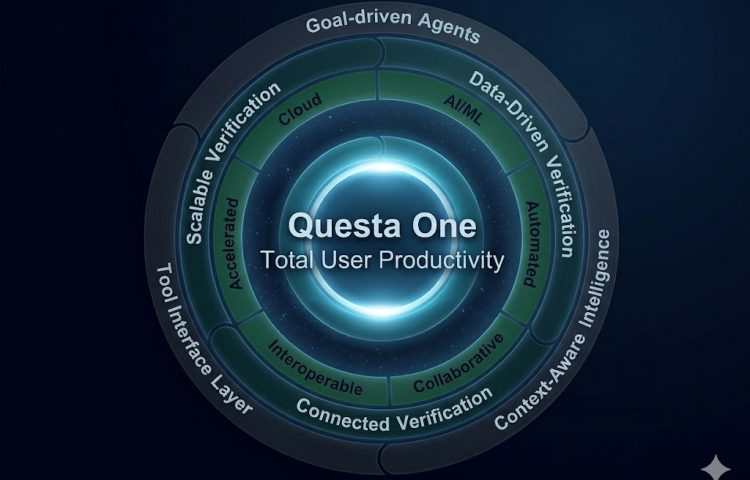
- Agentic AI for chip verification
- Specialized RTL and debug agents
- Framework-agnostic AI tool integration
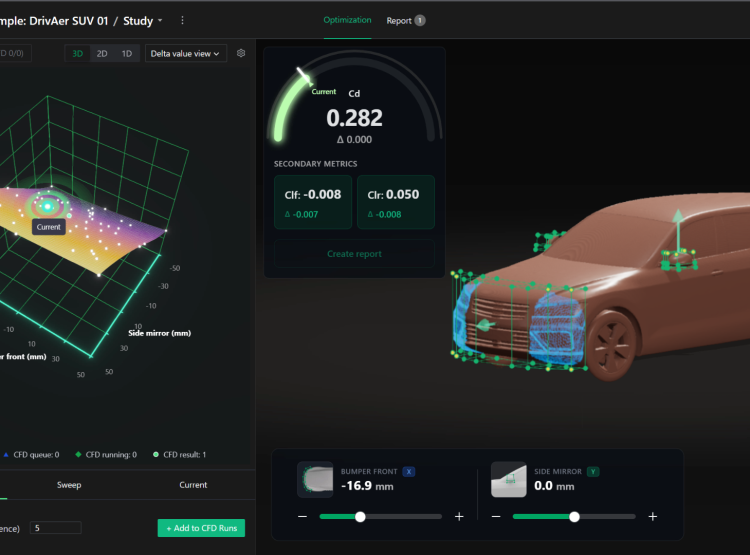
- Physics-Informed AI Platform
- Real-Time Aerodynamic Prediction
- Closed-Loop Workflow with High-Fidelity CFD

Predicting lithium-ion battery aging requires balancing simulation accuracy with computational efficiency. By combining physics-based modeling in GT-AutoLion with machine learning capabilities in GT-SUITE, virtual aging datasets can be generated to train metamodels that estimate battery health under varied operating conditions. This hybrid approach enables faster evaluation of both calendar and cycle aging while maintaining reliable prediction accuracy.

Automotive supplier Valeo has partnered with photovoltaic specialist Powen to implement a 7.8 MW solar installation for self-consumption at its Martos manufacturing facility in Spain. The initiative supports the plant’s transition toward cleaner energy use and reflects broader efforts within the automotive sector to strengthen manufacturing sustainability.
Click to read more..
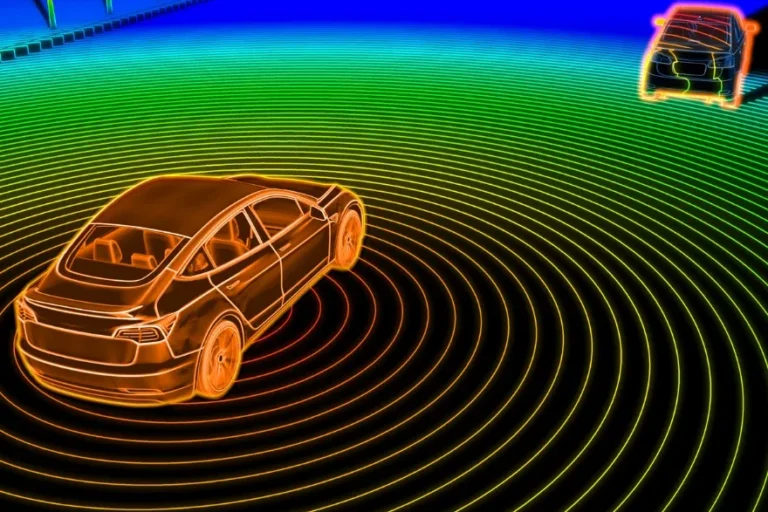
Keysight has outlined a multiphysics simulation workflow for designing LiDAR on a chip using its RSoft Photonic Device Tools suite. The approach breaks the photonic system into blocks—such as splitters, thermo-optic phase shifters, and emitting gratings; and models them using techniques including BPM and FDTD simulations to optimize beam steering, optical power, and insertion loss in integrated photonic LiDAR systems.
Click to read the original article..
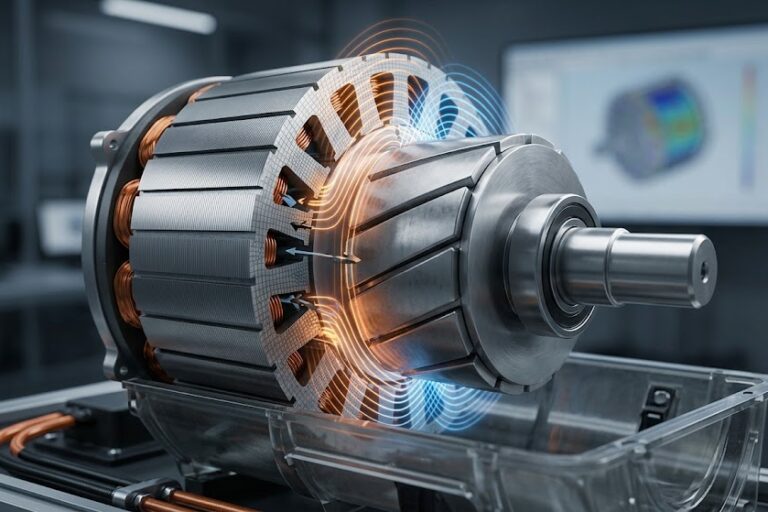
Effective NVH management in electric motors requires precise modeling of electromagnetic excitations, a key source of high-frequency noise. Using AVL EXCITE™ M, engineers can integrate stator tooth forces and electromagnetic torque data into multibody dynamic simulations to evaluate structural response, predict resonances, and analyze vibration transfer paths during early E-Motor development.
Click to read the original article..
Industry Events
This webinar examines how light-induced thermal effects influence metasurface behavior, enabling transitions from optical functionalities to thermochemical applications. It highlights multiphysics interactions, design considerations, and emerging use cases relevant to nanophotonics, optical engineering, and thermal management domains.
🗓️ March 26, 2026
🕣 20:30- 21:30 IST
This webinar will examine the role of exhaust gas recirculation (EGR) in industrial gas turbine performance using GPU-accelerated large eddy simulations (LES) with Fidelity CFD. It aims to analyze flame dynamics, emissions, and combustion stability in the Solar Turbines Taurus 60 SoLoNOx combustor, highlighting how high-fidelity modeling helps evaluate EGR limits and supports carbon-capture-ready turbine design.
🗓️ March 26, 2026
🕣 20:30 – 21:30 IST
This seminar explores methods for developing and testing perception-driven autonomous systems for airborne and maritime applications using model-based design and simulation tools.
Key topics include:
- LiDAR-based safe landing zone detection
- Plant modeling for UAVs and marine vehicles
- Guidance logic and control systems for UAVs
- Closed-loop simulation using MATLAB, Simulink, and Unreal
🗓️ March 26, 2026
🕥 22:30- 23:30 IST
Future.Industry 2026 is a global virtual event bringing together engineers, researchers, and industry professionals to discuss developments in artificial intelligence, simulation, data analytics, and high-performance computing. The program includes keynote presentations, panel discussions, and technical sessions focusing on how these technologies are applied across industries such as automotive, aerospace, manufacturing, and energy.
🗓️ March 31- April 1,2026
🕤 09:30- 13:30 IST
In FOCUS
Company in Focus

Who they are
Secondmind is a Cambridge-based deep-tech company providing a “Cognitive Layer” for automotive engineering. This means their software acts as an intelligent processing level that sits above raw simulation data, helping to analyze, reason, and identify the best design paths.
Led by CEO Gary Brotman, Secondmind champions a Human-Centric AI approach. Rather than attempting to automate the engineering process entirely, their technology is designed to augment the domain expert. By handling the heavy mathematical lifting and pattern recognition, the software allows engineers to focus on high-level strategy and safety-critical design decisions.
Solutions & Technology
Secondmind utilizes Active Learning—a sophisticated branch of AI that thrives on efficiency rather than sheer volume.
- Data-Efficient Modeling: Their platform can achieve high-precision results using up to 80% less data than traditional methods, which is vital when physical testing is expensive.
- Gaussian Process Models: These models provide “Uncertainty Quantification.” They don’t just give an answer; they show the engineer how much the model can be trusted in a specific design space.
- Cloud-Native Optimization: A seamless software environment that plugs into existing industry tools like MATLAB to automate complex Design of Experiments (DoE).
Applications:
- E-Powertrain Optimization: Solving the complex puzzle of balancing battery range, motor power, and thermal management.
- Virtual Calibration: Moving engine and transmission tuning from the physical test track into a high-fidelity virtual environment.
- Sustainability & Net-Zero: Helping partners like Mazda accelerate their electrification timelines by streamlining the R&D process and reducing physical prototyping waste.
Did you know?
Secondmind’s ‘Active Learning’ technology was specifically developed to solve the ‘Small Data’ problem? In automotive engineering, generating high-quality data through physical crash tests or long-range battery cycles is incredibly expensive. Secondmind’s AI is unique because it is designed to learn from these few, high-value data points rather than requiring the millions of entries that standard AI typically needs.”
Solution Focus
The primary focus is Design Space Exploration and Model-Based Calibration.
By using Physics-Informed Machine Learning, Secondmind ensures that every virtual suggestion is grounded in real-world physics. This prevents the “hallucinations” common in generic AI, giving engineers the confidence to explore creative new vehicle architectures knowing they are technically viable for production.
Technology Focus
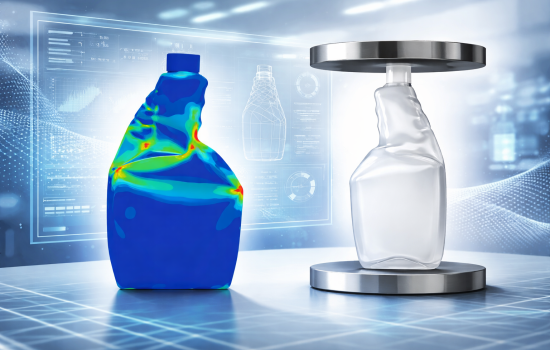
Consumer packaged goods (CPG) manufacturers are increasingly focused on lightweight packaging as a way to reduce material usage while maintaining product protection and performance. Designing lighter packaging often requires extensive simulation and testing to ensure structural integrity. Traditional engineering simulations can take significant time, which can slow down product development and limit the number of design alternatives engineers can evaluate.
The blog by Kinetic Vision discusses how artificial intelligence-driven simulation technologies are helping address these challenges. Kinetic Vision is a technology consulting firm that works across engineering, artificial intelligence, and advanced simulation to help organizations analyze product performance and improve design processes.
The blog highlights the role of Simcenter™ PhysicsAI™, an AI-based engineering tool by Siemens that learns from physics-based simulation data. By training machine learning models on results generated from traditional simulations, the tool can predict structural behavior of packaging designs much faster than running full simulations each time.
According to the blog, this approach can support packaging development by:
- Allowing engineers to quickly evaluate multiple design variations
- Helping identify opportunities to reduce material usage early in the design stage
- Enabling faster iteration before physical prototyping and testing
As discussed above, integrating tools such as Simcenter™ PhysicsAI™ into packaging development workflows provides another way for engineers to analyze design possibilities. This capability can support ongoing industry efforts to develop lighter packaging while considering sustainability in manufacturing processes.