



Your weekly sync on the pulse of the simulation industry
Industry News

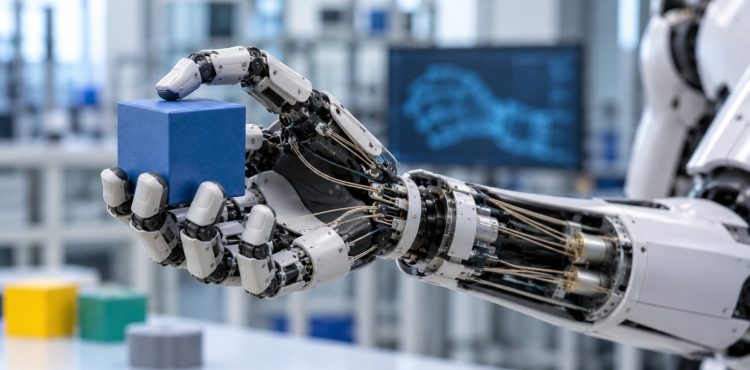
A humanoid robot creates value only when it can interact with the physical world, such as grasping objects, turning a valve, or operating a tool. These tasks depend on the robotic hand, a complex system.
The human hand inspires many designs. Many of the muscles moving the fingers sit in the forearm and act through tendons, and numerous humanoid hands place motors in the palm or forearm, transmitting force through cables, ropes, or Bowden mechanisms. Yet every choice affects another: a larger motor can add weight, heat, and battery demand, while smaller fingers may complicate tendon routing and cooling.
System simulation examines these interactions together. Using Siemens’ Simcenter Amesim, engineers can build a digital twin of the hand before any prototype exists, combining ropes, actuators, motors, controls, friction, and power needs in a shared model. Applications include validating finger motion and grasping, identifying where friction causes force losses, sizing motors from realistic operating scenarios, estimating battery state of charge, and evaluating thermal behaviour.
This shifts questions from component performance toward missions, such as whether a hand can handle varied object shapes, common grasps, or repeated valve operation through a shift. Such system-level evaluation aims to support earlier, informed design decisions as robotic hands work toward human-like manipulation.
Partnerships & Collaborations


Volvo Cars is expanding its partnership with NVIDIA to advance safe automated driving. Using NVIDIA’s Hyperion sensor and compute architecture, the technology aims to help future Volvo cars navigate highways, urban streets and parking, debuting in a next-generation model.
Click to read more..
Siemens and TD SYNNEX have agreed on a joint framework for a global distribution partnership. It aims to broaden access to solutions in industrial automation, software and AI, cybersecurity, intelligent infrastructure and electrification, supporting IT/OT convergence and physical AI adoption.
Click to read more..
Gexcon has signed an agreement with the Federal University of Rio de Janeiro to support Brazil’s first large-scale jet fire testing facility, funded by Petrobras. Gexcon aims to share its Norway-based experience through advice, support and training.
Click to read more..


Honda is evaluating Ansys GeomAI, an AI tool that generates variations of vehicle parts such as the A-pillar, in a proof-of-concept stage. It aims to simplify model preparation for airflow simulations, so engineers can focus on analysis and design optimisation.
Click to read more..

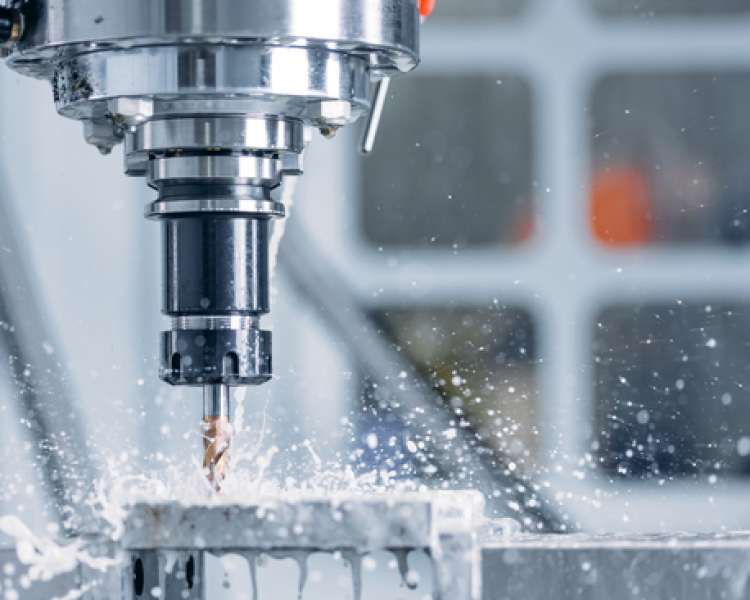
DELMIA has acquired SGPOST, a CNC post-processing technology that will be renamed DELMIA SGPOST and integrated across its core Machining roles. It aims to connect CAM programming, simulation and NC code generation, while extending availability to SOLIDWORKS Shop Floor Programmer users through resellers.
Click to read more..
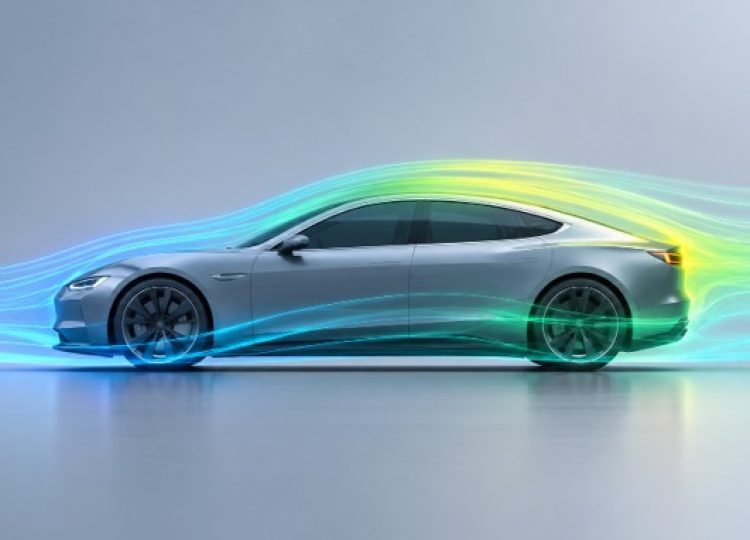
Luminary and a global automotive manufacturer have integrated a Physics AI virtual wind tunnel into Blender, aiming to give designers aerodynamic feedback faster. Unfamiliar designs are flagged, letting designers run a detailed simulation whose results help train the model.
Click to read more..

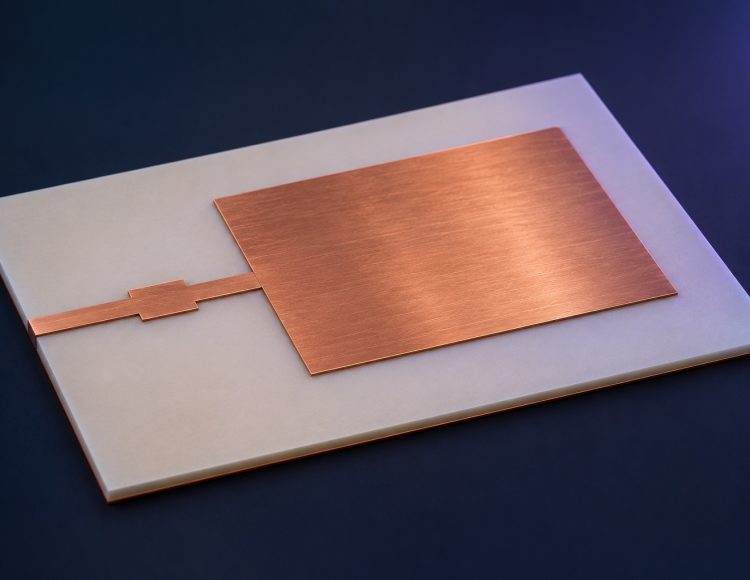
Quanscient outlines a workflow combining Latin hypercube sampling with a Gaussian-process surrogate model to develop a patch antenna. Targeted simulations refine predictions, a full-wave solver validates the result, and the model assesses manufacturing yield under fabrication variations.
Click to read more..
Industry Events
Coupling different physical domains remains a key multiphysics challenge. This NAFEMS webinar demonstrates how to build and run a benchmark case for vibroacoustics, the coupling of structural dynamics and acoustics, using a hollow sphere example, with principles applicable to a wide range of coupling problems.
🗓️ Nov 24, 2026
🕓 16:00 – 17:00 CST
Learn how Python can streamline electromagnetic simulation workflows in CST Studio Suite. This webinar explores Python–CST integration, automated parametric model creation, extraction of S-parameters for post-processing, and Python-driven automation of antenna and radome simulations to reduce repetitive tasks, improve efficiency, and minimize modeling errors.
🗓️ Nov 25, 2026
🕚 11:00 – 12:00 IST
AI tools and large language models are opening new possibilities for simulation workflows, from generating code to debugging models. This webinar demonstrates AI-assisted simulation and agentic workflows in COMSOL Multiphysics®, showing how AI agents can interact with the software to autonomously build and evaluate simulation models.
🗓️ Nov 26, 2026
🕚 11:00 – 12:00 GMT
Continuous validation is essential for developing electric vehicles and software-defined vehicles. This webinar introduces AVL Nexus HiL™ and its scalable approach to validating individual ECUs, domain-level applications, and complete vehicle systems, highlighting real-time simulation, fault insertion, automated testing, and CI/CD integration to improve test coverage and accelerate feedback.
🗓️ Nov 26, 2026
🕞 15:30 – 16:30 IST
In FOCUS
Company in Focus

Who they are
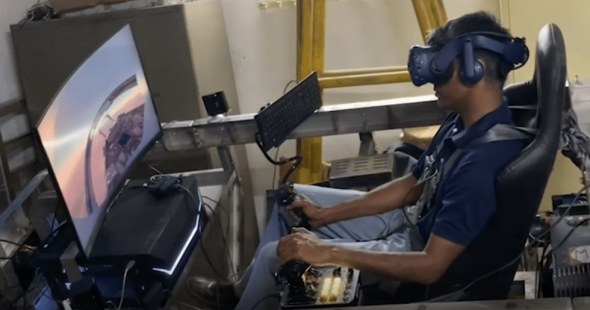
Axial Aero is a technology innovation company with a facility in Hyderabad, India. It works on aeronautical and aerospace products and services for commercial and military use, with interests ranging from propulsion systems and simulation technologies to hybrid electric aircraft solutions and advanced control systems. Its founders are two former IAF fighter pilots, an electronics engineer and a software engineer, with over 100 years of blended experience.
Solutions & Technology
Its current product is the 6 DOF-360° Flight Simulator, which removes the motion limits of Stewart platforms:
- Full Rotation: Turns 360° around the X, Y and Z axes.
- G-Force Feedback: Includes G-force feedback.
- Seat Movement: Actuators built into the seat provide movement along three axes.
- Software: Custom motion-cueing algorithms and motion-cancellation technology.
- Flight Models: Axial Aero rendered the 3D and flight model of India’s LCA (Tejas).
Applications:
- Combat Platforms: Fighter aircraft and attack helicopters.
- Other Aircraft: High-performance fixed-wing aircraft, helicopters and eVTOL.
- Drones: Remote piloting of advanced drones.
- Training: Spatial disorientation and UPRT training.
Did you know?
The Axial Aero logo is inspired by the paper plane and Origami, the Japanese art of turning plain paper into something magical.”
Solutions Focus
Axial Aero’s current work centres on its flight simulator, built for realistic pilot training. The made-in-India prototype is in advanced development and testing in Hyderabad, and has the potential to improve pilot safety, reduce costs and boost domestic manufacturing.
Technology Focus


As more renewable energy joins the grid, storing electricity until it is needed has become a central challenge. Long-duration energy storage aims to make the grid more resilient, support existing transmission and distribution infrastructure, and allow a greater share of low-cost, variable renewable energy.
PhD research by Muhammad Mubashar Ashraf at Virginia Tech explored this using Modelon Impact, a modeling and simulation platform. Through internships at the National Laboratory of the Rockies, he modeled a pumped thermal energy storage system from the lab’s PUMP project. It heats silica particles, stores them in thermal silos, and uses a fluidized bed heat exchanger. The system charges by turning cheap electricity into heat, then converts stored heat back to power when prices rise.
Key steps:
- Heat exchanger: Heated particles and air flow in opposite directions and touch directly, removing heat transfer surfaces, reportedly lowering cost and improving thermal performance.
- Validation: A CFD model was checked against results from the lab’s prototype test station.
- Parameters: Overall heat transfer coefficient, pressure drop, and minimum fluidization velocity were used to build a component model reproducing the experimental and CFD results.
- System: Components were combined with controls into a full model, then exported as an FMU for grid analysis.
The technical paper reports round-trip efficiency just over half, consistent with comparable systems in literature. The grid study across multiple U.S. regions found that economics depend strongly on price spreads, market volatility, and operating characteristics.
Overall, it shows how system-level simulation links component design to grid economics.
Click to read the original article..