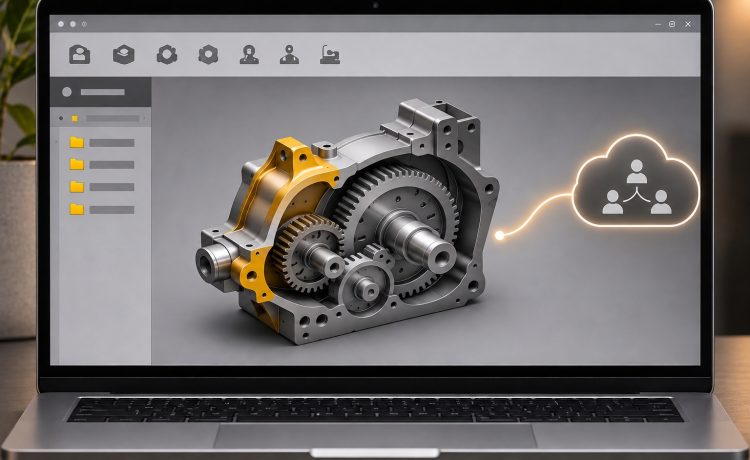
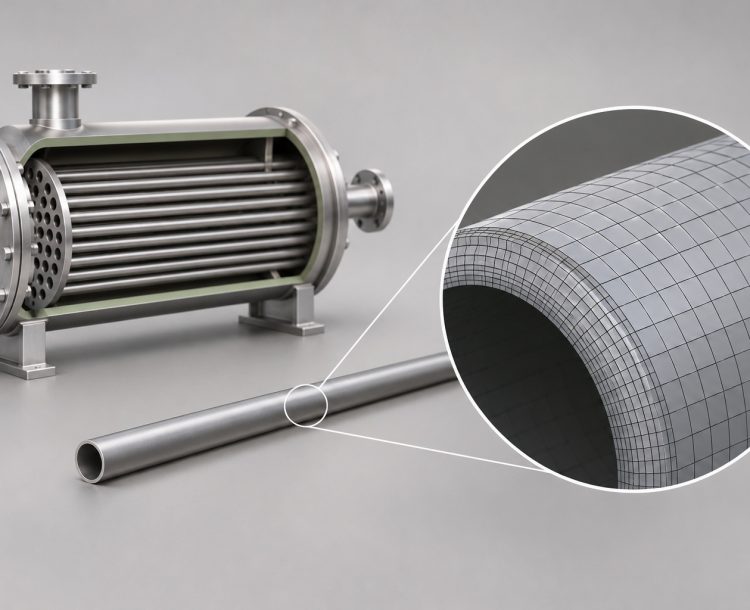
Cosmetic packaging is more than a container; it shapes consumer experience and safety. With tighter regulations, ingredient restrictions, and sustainable materials, brands must ensure packaging does not interact harmfully with formulations. The key concern is migration, where substances from packaging, additives, coatings, or inks move into a formulation. Checking this has relied on manual work across spreadsheets, supplier records, and laboratory tests, often taking days or weeks. Suppliers, packaging makers, and brands also lacked a shared language. Backed by Polymeris (plastics) and Cosmetic Valley (cosmetics) expertise, the CosmetoPack Consortium spent years validating methods for migration risk, toxicological thresholds, and compliance. It then partnered with Ansys, part of Synopsys, to create CertiSim. Simulation sits at the core of the platform. CertiSim aims to combine CAD-informed simulation, trusted materials data, and calculation engines to estimate a margin of safety for a specific product. Users upload CAD files or choose package shapes, then select materials from an embedded database. An offline AI assistant explains results and keeps data local. Reports support Product Information Files and Cosmetic Product Safety Reports. By predicting migration during design, teams aim to catch issues early, avoiding redesigns and delays, especially with new or recycled materials.
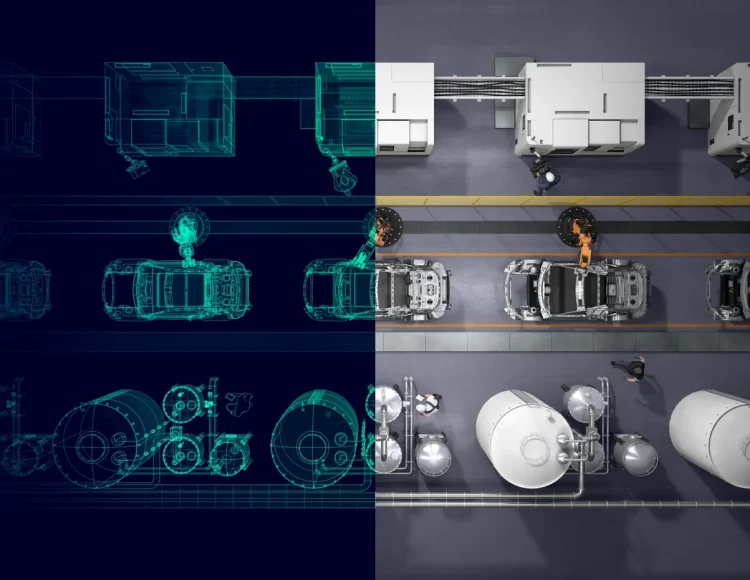
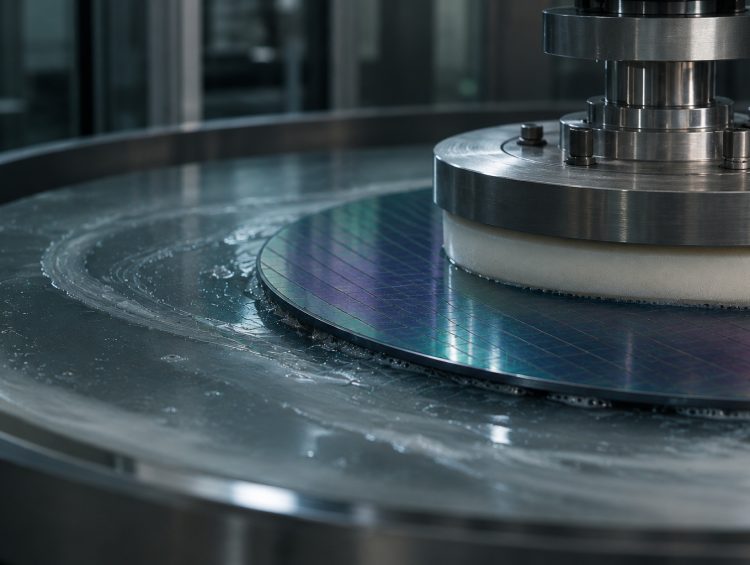
NVIDIA announced that semiconductor companies are adopting its CUDA-X libraries, including new cuPotential, which aims to help AI agents simulate atomic interactions. The tools support chip design, simulation, manufacturing, inspection and testing in AI-assisted chip factories. Click to read more..
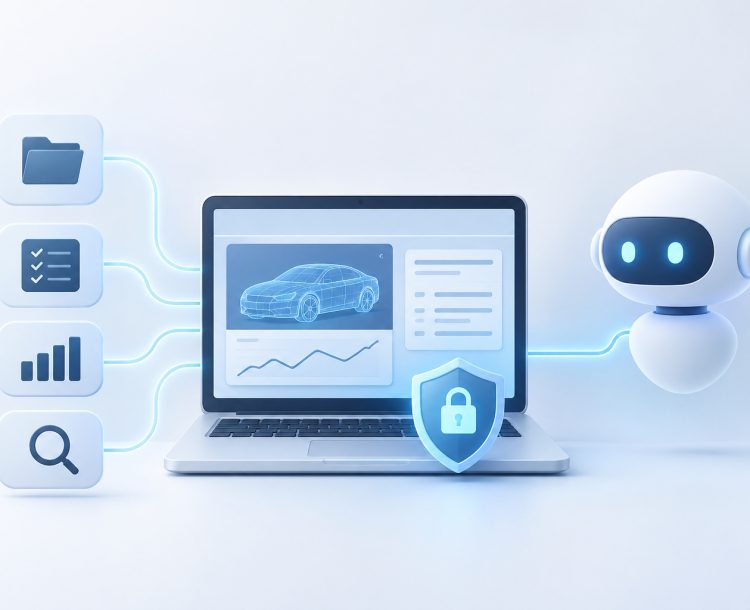
SCALE.sdm, a simulation data management platform, has announced an interface based on the Model Context Protocol. It aims to enable AI agents to securely access project data, requirements, simulation and test results in read-only mode, supporting automated analysis, reporting and semantic search. Click to read more..
As AI surrogate models increasingly support critical engineering decisions, knowing when to trust them is essential. This hands-on NAFEMS course teaches validation workflows, uncertainty quantification, and statistical testing to evaluate self-built or pretrained models, diagnose failure modes, and decide when retraining or a full solve is needed.
Efficient oil cooling is critical for high-performance electric motors. This webinar presents a multiscale modeling approach combining high-fidelity simulations, experiments, and reduced-order near-wall models for oil jet impingement, enabling accurate, low-cost CFD predictions, demonstrated on a near-industrial end-winding cooling configuration.
Designing metalenses requires precise control over nanoscale structures and their optical response. This virtual workshop demonstrates an automated, Python-based workflow using PyLumerical, covering RCWA unit-cell library generation, phase-to-radius mapping, and symmetry-accelerated FDTD simulations to evaluate full metalens focusing performance and explore inverse design strategies.
Explore how AI and machine learning integrate with multiphysics simulation. This COMSOL Day covers synthetic data generation, surrogate modeling, uncertainty quantification, and generative and agentic AI workflows, featuring keynotes from SGL Carbon, CEA-Leti, and the University of Warwick, followed by an expert panel discussion.
AIOTEL is a Bengaluru-based deep-tech startup founded in 2021 by Priyank Sharma. The company works across Digital Twins, IoT, GenAI, 3D, and XR, aiming to help industries and economies transform how they function by turning connected data into actionable, immersive insights.
Solutions & Technology
AIOTEL’s digital twin platform, TWINVRSE, integrates IoT, advanced analytics, visualization and XR, supported by an extended product line:
TWINPAD: 3D visualization with 4D time-based contextualization, condition-based alarms and AR/VR integration.
STATSPHERE: ML-driven predictive analytics and anomaly detection with interactive dashboards.
IoT Platform: Device provisioning, management and over-the-air updates with a rule engine.
SIGHTSPHERE: Configurable computer vision pipelines that convert video into real-time event intelligence.
Applications:
Predictive Maintenance & Monitoring: Reducing unplanned downtime by tracking parameters like RPM, torque and belt tension.
Urban Mobility & Planning: GIS, point cloud and 4D timeline visualization for infrastructure planning.
Remote Operations & Training: XR-based guidance for maintenance and workforce training.
Operational Safety: Real-time hazard monitoring in mining, covering gas levels, vibration and airflow.
Solutions Focus: AIOTEL’s focus is to bring IoT data, AI-driven analytics and immersive 4D and XR visualization together in a single digital twin environment, helping teams detect issues earlier, plan projects better and reduce unplanned interruptions.
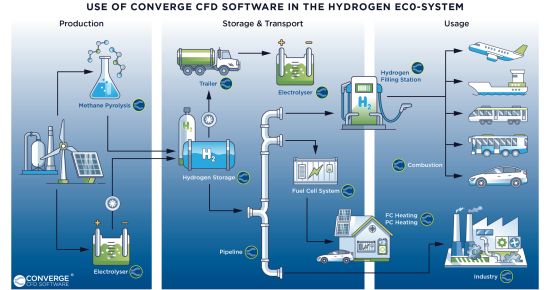
Hydrogen is a promising fuel with high energy content per kilogram, but it is hard to store and move. It leaks easily, can embrittle metals, and ignites with very little energy. Since physical testing is slow, costly, and sometimes hazardous, Convergent Science describes how its software, CONVERGE, aims to enable virtual design testing.
Production and storage
Most hydrogen still comes from natural gas reforming; pyrolysis and electrolysis are scaling up. For pyrolysis, the software aims to predict methane-to-hydrogen conversion.
Compressed tanks must manage temperature rise while filling; the company reports its predictions matched experiments.
Liquid hydrogen tanks exchange heat and mass between liquid and vapor; modeling aims to capture this and predict boil-off.
Transport
Hydrogen’s lower energy by volume means pipelines need higher velocities or pressures; simulation aims to evaluate pressure drop, temperature changes, and leaks in blended gas.
In trailers, sloshing can accelerate boil-off; in pumps, liquid-vapor shifts can cause cavitation. Simulation aims to guide tank design and flag pump risks early.
Safety
Hydrogen ignites across a far wider concentration range than methane. Simulation aims to show how leaks disperse, informing sensor and ventilation planning. It also covers self-ignition, bonfire tests, flame arrestors, and deflagration-to-detonation transition.
End use
CONVERGE is used for hydrogen engine strategies, including direct injection and dual-fuel, and for fuel cell performance. Hydrogen is also entering heating and industrial uses.
From production to end use, every stage of hydrogen’s journey presents distinct challenges. Simulation aims to help engineers understand these risks early, supporting the safe and practical growth of the hydrogen ecosystem.