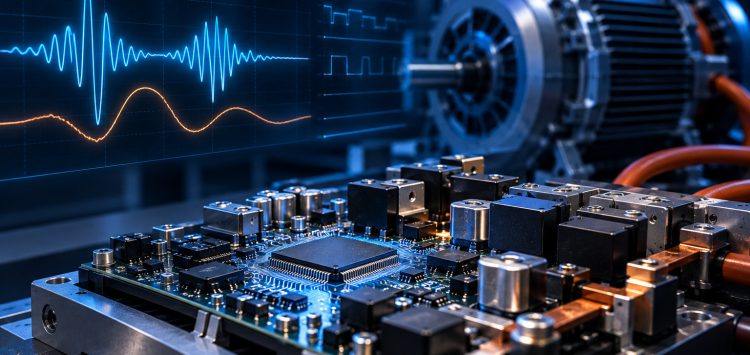
weeteq, a Glasgow-based semiconductor startup, is examining how power and control systems are sized. COO Martin MacDonald explains that systems have traditionally been designed for the worst microsecond rather than the average second.
Its Ultra Edge® technology aims to address this by using machine learning on existing microcontrollers to predict transient behavior and respond in real time, in under a millisecond. Intended applications include motor drives, industrial automation, automotive systems, and AI data centers.
weeteq needed to validate ideas before committing to costly hardware development. Using MATLAB and Simulink, the team models applications such as motors and inverters and tests Ultra Edge in simulation, where engineers can experiment safely. Simscape Electrical, Statistics and Machine Learning Toolbox, and Global Optimization Toolbox support electrical modeling, control tuning, and result analysis. Proven designs can generate code for target processors or integrate with customer workflows.
Before custom silicon, the team used an FPGA environment, with MathWorks tools and partner environments exchanging data to validate behavior. In-kind support came from MathWorks and Silicon Catalyst.
weeteq was founded on a simple question: what if engineers no longer had to design around the worst microsecond? Having demonstrated the technology on a data center prototype, the company is now focused on bringing it to market.
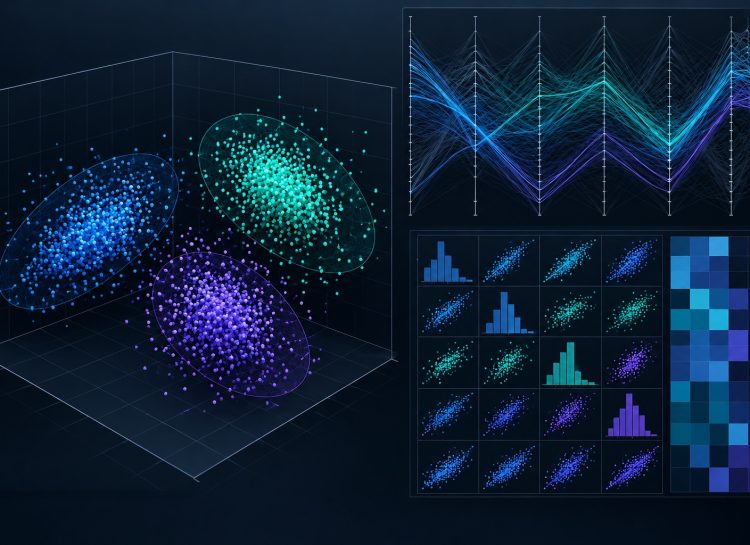
Rescale introduces design of experiments approaches using Rescale Edison and Workflows. Edison aims to generate experiment matrices from parameters, ranges and goals. Engineers can run simulations independently or use a centralized template for monitoring, with results ready for AI Physics. Click to read more..
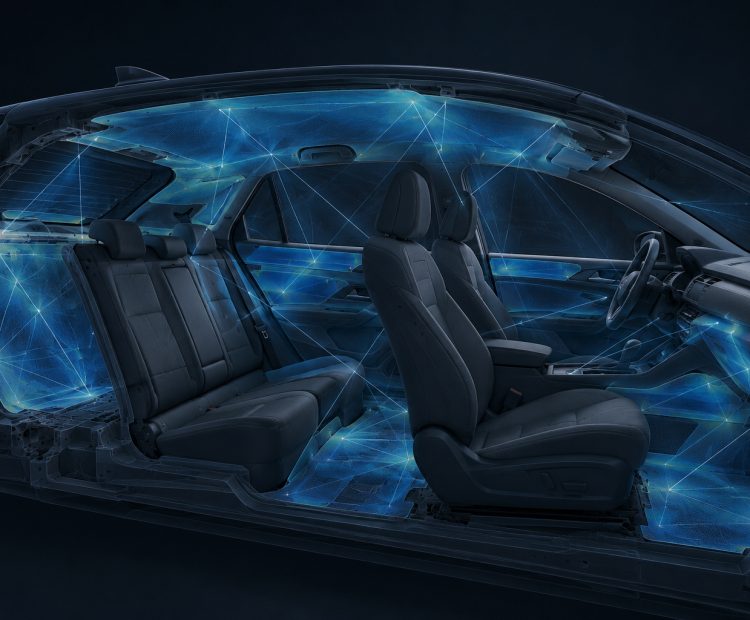
Cadence outlines how its Actran radiosity solver predicts high-frequency noise by modelling acoustic energy exchanged between surfaces. It suits vehicle cabins, large enclosures, industrial facilities and environmental noise prediction, and complements finite and boundary element methods at lower frequencies. Click to read more..
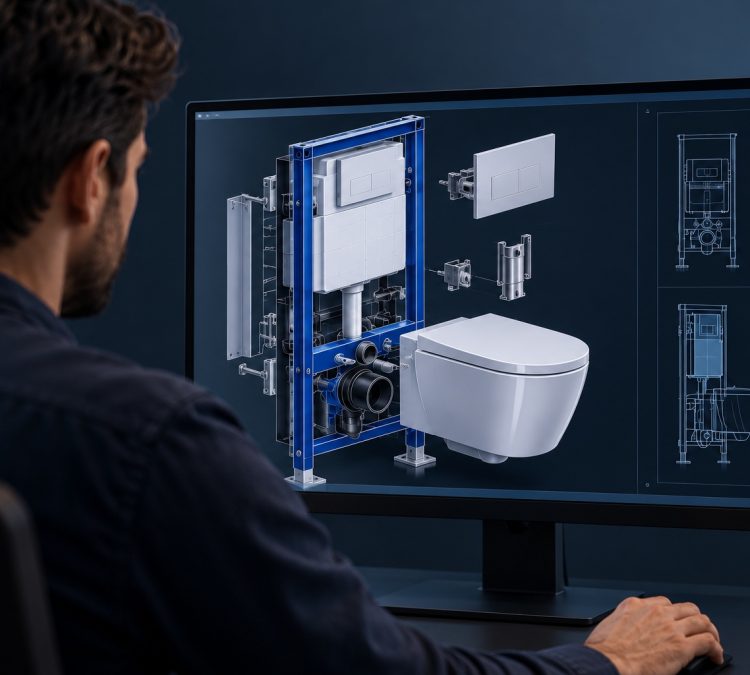
Sanitary products manufacturer Geberit uses Dassault Systèmes’ platform so ceramic engineering teams across Europe share common CAD methods and data. It aims to keep design data consistent while giving engineers flexibility. The shared digital model also connects mechanical, electronics and simulation teams, supporting products that now include smart features such as heated seats and automatic lid opening. Click to read more..
Moving chip and package design data from ECAD to MCAD often involves hours of manual geometry cleanup. This webinar presents a streamlined workflow to make chip, package, and PCB geometry simulation-ready for electromagnetic analysis in CST and structural/thermal analysis in Abaqus, reducing manual rework and errors.
Validating that a complex system will perform as intended before deployment is a key challenge in aerospace and defense. This webinar demonstrates an end-to-end digital engineering workflow, using an aircraft collision avoidance system example, connecting requirements, SysML v2 modeling in Ansys SAM, simulation in STK, and SCADE Display visualization for operational validation.
🗓️ November 4-5, 2026
🕚 Session 1: November 4, 11:00 EDT 🕗 Session 2: November 5, 8:00 EDT
Discover how SCALE.sdm enables efficient and transparent management of simulation and test data. This webinar introduces the basic principles of attributes and parameters, and shows how to use them to set up individual load cases, control specific behavior, and build flexible input models.
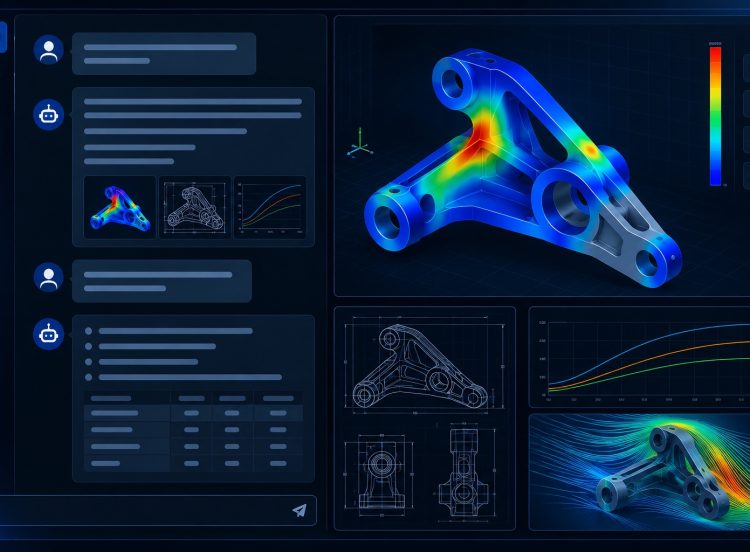
Explore how AI-driven agentic workflows can automate simulation setup, guide engineering tasks, and scale expert methods across teams. This webinar shows how SimScale combines Engineering AI with Physics AI, with a Convion case study evaluating multiple design variants to shorten design optimization.
Twyn is an Indian DeepTech enterprise SaaS startup, headquartered in Dubai with a Center of Excellence in the National Capital Region of Delhi. The company uses Artificial Intelligence and spatial computing to build XR-based, AI-powered digital twins for smart facilities, aiming to create an Industrial Metaverse powered by live and immersive digital twins.
DIY Digital Twins: Plug-and-play libraries for creating digital twins, plus IIoT-enabled edge hardware that integrates with modern and legacy systems; compatible with major 3D file formats.
Data Acquisition & Visualization: Real-time data collection from sensors, PLCs, SCADA, ERP and MES.
Condition-Based Monitoring: Edge computing for real-time asset health and OEE monitoring.
Predictive Maintenance: AI-powered early fault detection using functional patterns and simulated scenarios.
Smart Energy Monitoring: Real-time energy consumption insights using AI-powered analytics.
Applications:
Twyn’s solutions are designed for smart facilities and smart manufacturing, supporting shopfloor asset monitoring, bottleneck identification, maintenance optimisation, and energy management, with support for net-zero goals.
Solutions Focus: Twyn focuses on immersive digital twins that provide real-time monitoring and predictive simulation capabilities, aiming to help facilities balance corrective and preventative maintenance and reduce costs through optimised maintenance cycles.
AI data centers consume large amounts of electricity, and gas turbines are being considered because they offer dispatchable power that can support continuous operation, unlike intermittent renewables. A Siemens blog explains how system simulation with Simcenter Amesim aims to support the design of such power setups.
AI workloads such as GPU training, inference bursts and agentic loops create sudden, unpredictable power swings. Frequent starts and stops add thermal wear to turbines. Cooling demand follows the load, and rapid changes can cause thermal mismatches in waste-heat recovery systems, risking heat exchanger shock.
The blog uses a Siemens Energy gas turbine as a reference, noting the approach can adapt to other turbines and manufacturers. The workflow includes:
Presizing: a built-in tool defines the design point, checks off-design behavior and generates the model.
Dynamic modeling: adds shafts, drivetrain, generator, fuel controls, start-up sequencing and a stochastic data center load, with the AI assistant helping tune parameters.
Layered control: turbine dynamics, individual turbine controllers and plant-level supervisory control, with a droop governor and cascade PID fuel controller to avoid chasing every fluctuation.
Results come from a virtual transient simulation of start-up and rated-load operation, not a physical data center test, and possible extensions include grid interaction, battery storage, renewable coordination, alternative fuels such as hydrogen, and cost and emissions assessment.
Powering AI data centers is an ecosystem challenge, and simulation aims to support informed decisions across turbines, storage, controls and cooling.