


Your weekly sync on the pulse of the simulation industry
Industry News

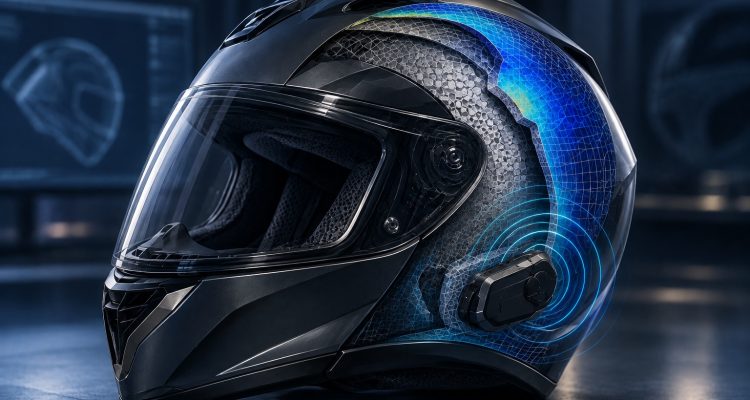
In elite motorcycle racing, a helmet does more than protect a rider; it also influences airflow, stability and fatigue. KIDO Sports, a Seoul-based company, designs and manufactures ScorpionEXO helmets for professional riders, commuters and touring enthusiasts across full-face, off-road and adventure categories.
Its challenge was that development relied on 2D design and extensive physical testing, which demanded considerable engineering effort and cost. When European safety standards became stricter, the whole range needed redesign and re-certification within a tight timeline. Adding electronics, such as antennas in its EXO-COM communication system, also raised interference concerns.
To address this, KIDO Sports, working with partner ISPARK, adopted Dassault Systèmes solutions. Engineers use CATIA for 3D parametric modeling of the shell, foam liner, ventilation and fit, including Asian-specific head shapes, so changes update across related components. SIMULIA draws on that same design data for impact and electromagnetic simulation. A proof of concept showed simulation results closely matched physical test data, and antenna placement and interference can now be examined before prototypes are built.
KIDO Sports aims to extend simulation across its lineup, lower development costs and eventually combine it with industrial AI, a promising step toward connected, safety-focused riding.
Click to read the original article..
Partnerships & Collaborations


OpenAI and Synopsys signed a multi-year agreement to jointly develop GPT-Synopsys, a specialized AI model designed to operate Synopsys’ electronic design automation tools, aiming to support chip design, verification and power, performance and area optimization, with engineers reviewing results.
Click to read more..
Siemens Digital Industries Software has partnered with Redington to distribute its Xcelerator portfolio across selected African markets. The collaboration aims to give industries local access to design, simulation, Digital Twin and industrial AI tools to support digital transformation.
Click to read more..
SCALE has partnered with Wissen Baum LLP, a simulation and engineering services specialist, to bring its simulation data management solution, SCALE.sdm, to India. The partnership aims to help Indian engineering organizations manage simulation data efficiently, transparently and at scale.
Click to read more..

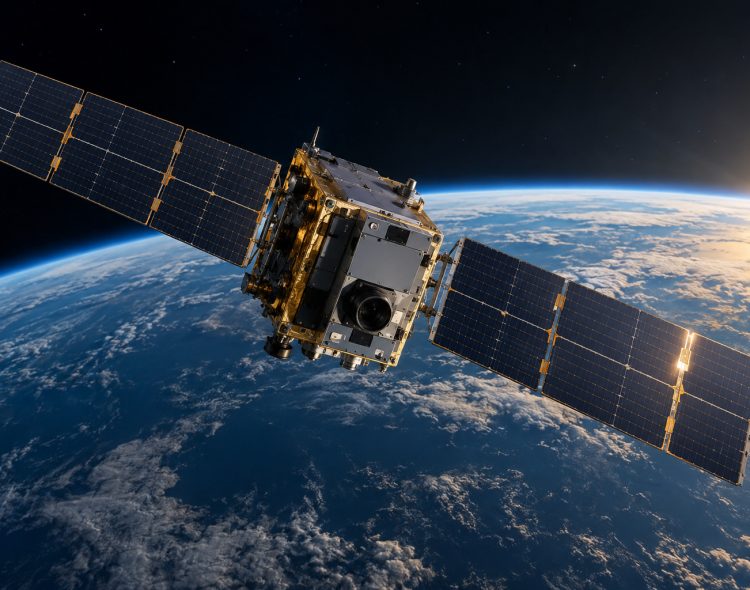
CUS-GNC’s SpacePilot is reusable onboard software that aims to let satellites make decisions without waiting for ground contact. It combines guidance, navigation, and control with AI-based reasoning, and already operates on multiple satellites. MATLAB and Simulink support its development and testing.
Click to read more..

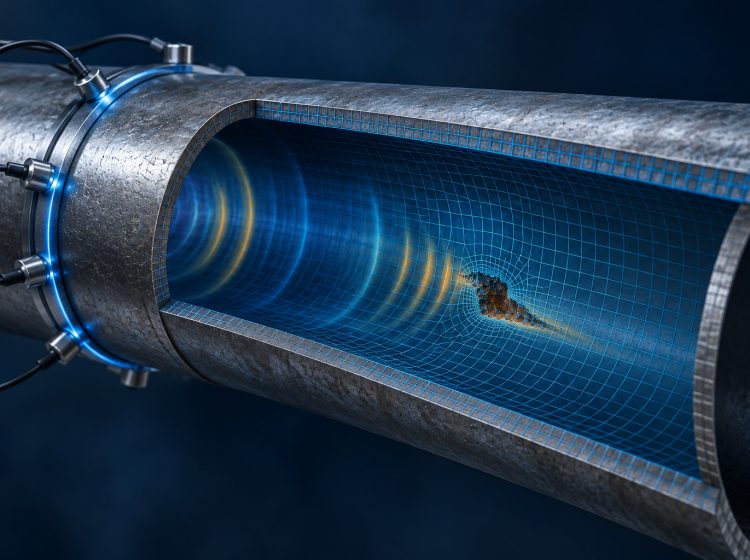
Researchers at Central Michigan University use Coreform Cubit to automatically mesh pipeline models with varied internal defects. Paired with SPECFEM3D ultrasonic simulations, the workflow aims to generate sensor data for training AI to detect and locate defects in steel pipelines.
Click to read more..


PhysicsX has established a Singapore hub to expand its AI-powered engineering capabilities across Asia-Pacific. A partnership with A*STAR aims to develop AI-driven simulations for complex engineering and manufacturing challenges, spanning maritime, semiconductor manufacturing, advanced manufacturing and biotechnology sectors.
Click to read more..


PepsiCo is working with Siemens and NVIDIA to use AI and digital twins to test factory and warehouse layouts virtually before making physical changes. The approach aims to identify potential issues early, beginning with US facilities before expanding globally.
Click to read more..
Industry Events
This webinar explores WASP-NET (Waveguide and Antenna Synthesis Program for NETworks) and its hybrid electromagnetic approach for designing passive microwave and millimeter-wave components, antennas, arrays, and feed networks. It highlights multi-solver technology, customizable 3D building blocks, and advanced optimization methods to help engineers meet demanding specifications while reducing development time.
🗓️ October 27, 2026
🕑 14:00 – 16:00 IST
This webinar introduces equation-based modeling in COMSOL Multiphysics®, showing how users can set up and solve their own partial differential equations, alone or alongside built-in physics interfaces. It covers formulating equations, with the convection-diffusion equation as an example, and includes a live demo and Q&A.
🗓️ October 27, 2026
🕑 14:00 – 14:45 CET
This webinar shows how small and medium-sized businesses (SMBs) in production and manufacturing can use Siemens Simcenter Amesim system simulation to cut R&D costs and reduce physical prototype iterations. It covers the cost and time challenges of prototyping, along with use cases, success stories, a live engineering demo, and a Q&A session with LTS experts.
🗓️ October 28, 2026
🕑 14:00 – 15:00 ET
This training course explores electric motor cooling simulations using CONVERGE, covering air-cooled motor modeling, geometry setup, numerical methods, and flow and temperature analysis. It also examines oil-cooled and external water-jacket configurations, rotational motion modeling, and coupling thermal simulations with electromagnetic software.
🗓️ October 29, 2026
🕑 14:00 – 18:00 IST
In FOCUS
Company in Focus

Who they are
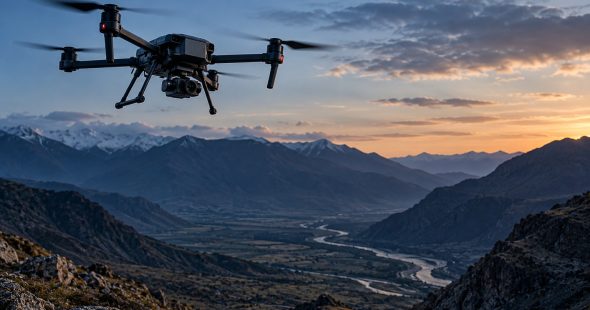
PhoQtek Labs is a Hyderabad, Telangana-based company established in 2025 by Gautham Nekkanti. It develops indigenous, Made-in-India GPS-denied navigation technologies for defense platforms, aerospace systems and autonomous vehicles operating in GNSS-denied and electronically contested environments, including UAVs, UGVs and aircraft.
Solutions & Technology
Its technologies are under staged development:
- Visual Navigation System: Onboard visual sensing and edge processing extract navigation-relevant information where GNSS is unavailable, degraded or jammed.
- Fiber-Optic Gyroscope: Measures rotation through light guided in optical fiber.
- Embedded Electronics: Integrated electronics within its navigation portfolio.
- G-NAV: A navigation software stack serving as the fusion layer between sensors and platform avionics.
Applications:
- Defense: Navigation resilience in GNSS-denied and electronically contested environments.
- Aerospace: Visual and inertial navigation for autonomous flight and redundancy studies.
- Space: Sensing and inertial technologies for platforms beyond GNSS coverage.
- Robotics: Navigation indoors and in GNSS-limited facilities.
- Autonomous Vehicles: Urban canyons, tunnels and obstructed environments.
- Industrial & Underground: Tunnels, mines, pipe-jacking guidance and inspection corridors.
Did you know?
PhoQtek took GarudaNAV to Pokhran Field Firing Range for Indian Air Force Dronathon 2026, where the flight ran with GNSS denied and navigation stayed on GarudaNAV.”
Solutions Focus:
PhoQtek focuses on resilient navigation where satellite signals cannot be trusted, offering R&D partnerships, prototype demonstrators, platform-specific validation programs and system-integration opportunities to defense users, aerospace teams, UAV/UGV developers and robotics companies.
Technology Focus

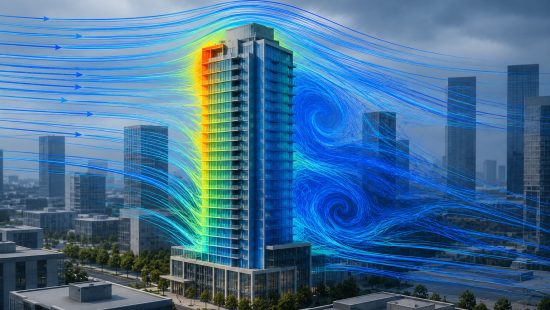
Wind load analysis is the process of studying how wind affects a building and the forces it creates on its structure and outer surfaces. It helps architects and structural engineers assess safety and set design requirements.
Wind pressure varies with speed, height, shape, surroundings, and terrain. Wind pushes on the windward face, while suction can act on the sides, rear, and roof. Corners, roof edges, and balconies can see strong local pressure or suction, depending on shape and wind direction. Tall, slender buildings can sway from vortex shedding, where swirling wind peels off the sides rhythmically. If that rhythm nears the building’s natural frequency, movement can amplify, affecting comfort.
Engineers calculate wind loads using codes such as ASCE and Eurocode. They consider the building’s risk category, site wind speed, terrain, and height, convert this into pressure, then apply coefficients. Internal pressure is checked too. The results guide the main frame, while windows, panels, and fasteners are assessed separately because they face higher local peaks. Codes vary by edition and country, so engineers confirm which version applies.
Code tables are based on a limited set of building shapes. Tapered towers, slender designs, or buildings with close neighbours may need wind tunnel testing, where a model is tested in controlled airflow.
SimScale’s blog explains that Computational Fluid Dynamics (CFD), a computer-based virtual wind tunnel, cannot be used alone for code approval but aims to help compare options early. Its examples show:
- Rounded corners weakened vortex shedding on a tall tower.
- Stepping back a supertall’s upper levels cut wind force far more than tapering.
- Closely packed tanks faced higher force than one alone.
Wind is invisible, yet it shapes how buildings are designed. By studying aerodynamics early, while corners, massing, and form can still change, engineers and architects can create structures that stand firm, feel comfortable, and respond calmly to every gust.