

Your weekly sync on the pulse of the simulation industry
Industry News

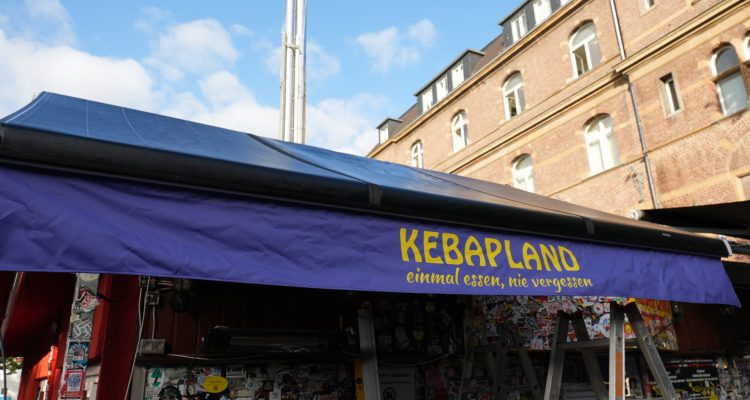
What was once just a shield from the sun may now also help power the space beneath it. A German startup is bringing electricity generation to a familiar feature of outdoor hospitality: the terrace awning.
SolarMarkise UG, based in Essen, has developed a folding-arm awning with photovoltaic cells integrated directly into the fabric. The company says it spent two years refining the material so that it stays firmly tensioned when extended and can still be rolled up like conventional awning cloth.
When open, the fabric converts sunlight into direct current. An inverter then changes it into alternating current, which is fed into a building’s electrical system through a standard wall socket. Surplus energy can be held temporarily in a battery for later use.
The technology is already in use in Cologne. According to the company, a grill restaurant in the Ehrenfeld district has installed the awnings, as covered by the newspaper Express. The company states that together they reach a peak output of around 1800 watts, enough to cover a significant portion of the restaurant’s electricity needs.
Co-founder Ivan Pavlovic describes the concept as a combination of solar energy and shading. For businesses with sunny outdoor areas, the approach points to a way of using existing structures to supply part of their own power.
Partnerships & Collaborations


CoreWeave announced NVIDIA Vera Rubin availability on its cloud, with Cognition as the first customer running production workloads. It will offer NVIDIA Vera CPU for AI agents and launched CoreWeave Forge, which aims to connect model training, evaluation and improvement.
NASA is integrating AVL’s Ripple Generator and Impedance Spectroscopy System to its power testbeds. By measuring how electrical systems respond across a wide frequency range, the tools aim to detect resonance risks early, improve digital models, and reduce hardware testing, supporting stable aerospace power systems.

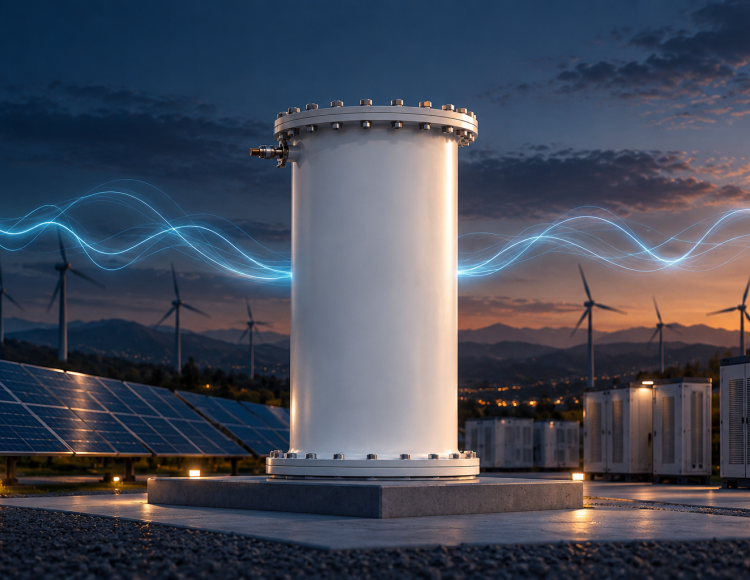
Finland-based Teraloop is developing flywheel storage to capture excess renewable energy as kinetic energy. Its hubless carbon-fiber rotor uses magnetic levitation in a vacuum, while Ansys simulation supports electromagnetic, structural, thermal and fluid analysis during system development.
Click to read more..


Autodesk has named Diana Colella executive vice president of its architecture, engineering and construction business, succeeding retiring leader Amy Bunszel. Colella will advance the Forma industry cloud and AI strategy, while continuing to oversee the Media and Entertainment business.
Click to read more..
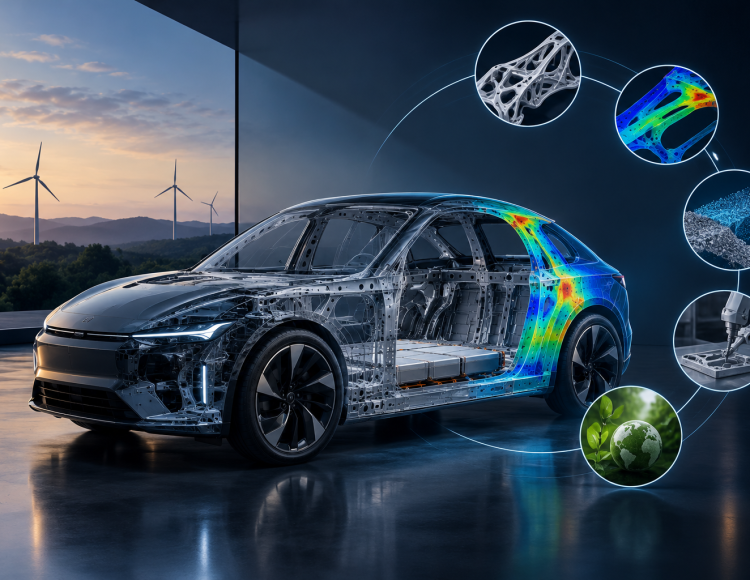
Dassault Systèmes highlights how CATIA, SIMULIA and the 3DEXPERIENCE platform can support sustainable electric vehicle development by combining modeling, simulation and eco-design. The approach aims to evaluate materials, production methods, crash safety and lifecycle carbon impact during early-stage design.
Click to read more..
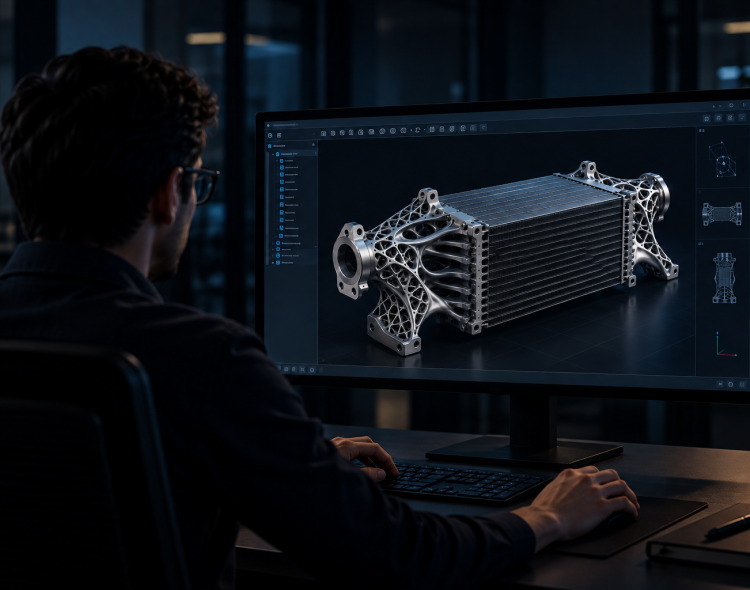
CELLSIUS, an ETH Zürich student team, used ToffeeX generative design to optimize coolant manifolds for its hydrogen-electric aircraft’s fuel cell heat exchanger. The metal-printed design aims to reduce weight, improve coolant distribution and lower pressure loss, reducing required pump power.
Click to read more..
Industry Events
As embedded software grows more complex, teams need faster ways to ensure quality, safety, and compliance. This seminar demonstrates how AI-assisted workflows with Polyspace help detect defects early, covering Polyspace as You Code, unit testing and code coverage with Polyspace Test, collaborative reviews, and CI/CD integration for continuous verification.
🗓️ October 9, 2026
🕙 10:00 – 15:00 IST
📍 MathWorks Office Pune – The Pavillion, Level 5
AI is opening new possibilities for simulation automation and engineering productivity. This webinar offers a practical look at how agentic tools can simplify modeling workflows and automate certain tasks in COMSOL Multiphysics®, with a live software demo and a Q&A session.
🗓️ October 13, 2026
🕑 14:30 – 14:45 CEST
Alternative fuels, vessel electrification, and evolving IMO regulations are creating more propulsion choices and greater uncertainty for maritime engineers. This AVL SIMpulse event shows how system-level simulation and virtual twins help evaluate propulsion and energy system concepts, marine engine development, and ship-level dynamics through real-world examples, enabling confident decisions before physical prototypes exist.
🗓️ October 15, 2026
🕜 13:30 – 15:30 IST
Robotics teams are using simulation earlier and more often to shorten design cycles. This SimScale webinar, in collaboration with Bumatic, covers cloud-native validation of structural durability and thermal performance, agent-to-agent simulation orchestration, and a demo of cloud simulation, Engineering AI, and Physics AI running end to end, from CAD upload to design prediction.
🎥 Available On Demand
In FOCUS
Company in Focus

Who they are
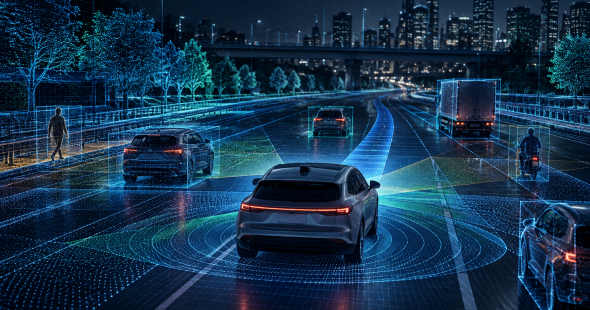
SimDaaS Autonomy is an AI-driven simulation company based at the Sidbi Innovation and Incubation Centre, IIT Kanpur, India. Its mission is to accelerate the development and deployment of autonomous systems.
Solutions & Technology
- Products: SaaS Platform, Scenario Factory, Scenario Library and Sensor Data Repository, covering scenario generation, model testing and sensor data.
- Services: Autonomous system design (sensor selection, packaging and placement), deep learning model training and testing, automation R&D, and automated data annotation.
- Technology: Mostly learning-based with physics-based methods, across Scenario Simulation, LiDAR and camera Data Simulation, and pctFusion Perception Engine.
Applications:
- Automotive: ADAS for two- and four-wheelers, autonomous vehicles.
- Agriculture: Farm machinery automation, precision agricultural simulation.
- Defence: Autonomous guided vehicles, sensor simulation and fusion.
- Drones: Autonomous navigation and obstacle avoidance.
Did you know?
SimDaaS‘s Video2Scenario tool can transform real-world edge cases captured on dashcams into simulated scenarios.”
Solutions focus
SimDaaS focuses on creating realistic traffic scenarios for training and testing autonomous vehicles and ADAS, including scenarios for Indian conditions. Its Traffic Manager governs vehicle behaviour through dynamic rule adaptation, collision avoidance and an advanced lane-change module, while users control OpenDRIVE road networks, left- or right-hand drive, traffic density, driver behaviour, weather and time of day. Its variation engine turns a base scenario, such as a cut-in manoeuvre, into many variants by changing vehicle models, environment and time. SimDaaS aims to empower autonomy through simulation, using synthetic data at scale.
Technology Focus

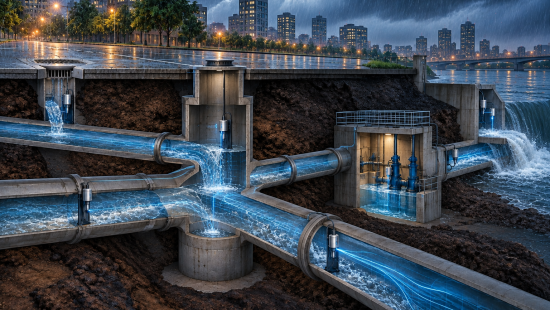
Sewer networks are complex urban infrastructure, traditionally managed through periodic inspections, manual calculations and reactive maintenance, with limited visibility into what is happening inside the network. As cities expand, rainfall patterns intensify and regulatory scrutiny of combined sewer overflows (CSOs) increases, this gap is becoming more important.
Real-time sewer monitoring uses sensors at strategic locations, including junctions, pump stations and areas with higher overflow risk, to continuously measure factors such as flow, depth, water level, rainfall and water quality. The data is transmitted automatically to a central system.
As outlined by Fluidit, sensor data shows conditions at specific measurement points, while a physics-based hydraulic model can use this information to understand how water is moving across the wider network. Models based on the SWMM standard can also combine live network data with rainfall forecasts to project how the system may behave.
This supports:
- CSO monitoring and prediction, including estimating potential discharge volume and duration
- Testing pump and control changes virtually before implementation
- Early identification of anomalies that may indicate blockages, failures or illegal discharges
- Automated CSO detection, quantification and reporting
A sewer digital twin takes this approach further by continuously connecting the physical network with its digital model. Fluidit Storm is designed to support this transition by connecting hydraulic models with real-time data, allowing the model to reflect changing network conditions and support predictive simulations, CSO monitoring and operational decision-making. This creates a more current view of the sewer network, helping utilities understand not only where problems are occurring, but also how the network may respond to changing conditions.