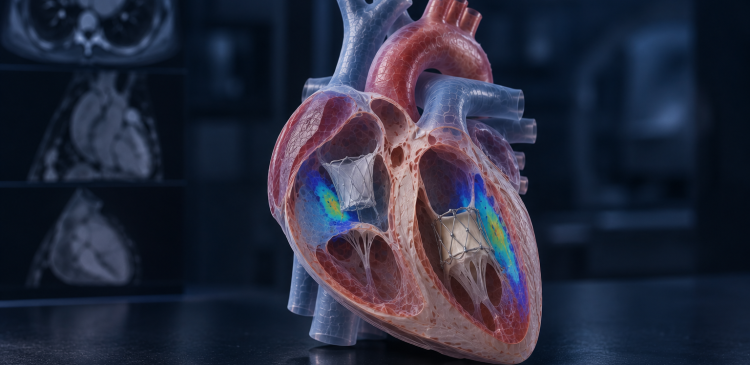
Congenital heart defects are present from birth, and no two are alike, yet devices were historically rarely designed for a specific child. According to NVIDIA, Children’s Hospital of Philadelphia (CHOP) uses open source AI to model children’s hearts before procedures. Dr. Matthew Jolley, a CHOP cardiologist, and his team built a cardiac modeling service on MONAI, an open source medical imaging framework cofounded by NVIDIA. Using CT scans, MRI and 3D ultrasound, it produces anatomically precise heart models.
CHOP routinely models ventricular septal defects, holes between the heart’s lower chambers. In one case, a model clarified the anatomy after earlier repairs failed, and the repair succeeded.
Ansys Rocky software now offers a deformable particle feature that aims to simulate how particles change shape and break under compaction. It estimates porosity and density distribution, with results usable in structural analysis for pharmaceutical, battery, food and additive manufacturing. Click to read more..
Deep-tech startup SunCubes is using SimScale’s Engineering AI to develop laser-based charging that lets drones recharge in flight without physical contact, targeting drone range and endurance limits. Cloud simulation aims to assess thermal, structural and aerodynamic performance of its systems. Click to read more..
Seoul National Universityresearchers used Tidy3D to validate disordered structures where correlations between material properties control light-scattering direction and symmetry. The study also demonstrated a passive alternative using loss-only materials, exploring optical control without perfectly periodic structures. Click to read more..
Agentic AI is reshaping engineering design, but complex systems need more than prompt-driven workflows. Explore how to guide an AI agent through Model-Based Design to generate requirements, design a model predictive controller, run SIL/PIL testing, and generate embedded code for deployment.
This three-day training course introduces the COMSOL Multiphysics® modeling workflow, covering geometry creation, meshing, model setup, and results visualization. It then progresses to solution techniques and multiphysics modeling through demonstrations, lectures, and self-guided hands-on training.
This webinar explores computational human body modeling for understanding trauma, injury prevention, and personalized clinical care. Through illustrative examples, it covers model development, verification and validation, and application-driven simulation strategies.
This webinar introduces Luminary-SMART, a new architecture for Large Physics Models designed to learn the underlying physics rather than the simulation mesh. It covers mesh independence, scalable model capacity, comparison with prior architectures, and benchmark performance for teams deploying Physics AI in production.
QpiAI is a Bengaluru-based company building vertically integrated AI, quantum computing and HPC infrastructure. Led by Founder, CEO and Chairman Dr. Nagendra Nagaraja, it brings together experts in AI, semiconductors, quantum hardware, quantum algorithms and HPC, with additional offices in the US, Finland and Singapore.
Solutions & Technology
QpiAI offers a full stack, from quantum chips to AI software and industry solutions.
Technology: Superconducting transmon qubits with surface-code error correction (25-qubit Indus, 64-qubit Kaveri; 128- and 1,000-qubit systems planned), Q-LDPC fault-tolerant roadmap, QpiAISense control electronics, quantum computers co-located with HPC and a multi-agent AI system.
Products: Indus (25-qubit quantum computer), QVidya (8-qubit education and research system), QCloud (quantum cloud platform for research and training), Pro, Agent Hive, Pharma (quantum-ready drug discovery platform), Matter, Logistics, Opt and Explorer.
Applications:
QpiAI serves pharmaceuticals, materials, manufacturing, logistics, energy, automotive and aerospace, telecommunications and banking, from drug discovery to CFD simulation and fraud detection. In a NASSCOM case study, QpiAI cites up to 96x faster automotive design simulations.
In some ultra-luxury watches, a minute repeater uses tiny hammers striking tiny gongs to chime the hours, quarter-hours, and minutes on demand. Originally created to tell time in the dark, it is now regarded as a piece of art, representing status, craftsmanship, and a link to the past.
Multibody dynamics simulated the hammer–gong interaction, including contact, spring, and damping effects. The boundary element method (BEM) calculated the radiated sound field, while the finite element method (FEM) served as a comparison. Unlike FEM, which requires meshing the surrounding air volume, BEM meshes only the boundaries, reducing computational and memory demands. Researchers also used a deep neural network surrogate model trained on BEM simulation data, together with the efficient global optimization algorithm, to explore hammer impact positions and their effects on acoustic intensity and tonal quality.
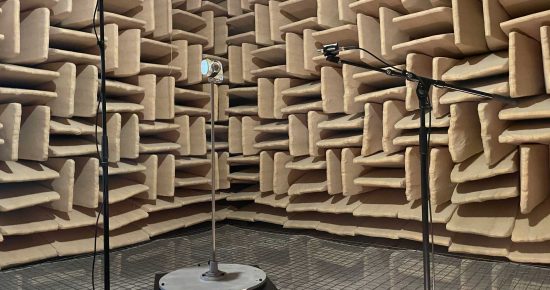
Researcher Roland Rozsnyo explained that the boundary element method gave similar acoustic results with substantially reduced computation, and that surrogate modeling notably shortened optimization time. Results are validated against measurements in HEPIA‘s anechoic chamber. He sees the watch industry as only at the beginning of using multiphysics simulation, suggesting this timeless tradition still has much to explore.