



Your weekly sync on the pulse of the simulation industry
Industry News


Seeing clearly through dense fog, or inspecting the contents of a package without opening it, may sound like science fiction, but a company called EYE4NIR is working to make this a practical reality. EYE4NIR develops dual-band imaging technology that combines visible light and short-wave infrared (SWIR) sensing within a single device, with the aim of enabling physical AI systems to see information that conventional cameras cannot capture, while making such advanced imaging affordable enough for widespread adoption. Its core innovation is a specialized pixel architecture that allows the sensor to electronically switch between visible and SWIR bands, enabling multispectral imaging where both types of data are captured from the same pixel, at a price point comparable to a standard camera.
To bring this design from concept to silicon, EYE4NIR relies on Cadence‘s full design flow, including cloud-based services for scalability, and Virtuoso Studio for analog design work such as schematic capture, simulation, and design optimization.
EYE4NIR is currently manufacturing its first development kits for interested customers and is ramping up toward full-scale production in the years ahead. The technology is a reminder that some of the most useful advances happen not in what a machine can compute, but in what it can actually see.
Partnerships & Collaborations


Siemens and Salesforce are deepening their partnership, combining Agentforce with Siemens’ Teamcenter Service Lifecycle Management, aiming to help industrial companies bring engineering-grade information into sales and service workflows, supporting spare-parts identification, accurate quoting, and customer engagement.
Click to read more..
AVL and QinetiQ have signed a memorandum of understanding to form a strategic partnership. It aims to advance their capabilities in Model-Based System Engineering and digital twin solutions, and to jointly explore opportunities in defence procurement, autonomous systems and land mobility programmes.
Click to read more..
JOYX and Hitch Interactive have formed a strategic partnership combining JOYX‘s verified robot training data with Hitch‘s robotics network and standardized interfaces, aiming to deploy embodied AI systems in real-world commercial settings by delivering complete capability packages for defined vertical use cases.
Click to read more..

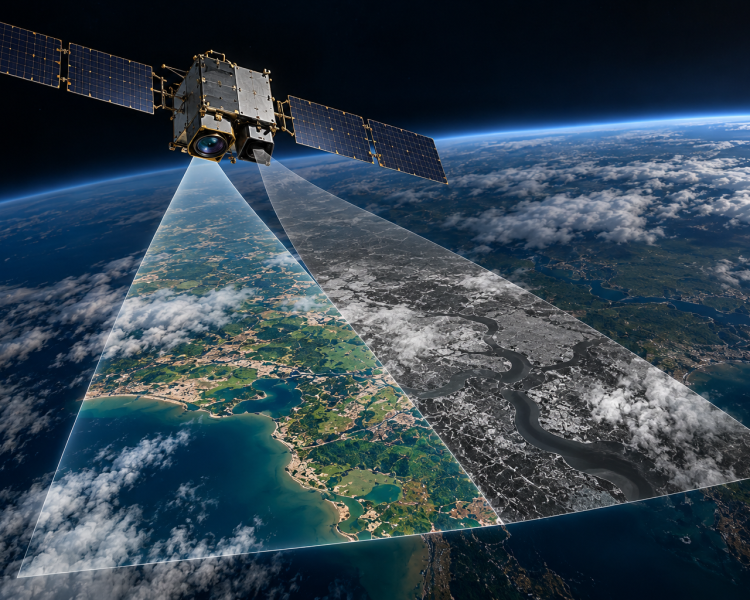
Space-tech startup GalaxEye has become the first Indian startup to receive a US patent for satellite imaging technology. The OptoSAR system synchronises optical and radar sensors to capture aligned imagery simultaneously, aiming to enable weather-agnostic Earth observation across defence, agriculture, insurance and disaster-response sectors.
Click to read more..

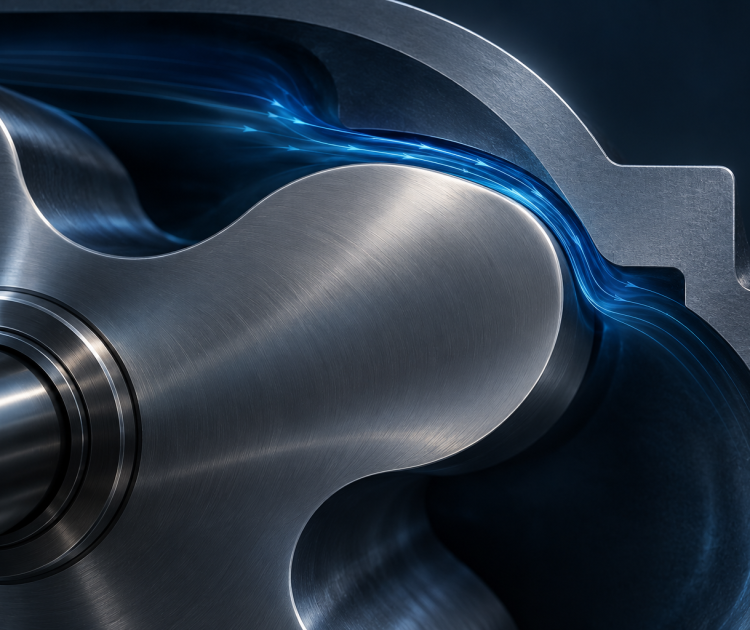
Researchers from City St George’s, University of London, and ToffeeX have applied physics-driven generative design within a CFD solver to reshape a Roots blower’s rotor tip. The study aims to reduce leakage flow through clearance gaps, potentially improving volumetric efficiency, with results validated against particle image velocimetry test data.
Click to read more..
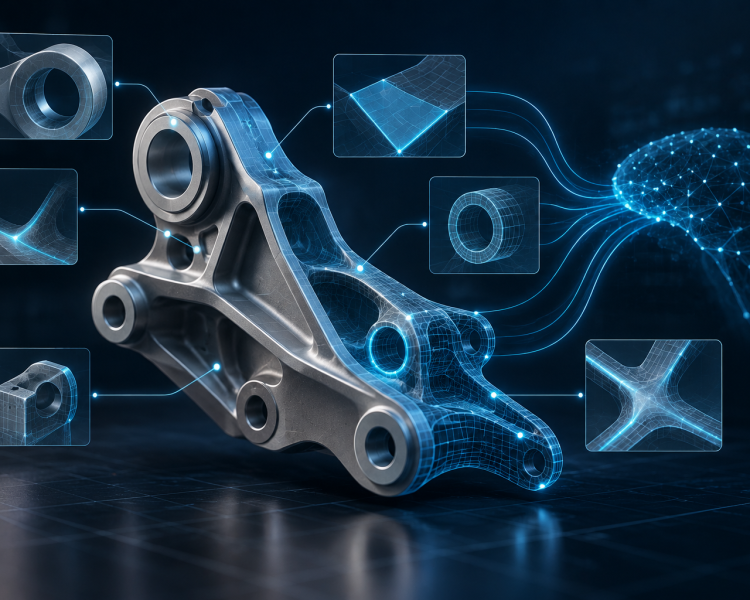
Navier AI, developer of an AI-driven simulation and engineering platform, has been awarded a Phase I SBIR contract by AFWERX, the Department of the Air Force’s innovation arm. The award supports a geometry reasoning layer that aims to help AI agents interpret spatial relationships in engineering models.
Click to read more..
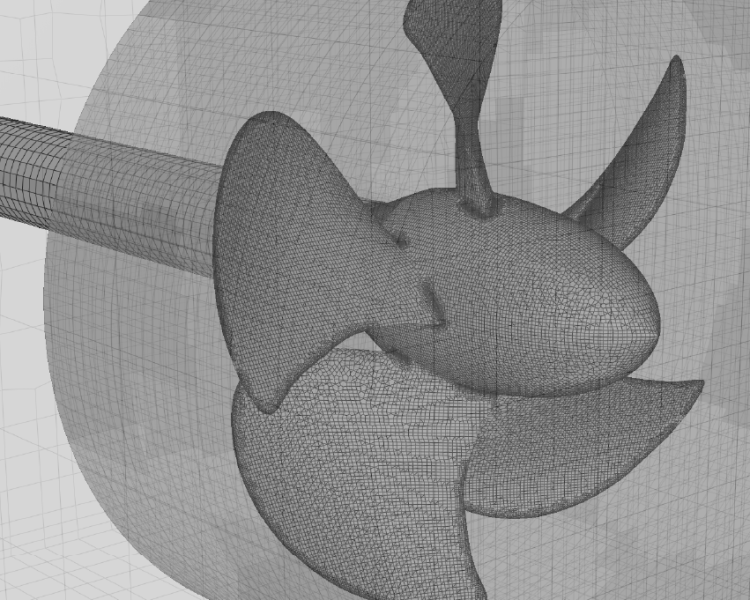
ENGYS validated its open-source CFD software, HELYX, using the Potsdam Propeller Test Case, a recognised marine benchmark, to assess how accurately it predicts propeller thrust, torque and efficiency. Two mesh-interface methods were compared, showing close agreement with experimental data, except at lightly loaded conditions.
Click to read more..
Industry Events
Pharmaceutical and healthcare development is turning to in silico methods to accelerate manufacturing, drug delivery, and regulatory approval. This virtual summit unites industry leaders, clinicians, and academia to explore how simulation is reshaping the pharma lifecycle. Join the summit to explore:
- Predictive modeling in drug manufacturing
- Simulation-driven drug delivery design
- In silico clinical trials and regulatory approval
🗓️ September 29-30, 2026
🕗 08:00 – 12:00 EDT
Automotive optical systems are growing more complex, spanning vehicle lighting, driver assistance, autonomous sensing, and in-cabin experiences. This webinar explores how optical simulation and virtual prototyping help engineering teams design, optimize, and validate these systems before physical prototypes, while improving safety, accelerating innovation, and reducing development costs.
🗓️ September 29, 2026
🕙 10:00 – 11:00 PDT
Battery design means balancing performance, lifetime, safety, and cost across varying operating conditions. This online event shows how the COMSOL Multiphysics® software models the physics behind battery behavior, from individual cells to complete packs. Join the event to explore:
- Electrochemical reactions, ion transport, and heat generation
- Battery degradation and thermal management
- Surrogate models to accelerate complex simulations
🗓️ October 1, 2026
🕙 10:00 – 11:00 CEST
Long simulation run times limit how many designs and scenarios aerospace engineers can explore. This webinar shows how SmartUQ’s machine learning and uncertainty quantification software trains surrogate models to predict simulation results faster, covering design of experiments, statistical calibration, and optimization under uncertainty.
🎥 Available On Demand
In FOCUS
Company in Focus


Who they are
SkyServe, headquartered in Bengaluru, India, is building the intelligence layer for the next generation of satellites — bringing AI-powered computing directly onboard spacecraft. Co-founded by CEO Vinay S. and CTO Vishesh Vatsal, the company‘s mission is to “democratise access to space, one uplink at a time,” processing Earth observation data where it’s captured, in orbit.
Solutions & Technology
SkyServe’s core offering is STORM, an onboard platform that hosts, runs, and executes GeoAI models directly on satellites, detecting objects, changes, and critical events in near real time. It‘s paired with SURGE, a ground-based environment where operators develop, test, validate, and prepare AI models for deployment on STORM in orbit.
Applications:
Onboard AI powers maritime monitoring, defence and border surveillance, disaster response, agriculture, critical infrastructure protection, and environmental intelligence — detecting events like dark ships, illegal fishing, oil spills, wildfires, illegal mining, and port congestion straight from orbit.
Did you know?
SkyServe’s STORM has flown on multiple missions, including Matterhorn aboard D-Orbit’s ION SCV-004, Denali aboard Loft Orbital’s YAM-6, and K2 aboard SatRev’s Sowa platform. Its broader mission portfolio also includes Rainier, with NASA JPL and D-Orbit, and Shakti, with ISRO and YAM-6.”
Solutions focus:
SkyServe’s platform runs on three pillars: Smart Xtract for downlink value (prioritizing essential data to conserve bandwidth), Task Flow to serve more tasking requests per orbit, and Space AI to react faster with real-time onboard analysis.
Technology Focus

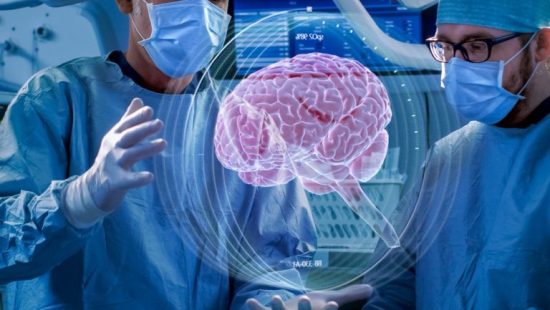
Unlike the heart or lungs, the brain resists generalization: regions governing language, vision, and movement sit in different places in every person, making neurosurgery delicate, since crossing into functional tissue can cause lasting harm. Neurotech company BrainSight AI, led by co-founder and CTO Dr. Rimjhim Agarwal, addresses this by fusing structural, functional, and diffusion MRI scans into one patient-specific functional map, aiming to show surgeons not just where a tumor sits but which neural pathways run through it, much like layering roads, routes, and live traffic onto one map.
This work depends on handling brain data responsibly, since it reveals personal information about how a person thinks. Dassault Systèmes India stresses that data protection, consent, and compliance must be designed into such platforms from the start, not added later. Dr. Agarwal separately views India’s diverse population as a scientific advantage, since it helps AI models generalize more reliably worldwide.
This variability now shapes treatment too. On Dassault Systèmes’ 3DEXPERIENCE platform, “virtual brain twins,” digital models built from a patient’s own scans, aim to let doctors test a therapy, such as non-invasive brain stimulation, before actual use.
Together, these efforts point toward brain care shifting from broad treatment to a more personalized, simulation-first approach.