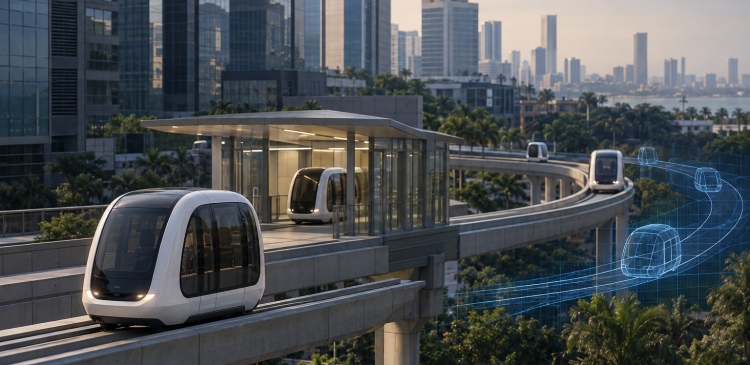
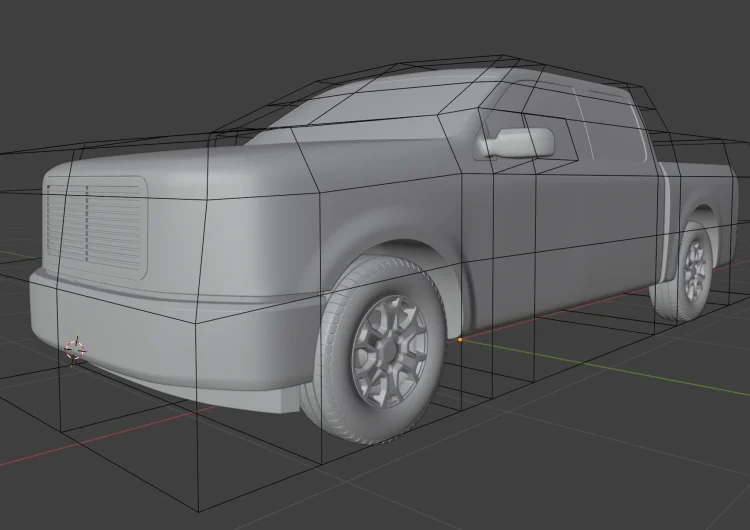
Using discrete-event simulation, the team built a digital twin of the full BKC network to test elements that paper-based designs alone could not, including:
Passenger throughput
Potential bottlenecks along the guideway
Fleet sizing and dispatch strategy
The model identified four interconnected complexity areas — vehicle dynamics, shuttle communication, station and merge operations, and fleet and energy management — helping the team replace assumptions with measurable data on throughput, wait times, and utilisation before construction begins. The approach highlights the role of simulation in planning and assessing complex urban transport systems.
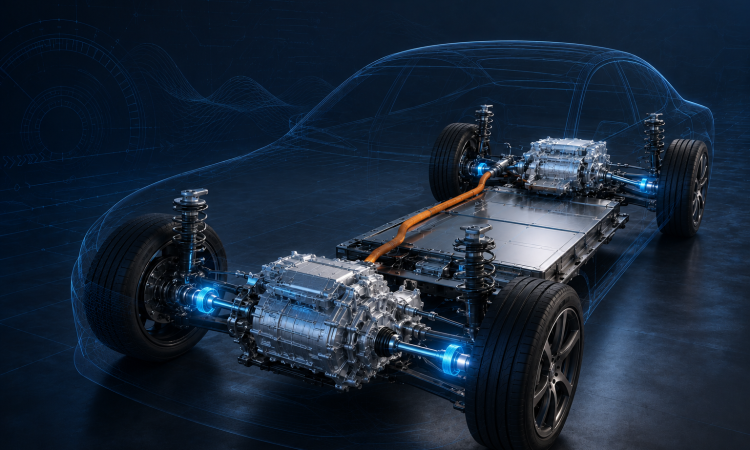
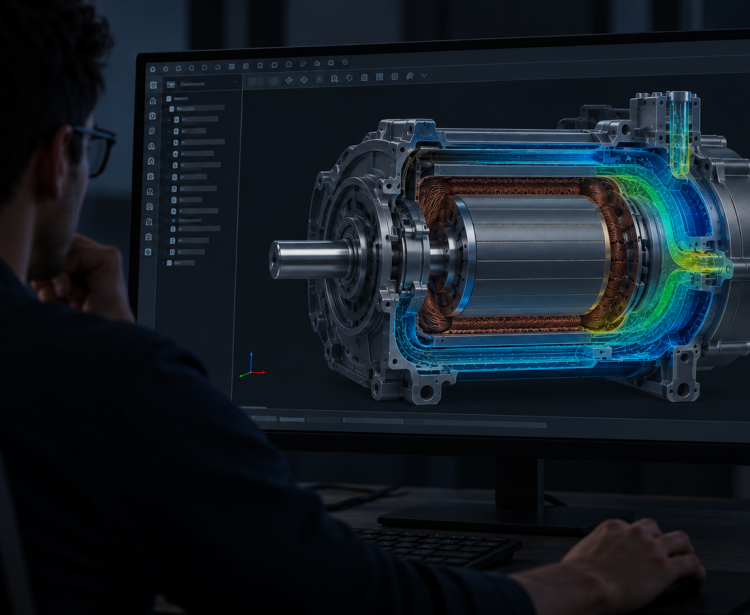
Automotive supplier Marelli uses Ansys FreeFlow with Ansys Mechanical to analyze oil flow and heat transfer in electric motors. The simulation approach aims to predict cooling performance under varying conditions, support thermal design, and validate results against physical test data. Click to read more..
SimScale has opened its Engineering AI agent, earlier tested with enterprise clients, to its global community of engineers, designers, and students. It aims to autonomously run simulation workflows from CAD clean-up, setup, and validated reporting, helping attract and upskill hardware engineering talent. Click to read more..
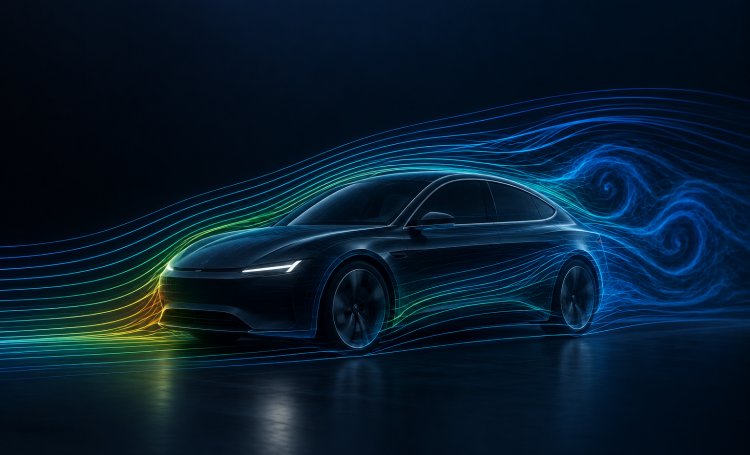
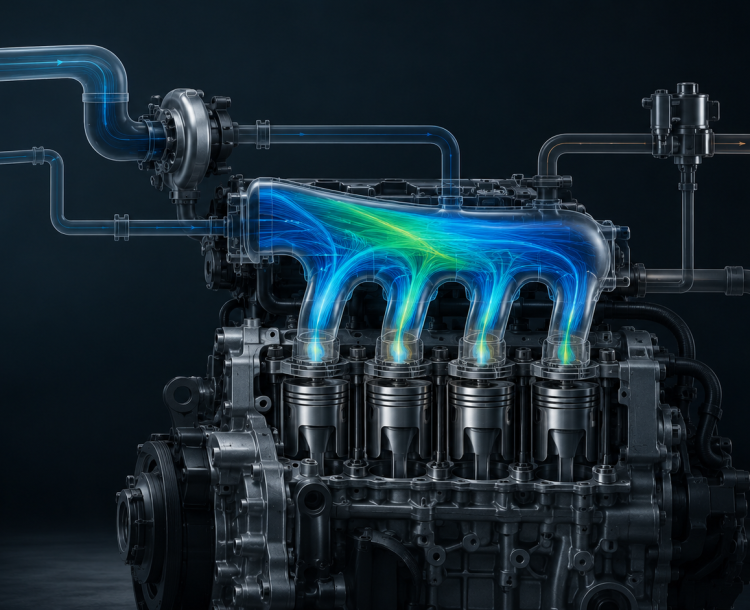
AVL has outlined a gas-flow co-simulation method linking CRUISE M and FIRE M, combining one-dimensional surrogate modeling with three-dimensional CFD. Demonstrated on cylinder-specific EGR distribution, the approach aims to improve predictivity for select gas-path components while managing simulation time via staged operation. Click to read more..
Simulating fluid-particle systems in fluidized bed reactors requires modeling complex hydrodynamics, heat transfer, and reaction chemistry together. This five-day virtual training builds proficiency in Barracuda Virtual Reactor, covering project setup, solver operation, and Tecplot post-processing, with optional hands-on breakout sessions.
Designing high-power PCBs requires careful management of current paths, thermal performance, and insulation. This webinar explores practical layout techniques for reducing voltage drop and heating, addressing creepage and clearance, identifying thermal hotspots, and improving interconnect reliability.
Engineering teams are moving past AI copilots toward autonomous agents that run entire simulation workflows end-to-end. Agentic Unlocks, hosted by SimScale, is a new forum where engineering leaders and simulation experts share real production deployments of agentic AI in engineering and simulation. Join the forum to explore:
Live lightning demos of agents running real engineering workflows
Lessons from teams scaling agentic AI in production
This webinar explores the latest capabilities in Gexcon’s EFFECTS and RISKCURVES v13.1, including new ignition-source modelling for location-dependent risk assessments, extended battery hazard modelling for BESS thermal runaway, and buried gas pipeline rupture modelling via crater formation. The session also covers expanded language support and practical applications in consequence and risk analysis.
Neysa is an Indian AI infrastructure company, founded in 2023 and headquartered in Mumbai. It operates Velocis, a full-stack AI Acceleration Cloud System giving enterprises GPU compute, platform tools, and support to train, fine-tune, and deploy AI in production. It is backed by over $1 billion in funding.
GPU-as-a-Service: on-demand NVIDIA H100, H200, L40S, L4, and AMD MI300X GPUs on VM, container, Kubernetes, or bare metal
AI PaaS: managed, pre-integrated Jupyter, PyTorch, Hugging Face, and Kubeflow environments
Inference-as-a-Service: dedicated, single-tenant endpoints on vLLM and SGLang
Orchestration & MLOps: Slurm and Kubernetes-based training with CI/CD and model registry
Unified Monitoring: a Command Center for real-time GPU and fleet telemetry
Catalog: private repositories of models and tools within a customer’s own VPC
Security & Control: RBAC, audit logs, Zero Trust, and the Aegis LLM Shield
Marketplace: curated AI-native apps and agents, coming soon
Applications:
Neysa serves banking, insurance, retail, manufacturing, research institutions, and AI-native startups, with stated use cases spanning fraud detection, underwriting, voice AI, and large-scale training.
Did you know? Before founding Neysa, co-founder and CEO Sharad Sanghi scaled Netmagic into India’s largest data-center company, later acquired by NTT.”
Solutions Focus: Neysa positions Velocis around production-grade performance, lower unit economics than general-purpose clouds, and enterprise security with India-resident data, backed by a 24×7 NOC and dedicated engineers.
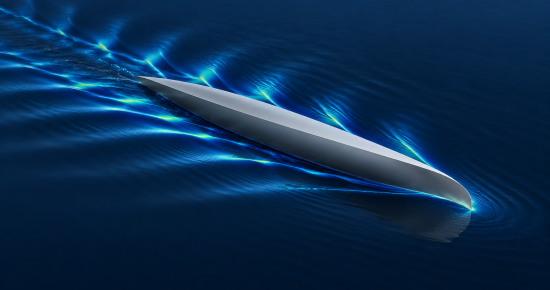
Predicting exactly how a ship will sit in the water as it gathers speed has long been one of naval engineering’s quieter challenges. Navier AI examined this question through the Wigley hull, a scale-model shape favoured in marine research because its form is defined by a mathematical equation rather than physical measurement, reducing uncertainty tied to the hull’s own geometry.
The study aims to determine whether flow simulations can reliably predict a hull’s sinkage and trim across a range of speeds, and to assess the numerical uncertainty behind its resistance calculations, rather than adjusting results to fit known data afterward. Using OpenFOAM, an open-source simulation platform, engineers modelled the hull moving freely through water while tracking:
Sinkage across a sweep of speeds, validated directly against earlier towing-tank measurements
Computed trim trends, reported but not checked against experimental data
Resistance, assessed through grid, time-step, and iterative uncertainty studies
The simulated wave tank itself, independently verified before trusting hull results
Sinkage predictions closely matched the towing-tank data, and an early discrepancy was traced to mesh alignment near the waterline rather than the physics itself, then corrected at its source. The case study underscores a simple discipline: credible simulation depends on fixing errors where they originate, not smoothing them over afterward.