


Your weekly sync on the pulse of the simulation industry
Industry News

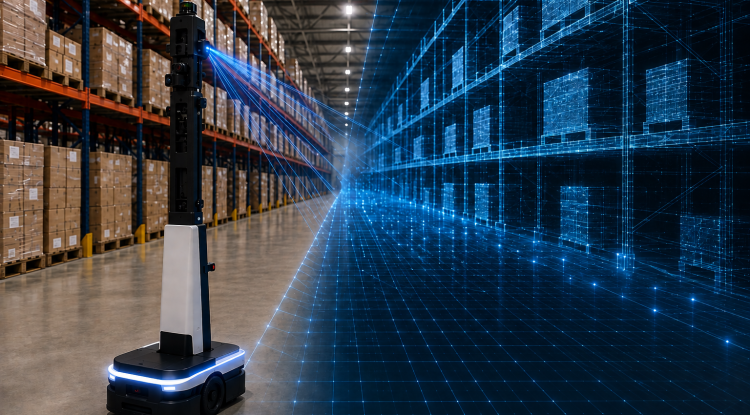
As warehouse robotics adoption accelerates worldwide, the engineering behind these machines is quietly becoming just as important as the robots themselves. Dexory, a robotics and warehouse data intelligence company known for its autonomous robots and digital twin platform DexoryView, operates in an industry where engineering teams face increasing pressure to shorten product development cycles while maintaining performance and reliability.
To address this, Dexory has deployed SimScale‘s Engineering AI, building on its existing use of SimScale’s AI-native cloud simulation platform. The deployment is designed to help Dexory‘s engineers identify the root cause of structural component failures, automatically explore multiple design variations through simulation, and create a searchable knowledge base from previous projects.
The platform is also expected to automate simulation reporting and run parameter sweeps that test several design variables together, helping teams reuse proven approaches and preserve engineering expertise as the company grows.
Rather than chasing productivity metrics alone, the initiative aims to help Dexory understand where AI agents genuinely add value in engineering and to establish best practices for their wider adoption. In doing so, Dexory reflects a broader shift among robotics companies, embedding AI not just in what they build, but in how they build it.
Partnerships & Collaborations


Siemens and German climate tech company Ucaneo are partnering to scale electrochemical Direct Air Capture technology. Siemens brings its Xcelerator portfolio, including Simatic PCS neo control system and process simulation software, aiming to build a standardized automation platform for capturing CO₂ from air for storage and sustainable fuels.
Schrödinger and Bristol Myers Squibb have signed a strategic agreement to deploy Bunsen, an AI co-scientist, within BMS‘s research organization. The collaboration aims to combine AI with physics-based simulations to help scientists explore chemical space, prioritize molecules, and guide discovery decisions.
InfraPartners and Phaidra have partnered to embed Phaidra’s AI agents, including Prism and its Liquid Cooling Agent, into InfraPartners’ prefabricated data centers, aiming to unify power, cooling and compute management for more reliable AI factory performance as demand for AI infrastructure grows.

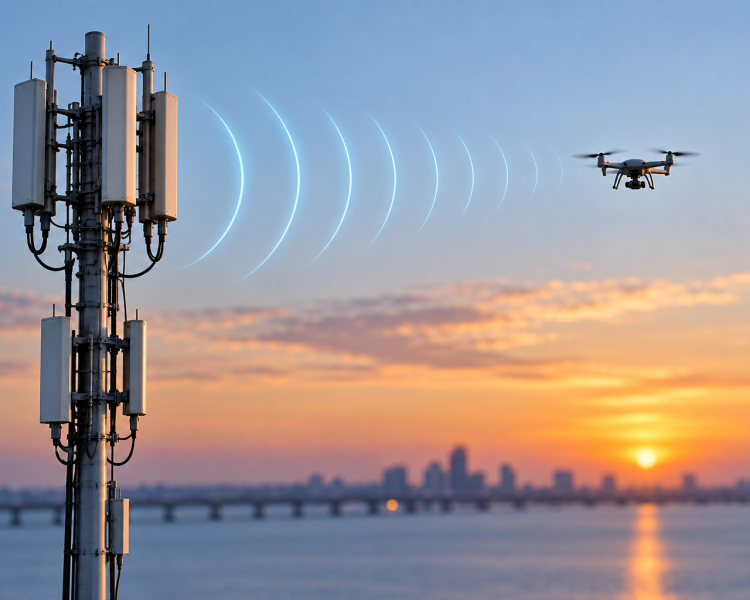
Lockheed Martin is preparing to launch NetSense, a drone detection service on Verizon’s 5G network, developed with Nvidia, Keysight Technologies, ODC and Astris AI. It aims to identify and track drones near critical infrastructure like airports, hospitals and power plants, etc without altering existing network infrastructure.
Click to read more..

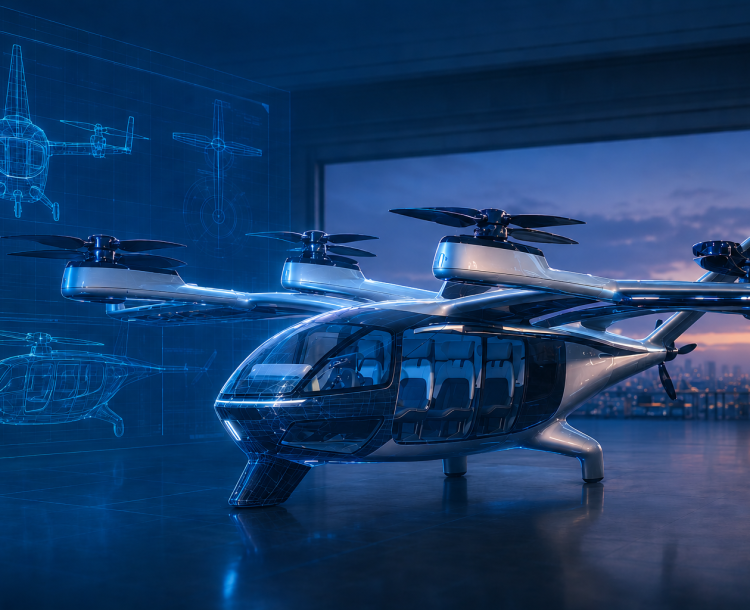
Sarla Aviation is using Siemens’ Xcelerator software portfolio to support development of its electric vertical take-off and landing aircraft. The digital thread connects design, simulation and lifecycle management, aiming to strengthen engineering collaboration and support certification readiness for urban air mobility.
Click to read more..

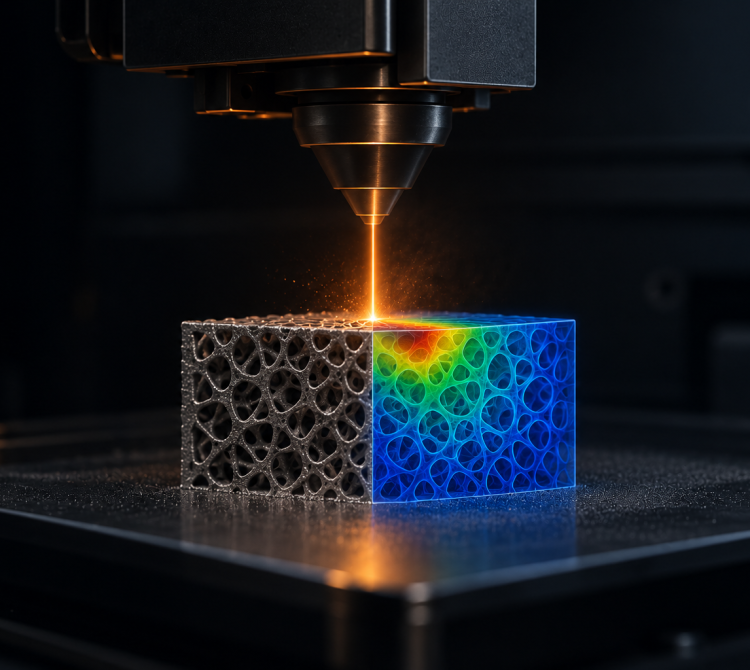
The Air Force Research Laboratory and University of Oklahoma supported research validated PanOptimization‘s PanX thermomechanical simulation software. The study confirmed PanX can model entire metal AM build volumes, predict interlayer temperatures, and identify crack-risk locations, aiming to support digital twin development for aerospace and defense manufacturing.
Click to read more..

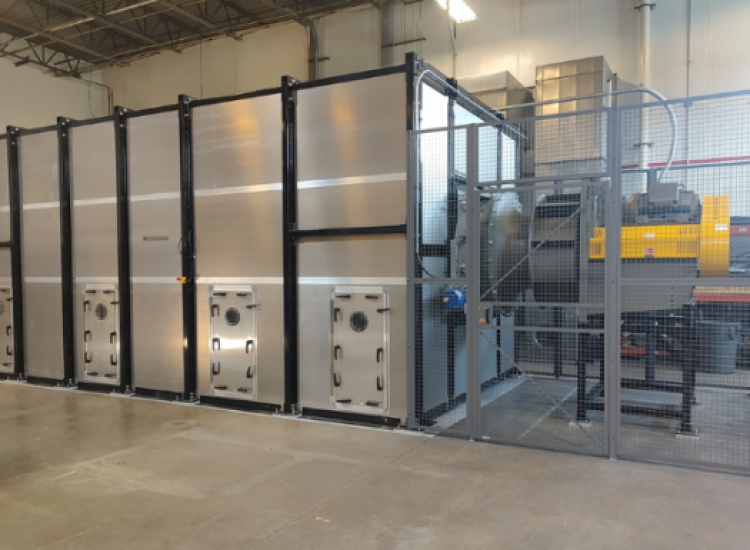
Airflow Sciences has built and commissioned a flow measurement tunnel for Stulz Air Technology Systems in Maryland. The facility aims to measure airflow and certify HVAC product performance, with its design complying with ASHRAE testing protocols.
Click to read more..
Industry Events
Disconnected workflows in radar development increase implementation risk, delay decisions, and create costly rework. This webinar shows how model-based systems engineering connects requirements, architecture, simulation, and verification within a unified workflow. Using a radar Transmit/Receive Module as a case study, learn how these workflows improve collaboration, support traceability, and help teams manage design changes efficiently.
📅 September 15, 2026
🕥 22:30 – 23:30 IST
This webinar covers practical FEA techniques for student teams, including mesh quality, geometry simplification, material properties, boundary conditions, common modeling mistakes, and result validation, helping participants strengthen their simulation and engineering analysis skills. Led by Ansys academic outreach specialists, it’s designed specifically for student competition teams looking to improve design accuracy.
📅 September 15, 2026
🕛 12:00 – 13:00 EDT
This virtual summit explores how AI is transforming military and defense design, engineering, and simulation. Sessions cover AI-driven simulation, autonomous systems, predictive maintenance, mission planning, and integration, security, and compliance, bringing together leaders from military, defense, and technology sectors for forward-looking discussions and real-world applications.
📅 September 15, 2026
🕖 07:00 – 13:00 PDT
Earth observation systems and aerial drones share similar optical design challenges, from telescope and imager architectures to stray-light control and multi-spectral performance. This webinar explores these workflows and how Keysight’s optical design tools, including CODE V, LightTools, and ImSym, support requirements and architecture development within a unified digital-twin workflow, from concept to validated system.
📅 September 15, 2026
🕙 10:00 – 11:00 PDT
In FOCUS
Company in Focus

Who they are
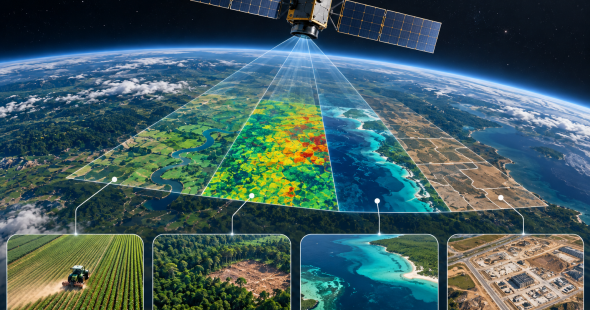
Pixxel is a Bengaluru-based space data company and spacecraft manufacturer, founded in 2019 by Awais Ahmed (CEO) and Kshitij Khandelwal (CTO) with the mission to build a “health monitor for the planet.” Pixxel now positions itself as a Planetary Infrastructure company, building across three connected layers: satellites, software, and space systems.
Solutions & Technology
The company’s offerings fall into three areas:
- Hyperspectral Imagery (Firefly): A constellation of operational satellites in Sun-synchronous orbit that capture rich hyperspectral data across a broad range of spectral bands at high spatial resolution, offering frequent global revisit. Honeybee, its next-generation constellation extending into shortwave infrared, is being developed for expanded spectral coverage.
- Earth Observation Studio (Aurora): An AI-powered software platform for tasking, accessing, and analysing satellite imagery through ready-to-use geospatial workflows.
- Space systems and satellite manufacturing: Including Pathfinder, an orbital data-centre satellite developed with Sarvam AI as its AI partner, and the satellite bus for Cosmoserve’s space-debris removal mission.
Applications:
Agriculture (crop stress, yield prediction), energy (oil spill, pipeline monitoring), environment (habitat, pollution mapping), forestry (biomass, wildfire detection), mining (mineral detection, compliance), and government (disaster response, infrastructure planning).
Solutions focus:
Pixxel is expanding beyond Earth imaging into orbital compute and space-debris infrastructure, positioning its “satellites + software + systems” stack as a foundation for both planetary monitoring and future off-world operations.
Technology Focus

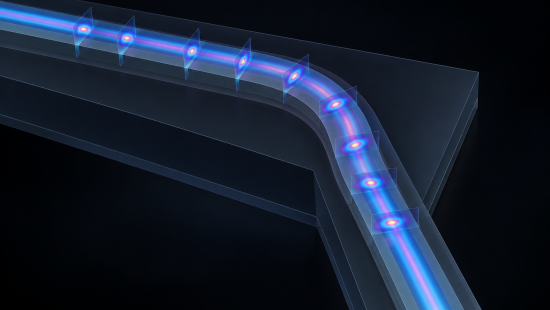
Waveguide bends are one of the most common building blocks in photonic circuits, yet getting them right is not always simple. A poorly modeled bend can lead to unexpected light loss, and simulating one accurately, particularly when it is built from anisotropic materials whose electromagnetic response depends on direction, can demand significant computational resources.
Finite-difference time-domain (FDTD) simulation is widely used as a general, reliable reference method, but its computational cost grows with the physical size of the device, making it resource-intensive for larger or swept designs. Eigenmode expansion (EME) aims to address this by representing the field as local cross-sectional modes propagated analytically along the direction of travel, rather than solving the full field everywhere in space.
To explore this, Flexcompute used its Tidy3D electromagnetic simulation platform to study a 90° Euler bend on an X-cut thin-film lithium niobate platform, a material whose optical axis lies within the chip plane. As the bend curves, the orientation of this axis relative to the propagation direction changes, introducing coupling effects. Tidy3D’s EME solver was structured to capture this behavior using multiple curved sections and several propagating modes at each interface.
Results showed close agreement between Tidy3D’s EME and FDTD solvers across different wavelengths and bend sizes, with EME requiring notably less computational effort. Ultimately, the study is a reminder that in photonic design, the choice of simulation approach can shape a project’s outcome just as much as the design itself.