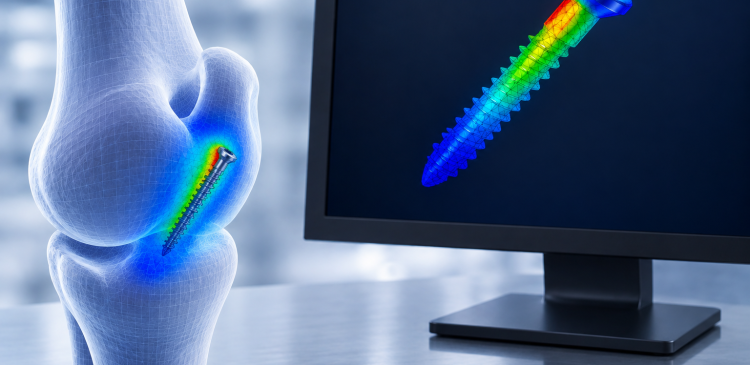
Orthopedic screwsused to stabilize bone must withstand significant pullout force once implanted, and manufacturers have long verified this through standardized physical mechanical testing on prototype samples, a process requiring repeated rounds of prototyping for every design iteration. To offer an alternative, medical device simulation company Numalogics, working with model manufacturer Sawbones and simulation provider Ansys, developed Endpoint, a cloud-based application that aims to replicate this mechanical test virtually using computational modeling.
Following this process, Endpoint became the first virtual mechanical test for an orthopedic device to receive FDA qualification under the Medical Device Development Tools program, a step aiming to establish a regulatory pathway for simulation-based testing in future device submissions.
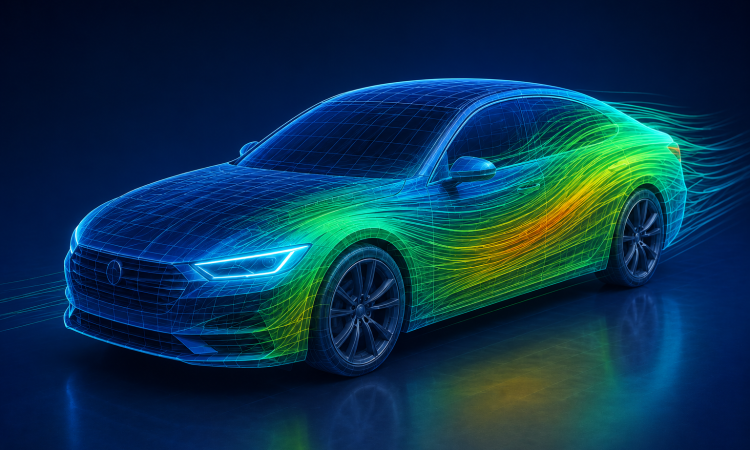
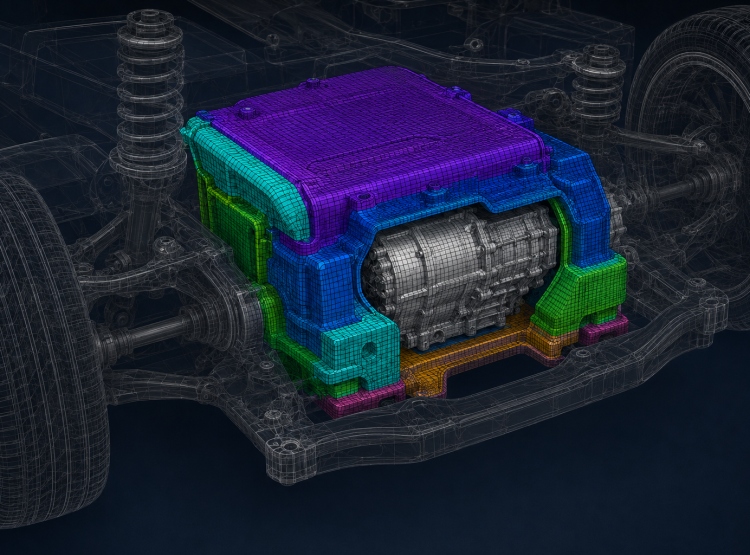
BETA CAE Systems developed a partly automated meshing procedure in ANSA for Volvo Cars to model NVH encapsulation on electric drive units. The approach aims to simplify complex geometry handling, reduce modelling time, and enable accurate FE models for acoustic simulations. Click to read more..
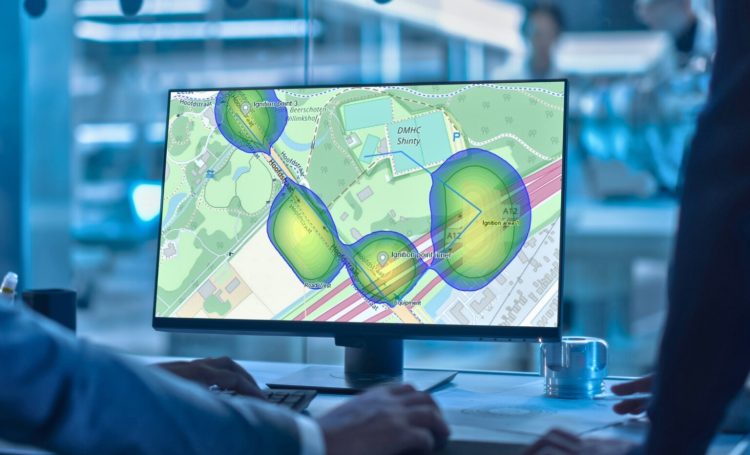
VCollab has added OpenUSD support to its Rapid Results Review platform, positioning it as an engineering intelligence layer for industrial digital twins. Integrating with NVIDIA Omniverse-based applications, it aims to interpret simulation results, flag risks, compare iterations, and support engineering decisions. Click to read more..
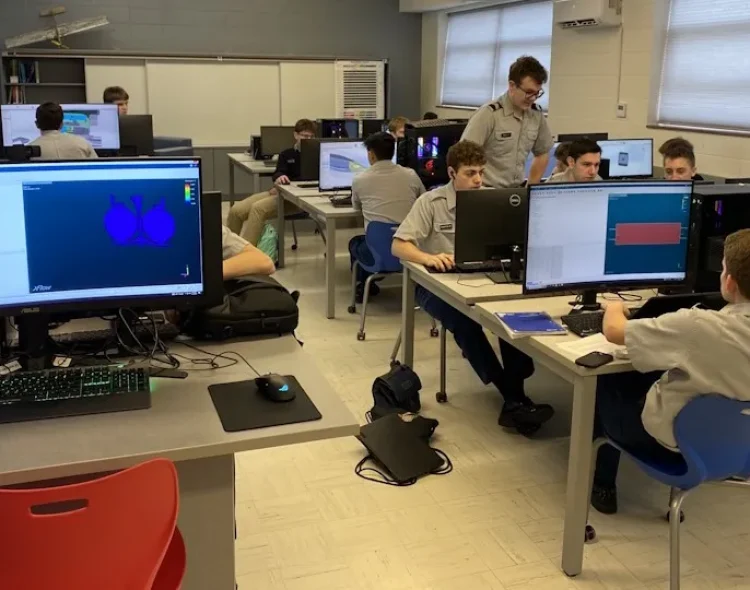
This virtual training introduces CODE V, a optical design software for designing, analyzing, and optimizing imaging systems. The session covers key imaging-system design considerations, CODE V’s interface and workflow, and its capabilities in ray tracing, diffraction analysis, optimization, and tolerancing.
This 3-day program explores wireless system design using MATLAB, Simulink, and FPGA implementation tools. Attendees will gain hands-on experience with wireless algorithms, HDL code generation, hardware optimization, FPGA-in-the-loop verification, and practical wireless transceiver deployment.
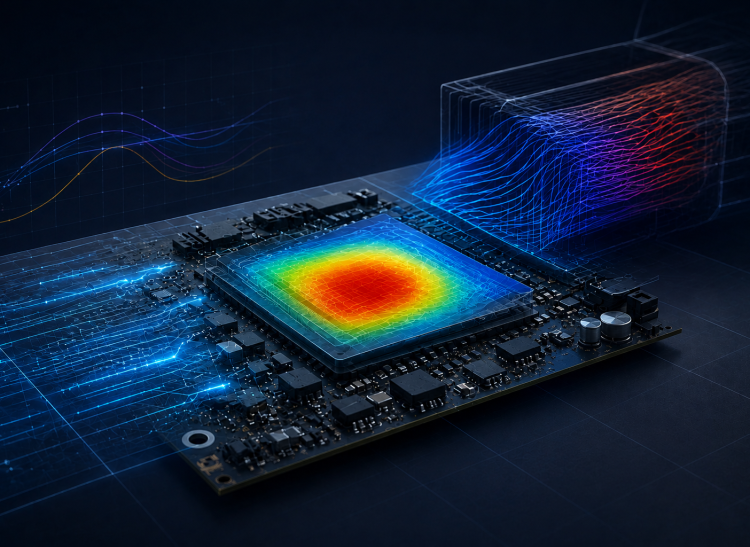
This webinar explores how modern design of experiments, surrogate modeling, and statistical calibration help engineers extract reliable insight from simulation, test, and digital twin data. It also includes a demonstration of the SmartUQ 11.1 software with customer use cases.
SIMULIA Innovation Day 2026 India brings together engineers, simulation specialists, and technology leaders for keynotes, customer stories, and hands-on sessions on structural simulation, CFD, electromagnetics, durability, automation, and AI-enabled engineering workflows shaping the future of simulation.
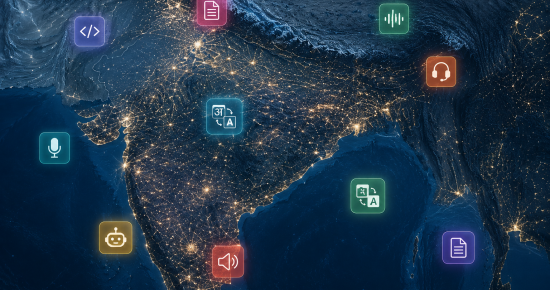
Sarvam AI is a Bengaluru-based startup building India’s Sovereign AI Platform, developed, deployed, and governed entirely in India. Founded in August 2023 by Dr. Vivek Raghavan and Dr. Pratyush Kumar, the company set out to prove India need not depend on foreign infrastructure for its AI stack. Its mission is summed up in one line: AI for all from India.
Solutions & Technology
Sarvam‘s stack spans models, agents, and infrastructure:
Models and AI Stack: A flagship reasoning model (Sarvam-105B) alongside speech-to-text (Saaras), text-to-speech (Bulbul), translation (Sarvam Translate, Mayura), and document intelligence (Sarvam Vision), spanning India’s languages, with coverage varying by model.
Agent Platform: Indus, a single workspace hosting Voice, Work, Content, Doc, and Coding Agents for enterprise workflows, deployable on cloud, private VPC, or air-gapped setups.
Edge and Inference: An offline, on-device stack combining speech recognition, translation, and synthesis (Sarvam Edge), and a model-serving layer (Sarvam Inference) hosted in India.
Applications:
Sarvam‘s technology powers conversational customer engagement, document and records digitisation, citizen-facing public services, and secure investigation workflows for defence, intelligence, and financial institutions.
Did you know? Sarvam Edge, its on-device speech stack, fits under 1GB and runs fully offline, working in Indian languages with zero internet connectivity.”
Solutions Focus: Sarvam pairs its models with forward-deployed engineers who work inside client teams to design, tune, and ship production agents rather than hand off tooling and step away. Its flagship model is trained extensively on native-script, romanised, and code-mixed Indian inputs, and Sarvam reports it leading comparable global models on Indian-language and conversational benchmarks. Click to know more..
On the evening of 12 August 2026, a rare total solar eclipse swept across Spain, briefly turning day into twilight as the Moon passed directly between the Earth and the Sun. Because the eclipse occurred in the evening, with the Sun already low on the horizon, its path of totality entered through north-western Spain and exited over the Balearic Islands, with the duration of totality varying depending on location. While skywatchers gathered to witness the spectacle, engineers saw it differently: as a real-world test for a country that increasingly relies on solar energy, since a vanishing Sun means a temporary loss of fuel for photovoltaic panels.
To explore this, engineers at Maya HTT used Siemens’ Simcenter 3D Space Systems Thermal simulation software, a tool originally built to model how spacecraft and satellites experience shifting sunlight, shadowing, and heat exposure in orbit. Applying this same approach to ground-based solar panels, they built a simplified thermal model to track how incoming solar radiation, or heat flux, changes as the Moon progressively obscures the Sun.
The simulation did not aim to predict Spain’s actual national solar power output. Doing so would require modelling thousands of individual installations, along with weather conditions and local grid behaviour, factors better suited to separate system-level simulation tools. Instead, it demonstrated the underlying physics: a rapid, forecastable dip in incoming solar radiation as the Moon’s shadow passed overhead, unlike unpredictable cloud cover.
Grid operators across Europe, and particularly in Spain, reportedly prepared in advance for a temporary decline in solar generation, while confirming there was no real risk to electricity supply. The study highlights how tools once built for spacecraft are now helping engineers understand events unfolding on Earth’s own energy grid.