


Your weekly sync on the pulse of the simulation industry
Industry News

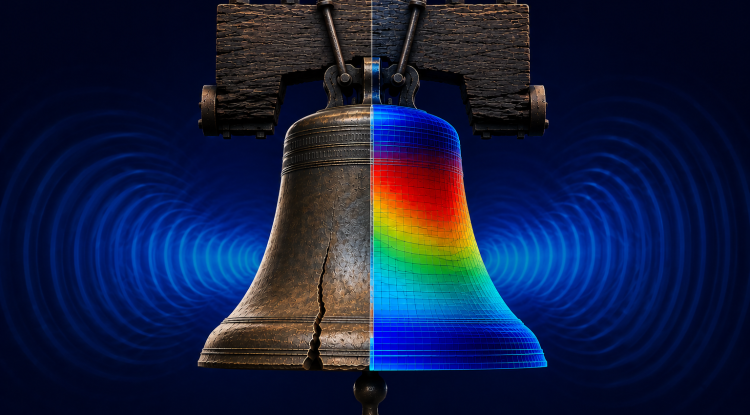
The Liberty Bell, one of America’s most enduring symbols of independence, is just as widely recognized for the distinctive crack running through it. That crack raises a natural question: how much has it changed the way the bell actually sounds?
A study published by COMSOL sets out to answer this using multiphysics simulation software, applying structural and acoustic analysis to a bell that has fascinated acousticians for years. The work begins by building a simplified 3D geometry from a scanned replica of the bell, then uses structural simulation to calculate its natural vibration modes and compares them against the classical frequency ratios that foundries traditionally use to judge whether a bell is well tuned. Because the composition of historical bell bronze isn’t well documented, uncertainty quantification is applied to see how variability in material properties could shift those frequencies.
A simulated crack is then introduced, and the results show it breaks the bell’s structural symmetry, splitting vibration modes that would normally pair evenly and disrupting the tonal harmony a listener would hear.
To take the analysis further, shape optimization searches for a geometry that could hit ideal tuning targets and the result closely resembles the bell’s original form, a quiet nod to the precision of early bell casting. A final simulation then models a clapper strike, translating these vibrations into the sound the bell actually radiates.
Partnerships & Collaborations


Rapidus and Cadence have partnered to bring agentic AI into advanced-node chip design, integrating Cadence’s InnoStack AI Super Agent with Rapidus’ Raads platform. The collaboration aims to streamline SoC design and simulation workflows, supporting engineering productivity and Rapidus’ semiconductor manufacturing goals.
Click to read more..
Gamma Technologies has partnered with Gotion Illinois to support battery development using GT-AutoLion. The collaboration aims to cover cell, module and pack design, including thermal management, safety analysis and model calibration, along with evaluation of emerging chemistries such as sodium-ion and solid-state batteries.
Click to read more..
Autodesk and the University of Florida have expanded their collaboration with a new lab dedicated to industrialized construction. It will use robotics, digital twins, BIM, and simulation to test building technologies, preparing students for emerging roles as Florida faces a housing shortage and an aging workforce.
Click to read more..


Université de Moncton has partnered with Dassault Systèmes to build a digital replica, via Virtual Twin as a Service, of southeastern New Brunswick, covering Moncton and Dieppe. The project aims to simulate density, traffic and biodiversity scenarios to guide informed urban planning decisions.
Click to read more..

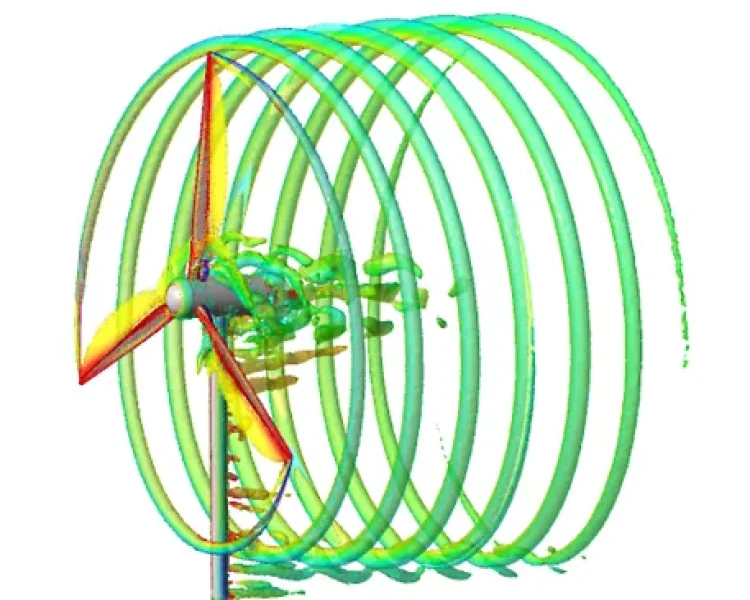
The University of Florence‘s Wind Energy Group used Ansys Fluent simulation software to study how platform motion affects aerodynamic behavior in floating offshore wind turbines. The research aims to help engineers better predict turbine performance and optimize rotor designs for offshore environments.
Click to read more..
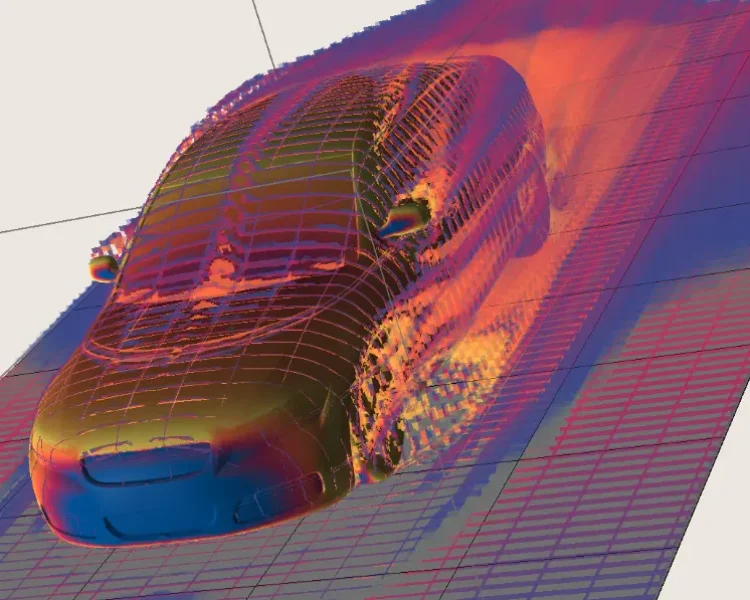
BeyondMath states its Physics Factory platform autonomously developed a model to predict airflow, pressure, drag and lift for unseen vehicle designs. Tested on DrivAerML, an automotive aerodynamics benchmark, the model aims to lead published research models on key accuracy measures.
Click to read more..

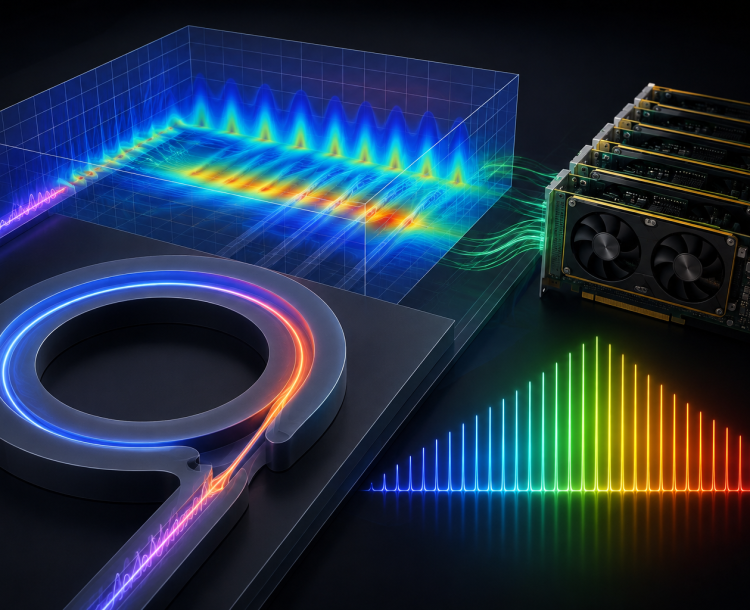
Researchers used Tidy3D, a GPU-accelerated FDTD simulation software, to model how a microresonator generates Kerr frequency combs, many closely spaced light frequencies used in telecommunications and precision measurement. The simulation tracks the electromagnetic field as the comb develops, aiming to reveal soliton formation and frequency mismatches relevant to comb noise.
Click to read more..
Industry Events
Physics AI is reshaping how engineering teams explore designs and make faster product decisions. This webinar unpacks what Physics AI is, why it matters, and the five-layer stack—deployment, platform, physics, physics AI, and industry solutions needed to bring it into the enterprise.
📅 August 31, 2026
🕙 10:00 – 10:45 PT
This four-day training course provides a practical introduction to CFD modeling in COMSOL Multiphysics, covering laminar and turbulent flow, compressible flow, conjugate heat transfer, reacting and multiphase flows, porous media, FSI, and convergence techniques through guided exercises and lectures.
📅 September 1 – 4, 2026
🕚 11:00 – 17:00 EDT
Aerospace and defense teams are exploring Agentic AI across systems engineering, requirements, and verification—but certification requires trust and traceability, not just automation. This session shows how Model-Based Design supports reviewable, human-supervised AI workflows, from safety analysis and requirements validation through verification and hardware and software implementation.
📅 September 2, 2026
🕐 13:00 – 14:00 EDT
In this session AVL and Polaron will examine how AI-driven image processing and simulation can be applied to battery-cell teardown analysis and microstructure characterization, linking electrode structural features with cell performance and enabling evaluation of design trade-offs.
Key topics include:
- Quantifying electrode microstructure beyond visual inspection
- Linking structural features to cell performance
- Using simulation to evaluate design trade-offs
- Reducing development time and testing effort
📅 September 3, 2026
🕠 17:30 – 18:30 IST
In FOCUS
Company in Focus


Who they are
Chakr Innovation is a Gurugram-headquartered cleantech and material science company founded in 2016 by IIT Delhi graduates. The company developed India’s first CPCB type-approved Retrofit Emission Control Device (RECD) for diesel generators, a major source of industrial and urban air pollution.
Solutions & Technology
Chakr‘s portfolio is built around tackling emissions at the source, spanning hardware, monitoring, and clean-energy solutions:
- Chakr Shield: Patented, catalyst-based RECD reducing PM, CO, and HC emissions from diesel generators.
- Chakr DeNOx: Emission control system targeting NOx reduction in diesel and gas engines.
- Dual Fuel Kit 2.0: Enables gensets to run on a diesel–natural gas mix, cutting diesel consumption.
- Chakr GenSense: IoT-based remote monitoring for diesel gensets, offering real-time dashboards and predictive maintenance.
- Chakr DeSmog: Automated dust suppression for construction and industrial sites.
- Chakr Emission Monitoring System: Real-time, CPCB-compliant monitoring (OCEMS, CEMS, CAAQMS).
- Al-Air Activator: Aluminium-powered electricity solution for mobility and energy applications.
Applications:
Chakr’s solutions serve manufacturing, healthcare, real estate, data centers, hospitality, automotive, and infrastructure sectors, including public-sector deployments such as Indian Railways, along with construction sites, helping organizations across these industries stay compliant with emission norms and air quality regulations.
Solutions Focus:
Chakr‘s core focus is turning regulatory compliance into a practical, retrofit-first pathway to cleaner air — addressing emissions at diesel generators and construction sites without requiring infrastructure replacement.
Technology Focus

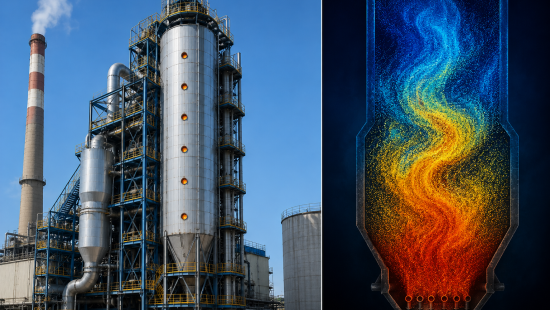
Ammonia is gaining attention as a carbon-free fuel that could help reduce emissions from coal-fired power generation. Since it is already produced, stored, and transported at industrial scale for fertilizer and chemical use, much of the infrastructure needed to burn it as fuel already exists.
Ammonia contains nitrogen, so while blending it with coal cuts carbon dioxide output, it can also raise nitrogen oxide emissions. Any co-firing strategy must therefore manage both effects together.
To study this, CPFD Software used its Barracuda Virtual Reactor software to first validate a combustion chemistry model against pilot-scale test data, matching temperature, gas composition, and emissions. That same chemistry was then applied to a full, production-scale coal-fired boiler model, confirming accuracy at industrial scale.
With this validated model in place, the latest simulation introduces ammonia co-firing at increasing levels, replacing part of the coal feed and tracking oxygen, carbon dioxide, nitrogen oxide, and water vapor from the bottom to the top of the furnace.
The results show:
- Carbon dioxide emissions decrease steadily as ammonia replaces coal.
- Water vapor output rises, reflecting ammonia’s hydrogen-rich combustion.
- Nitrogen oxide rises sharply near the furnace base, partially declines further up, but overall outlet levels still increase with more ammonia use.
This progression, from pilot validation to industrial scaling to ammonia evaluation, shows how simulation helps plants assess co-firing strategies before real-world changes.