



Your weekly sync on the pulse of the simulation industry
Industry News

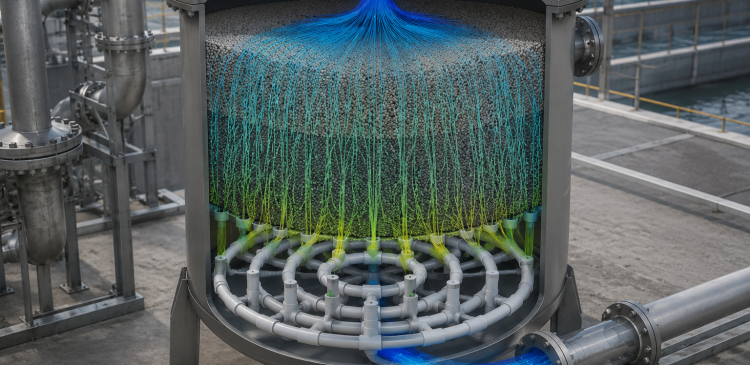
PFAS, widely known as “forever chemicals,” are persistent industrial compounds found in water supplies worldwide. Due to their resistance to natural breakdown and links to serious health risks, the U.S. Environmental Protection Agency introduced strict new limits on permissible PFAS levels in drinking water, pushing municipalities to find more effective filtration solutions to meet compliance deadlines.
To treat PFAS-contaminated water, municipalities typically rely on Granular Activated Carbon (GAC) or Ion Exchange (IX) resins, through which water passes as it moves through a deep media bed inside a pressurized vessel. However, conventional vessels often suffer from uneven water flow, creating stagnant zones within the bed. This leaves portions of the expensive filtration media underused, shortens its lifespan, and increases the risk of contaminants passing through untreated.
To address this, Catalytic Consulting in collaboration with Yardney Water Filtration Systems, used SimScale‘s cloud-based CFD platform to study fluid behavior inside filtration vessels. The team built a digital twin using the Volume of Fluid method alongside porous media modeling, simulating how water and pressure moved through the bed. Testing multiple design variations in parallel via cloud computing helped them pinpoint stagnation and refine the vessel’s geometry.
This led to a redesigned twelve-septa header that eliminates stagnant zones, extends media life, and replaces hazardous confined-space maintenance with safe external servicing—demonstrating how simulation-driven design can solve real engineering and public health challenges at once.
Product News

- Faster acoustics & AM simulations
- Improved NVH & motor prediction
- Improved Nastran, EM & automation

- GPU-based Concept Solver
- Agentic AI across product line
- Adds Fidelity Flow support


AURA: Business & enterprise knowledge
LEO: Engineering, simulation & design
MARIE: Scientific research & materials


Natural-language model creation
Builds models from system schematics
Automates DOE, metamodels & summaries


Gamma Technologies has introduced a virtual sensor approach that aims to detect lithium plating, an invisible risk during fast charging of lithium-ion batteries. It combines GT-AutoLion physics-based modeling with machine learning to estimate internal battery conditions in real time, helping charging systems adjust current dynamically for safer performance.
Click to read more..


Rescale has received funding under the U.S. Department of Energy’s Genesis Mission, joining Lawrence Berkeley, Livermore, and Oak Ridge National Laboratories on the Agentic HPC Pipeline Initiative. The initiative aims to apply agentic AI to national-lab simulation codes, helping manufacturers access these tools with less specialized expertise.
Click to read more..
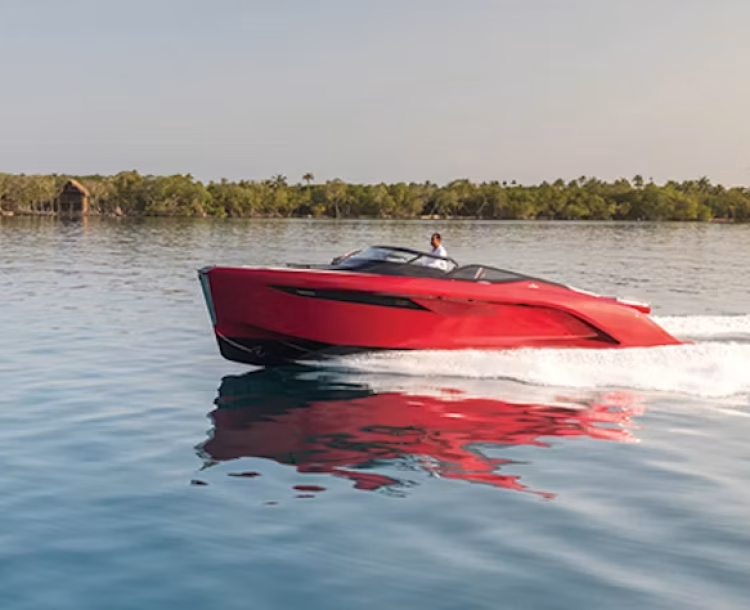
Marine engineering firm BAR Technologies partnered with Princess Yachts to develop the R35, a sport yacht with an optimized hull and hydrofoils that adjust automatically for stability and comfort. Siemens tools NX, Simcenter STAR-CCM+ and Simcenter Nastran supported design and simulation, while Teamcenter enabled data sharing between both companies.
Click to read more..
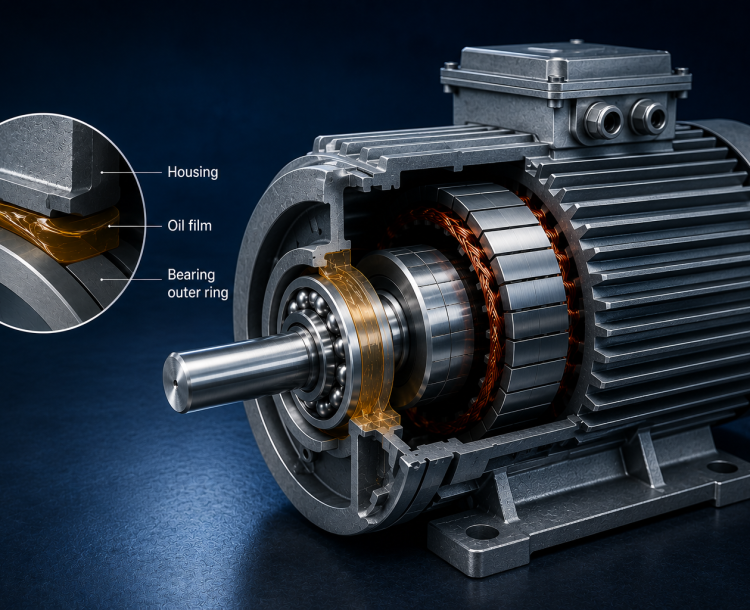
AVL examines how viscous oil-film damping can suppress gyroscopic effects in high-speed electric motor rotors. Using AVL EXCITE™ M, the study simulates rotor unbalance, magnetic pull and bearing dynamics, showing how an oil film can reduce radial motion, bearing loads and rotor-end displacement.
Click to read more..
Industry Events
This one-day hands-on training introduces participants to internal combustion engine modeling using CONVERGE. The session covers diesel, PFI spark-ignited, and pre-chamber engine cases, including spray, combustion, heat transfer, meshing, and post-processing.
📅 August 25, 2026
🕘 09:00 – 18:00 IST
📍 IndiQube Unity Tower, 4th floor, Survey No 148/1+2, Balewadi Phata, Opp. Shrusti Elegance, Baner, Pune, Maharashtra – IN
This four-day training course provides an introduction to low-frequency electromagnetics modeling using the AC/DC Module in COMSOL Multiphysics®. Participants will learn to build electrostatic, magnetostatic, and low-frequency AC models, covering meshing, symmetry, circuit coupling, rotating machinery, and multiphysics aspects such as heat transfer and structural mechanics.
📅 August 25–28, 2026
🕚 11:00 – 17:00 EDT
This webinar explores a 2026 update of Ansys simulation capabilities for pumps, compressors, and fans, spanning R&D through in-service troubleshooting. Topics include CFD for flow performance and efficiency, mechanical FEA for structural integrity and rotor-dynamics, simulation workflow automation for optimization, and material selection to complement simulation-driven design.
🗓️ August 26, 2026
🕙 10:00 – 11:00 EDT
As physics AI models take on more of the optimization work, design speed increasingly depends on how quickly engineers can generate and adapt geometry. This session explains how nTop and PhysicsX connect into a single workflow, turning parametric CAD models into AI-trained surrogates that predict performance in real time, with built-in checks for model accuracy.
🎥 Available On Demand
In FOCUS
Company in Focus

Who they are
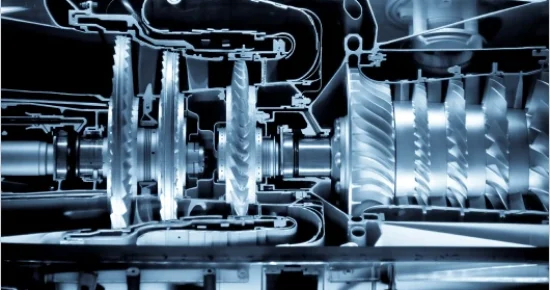
SoftInWay is a US-based turbomachinery, energy, and propulsion technology company founded by Dr. Leonid Moroz in 1999, whose experience as a Chernobyl liquidator shaped its founding focus on industrial safety and efficiency. What began as a turbomachinery consulting practice has grown into a global R&D engineering company and Siemens Gold Channel Partner, serving industry leaders, startups, universities, and government research organizations.
Solutions & Technology
SoftInWay‘s flagship platform, AxSTREAM®, is a modular suite covering the full turbomachinery design lifecycle:
- Turbomachinery Design: 3D design and analysis for compressors, pumps, turbines, fans, and blowers across axial, radial, and mixed-flow configurations.
- System Simulation: 0D–1D thermodynamic cycle and thermal-fluid modeling, including digital twin and virtual test bench capabilities.
- Rotor Dynamics & Bearings: High-fidelity FEM-based lateral, torsional, and axial rotor analysis.
- Optimization & AI: AxSTREAM ION automates design workflows, while AxSTREAM AI and its assistant, Peter, add machine learning and conversational support.
- Siemens Tools: STAR-CCM+, NX CAD, Simcenter 3D, and Teamcenter, offered as a Siemens partner.
Applications:
SoftInWay’s technology supports rotating machinery and thermal-fluid systems across:
- Aerospace: Rocket engines and hypersonic/supersonic propulsion.
- Energy: Power generation, renewable energy, hydrogen, and carbon capture.
- Other Sectors: Oil & gas, HVAC & refrigeration, transportation, appliance & medical devices, and defense.
Did you know?
SoftInWay‘s founder, Dr. Leonid Moroz, worked as a Chernobyl liquidator — an experience that directly shaped the company’s engineering philosophy around safety and reliability in high-stakes rotating machinery systems.”
Solutions Focus:
SoftInWay‘s mission is to replace fragmented CAD/CAE tools and physical prototyping with a single, generative design-driven platform, helping engineers move faster from concept to optimized turbomachinery and energy systems.
Technology Focus
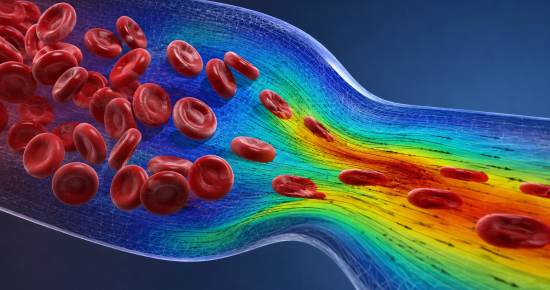
Medical devices that come into contact with blood, such as pacemakers, heart valves, catheters, and vessel connections, carry a risk of causing unintentional blood damage. A central concern is hemolysis, where red blood cells rupture under flow-induced stress and release hemoglobin into the plasma, an effect engineers weigh alongside sublethal cell damage and thrombosis when refining medical device design.
To investigate this, engineers at Veryst Engineering, used COMSOL Multiphysics® software and computational fluid dynamics (CFD) to model blood flow through an FDA benchmark nozzle featuring a contraction, neck, and expansion. The team had previously run detailed finite element simulations of this same nozzle, and reused that simulation data to train two deep neural network surrogate models:
- One to predict blood velocity within the nozzle
- Another to estimate hemolysis, using flow rate, converging length, neck diameter, and diverging length as adjustable design inputs
To sharpen accuracy near device walls, the team added a physics-informed model that enforced a no-slip condition, meaning fluid velocity drops to zero right at the wall surface, matching real flow behavior. The surrogate model matched real flow patterns well when the blood flow was turbulent, but struggled more when the flow was smooth and steady (laminar) or shifting between the two states. Its hemolysis predictions, however, stayed close to both the CFD results and published experimental data, and changing the nozzle’s converging and diverging lengths made little difference to hemolysis itself.
Looking forward, Veryst plans to measure exactly how much error the surrogate model introduces and confirm that error is small enough to not change the actual design decision, an approach that could help AI-based simulation gain wider acceptance in future FDA device reviews.