


Your weekly sync on the pulse of the simulation industry
Industry News

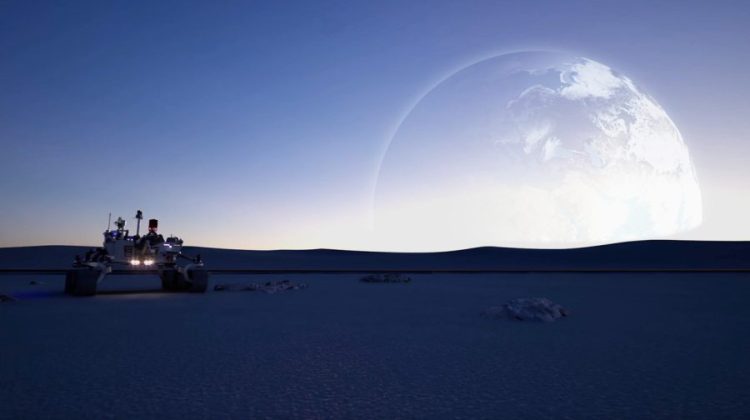
Designing a rover for the Moon means preparing it for one of the harshest environments in engineering. During launch, the vehicle is shaken by intense vibration and noise. After landing, it must survive scorching daytime heat followed by extreme cold at night, all while keeping batteries, electronics, and moving mechanisms functional.
The guest blog by Maya HTT explains that engineers are addressing this using digital twin simulation within Simcenter software, where mechanical, thermal, and structural models are linked to a single design instead of being built separately. This reduces duplicated work and design errors as changes are made.
Specific tools support each stage: Simcenter Response Dynamics evaluates whether a rover can withstand launch vibrations, while Simcenter 3D Space Systems Thermal simulates heating, radiation, and mechanism behavior across a full lunar day-night cycle. Notably, thermal results can then be automatically mapped onto structural models, even when the underlying meshes differ, allowing engineers to study combined thermal and mechanical stress without rebuilding models from scratch.
This integration lets teams spend less time recreating models and more time evaluating performance, an advantage becoming increasingly valuable as missions under NASA’s Artemis program grow more complex.
Partnerships & Collaborations


Cadence, working with NVIDIA, has introduced AuraStack AI Super Agent, extending agentic AI beyond chip design into PCB, packaging, and system-level engineering. Combined with ChipStack, InnoStack, and ViraStack agents, the initiative aims to build a complete silicon-to-system autonomous engineering platform for electronic design.
Click to read more..
Dassault Systèmes has signed an MoU with i-CATS University College to bring digital engineering into Sarawak’s classrooms, beginning with a Digital Aerospace Showcase at the university. It aims to build local talent and support Sarawak’s push toward becoming an aerospace and space technology hub.
Click to read more..
Silvaco and NVIDIA have partnered to advance physics-based digital twins for semiconductor design and manufacturing, combining NVIDIA‘s accelerated computing, CUDA-X, PhysicsNeMo, Omniverse, and Nemotron with Silvaco’s simulation portfolio to build, train, and deploy digital twins.
Click to read more..


Imperial College London‘s HEAD Lab uses Ansys LS-DYNA simulation software and high-fidelity brain models to study how impacts strain brain tissue, aiming to improve understanding of traumatic brain injuries, guide helmet design, and support future diagnostic tools engineering for personalized care.
Click to read more..

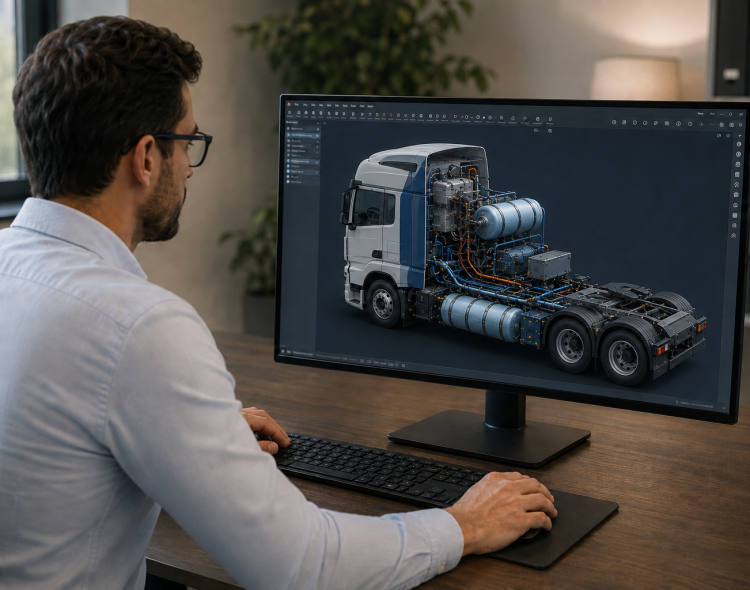
Hyliko, a French startup, is developing hydrogen fuel cell trucks to decarbonize long-haul freight, offered through a subscription-based service model. It uses Dassault Systèmes’ 3DEXPERIENCE platform with CATIA and SIMULIA to design, simulate and retrofit trucks, aiming to make hydrogen practical for fleet operators.
Click to read more..


Keysight has certified its RFPro electromagnetic design software, part of Advanced Design System, for Intel Foundry‘s 14A and 18A-P process technologies. The certification aims to help design teams validate electromagnetic simulations before chips enter production.
Click to read more..
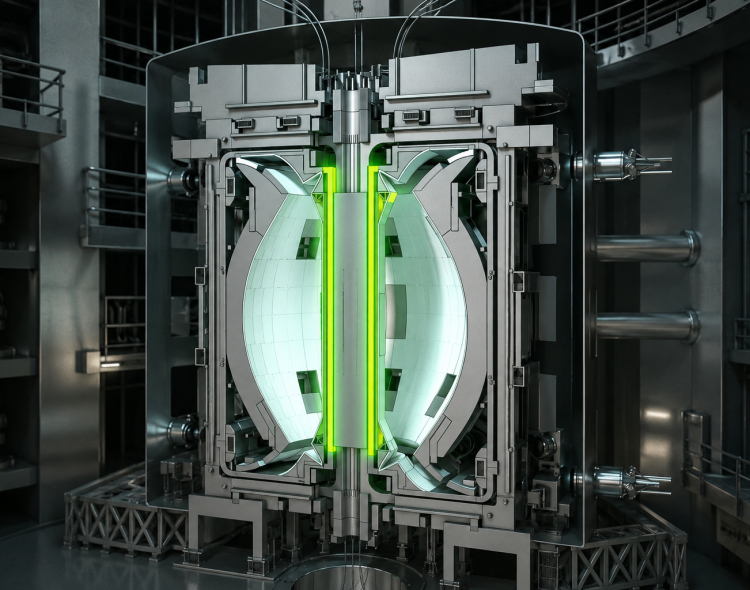
Researchers from STEP Fusion and Demcon Multiphysics used COMSOL Multiphysics to study heating from AC losses in spherical tokamak magnets. Findings support a simpler superconducting cable design and help guide thermal management and reliable operation of the UK’s future fusion energy plant.
Click to read more..
Industry Events
Thermal stress is a key consideration when designing components exposed to temperature variation. This webinar demonstrates how to model thermomechanical behavior in COMSOL Multiphysics®, covering thermal expansion, phase change, and thermal creep through model examples, case studies, and a live software demo.
📅 August 18, 2026
🕑 14:00 – 14:18 CEST
AI is changing how engineers explore ideas, build models, and speed up technical work. This webinar introduces generative and agentic AI in MATLAB and Simulink, covering code and model generation, algorithm exploration, simulation automation, and how engineers can validate and apply AI-generated results with confidence in existing engineering workflows.
📅 August 20, 2026
🕡 18:30 – 19:30 IST
Detecting drones in thermal IR requires large, diverse training datasets that are hard to obtain from real-world sources. This webinar from ThermoAnalytics presents an automated methodology using MuSES and CoTherm to generate synthetic UAV imagery, evaluating how it improves YOLO11 and Faster R-CNN detection accuracy across real and synthetic test sets.
📅 August 20, 2026
🕘 9:00 – 10:00 ET
This webinar explores how QUGATE algorithms and pSeven Enterprise help engineers build trustworthy surrogate models from limited simulation data. A real-world CFD case study shows how automation reduces the number of simulations needed while maintaining reliable results, improving computational efficiency, engineering decision-making, and development speed.
🎥 Available On Demand
In FOCUS
Company in Focus

Who they are
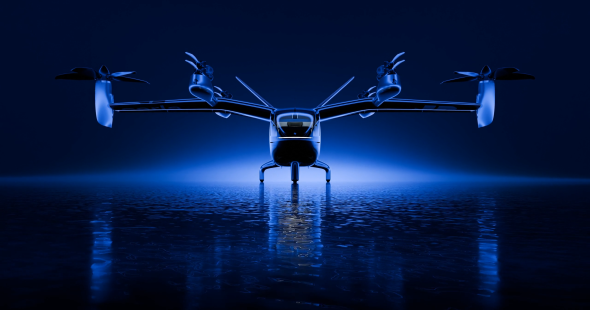
Sarla Aviation is a Bengaluru-based startup building India’s first flying taxi network for mass urban mobility. Co-founded by Rakesh Gaonkar and Adrian Schmidt, who both honed their expertise at Lilium in Germany, the company is named after Sarla Thakral, India’s first female pilot, who earned her licence in 1936 at just 21.
Solutions & Technology
Shunya, the company‘s flagship hybrid-electric eVTOL, is designed around a first-principles philosophy of simplicity and fewer failure points:
- Hybrid-Electric Powertrain: Two double-isolated battery packs and a SAF tank power seven electric propulsion units.
- Range & Speed: Up to 800 km in hybrid mode, 150 km fully-electric for urban hops, at speeds up to 250 km/h.
- Modular Cabin: Configurable in 6-seat, 4-seat “club,” cargo (680 kg payload), and ambulance variants, built for vertical takeoff from any flat surface.
Applications:
Sarla is rolling out its flying taxi network in three deliberate phases, each widening its reach and use cases:
- Phase 1: Airport transfers and free medical response flights.
- Phase 2: Connectivity between organised hubs like offices and campuses.
- Phase 3: A city-spanning mass transit network by 2035.
Did you know?
Sarla recently completed flight tests of Sylla, a half-scale, 700 kg-class technology demonstrator that logged 500+ tests and 18+ flight hours — the heaviest electric aircraft to take off in India.”
Solutions focus:
Sarla’s roadmap is built on radical simplicity — the belief that the best part is no part — enabling an affordable, “teleportation-like” mass mobility network for India.
Technology Focus

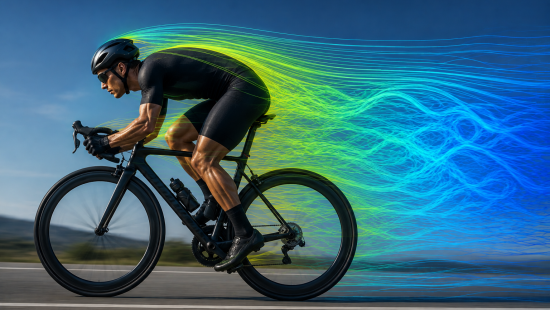
Ask any professional cyclist what wins a race, and fitness is only half the answer. The other half is quieter: helmet shape, riding position, even the vehicle following behind them. None of it shows up on a stopwatch directly, but over a long race, it adds up. A recent series of talks tied to the Tour de France looked at how researchers and cycling teams use simulation to work out these details ahead of time. Three studies highlighted by Ansys are:
- Wheel shape and drag: Working alongside Équipe cycliste Groupama-FDJ United and component maker Miche, researchers at Heriot-Watt University used CFD to test how wheel designs, like deep-section rims, tri-spoke, and disc wheels, affect drag. Wheels play a real role in how much a bike fights the air, so getting the simulation right, catching every geometric detail without making computing time unmanageable, was a big part of the work.
- Does your team car matter? Bert Blocken had already shown that a car trailing a cyclist can help them move faster by changing the airflow around them. His newer research asks a follow-up question: does the type of car matter? His team compared a standard estate car against a Mercedes Smart, a Jaguar, SUVs, and vans to see which gives a cyclist the biggest aerodynamic assist.
- Modeling a cyclist who’s actually pedaling: Most aerodynamic simulations treat a cyclist as frozen mid-motion, missing much of what’s really happening in the air around them. To fix that, an engineering student with Équipe cycliste Groupama-FDJ United used Ansys Fluent to simulate a rider who’s actually pedaling. The results lined up well with wind tunnel tests, giving the team a clearer sense of the turbulent air trailing behind a moving cyclist.
None of this replaces training or talent. Together, these efforts show how simulation is becoming a quiet but influential part of competitive cycling strategy.