


Your weekly sync on the pulse of the simulation industry
Industry News

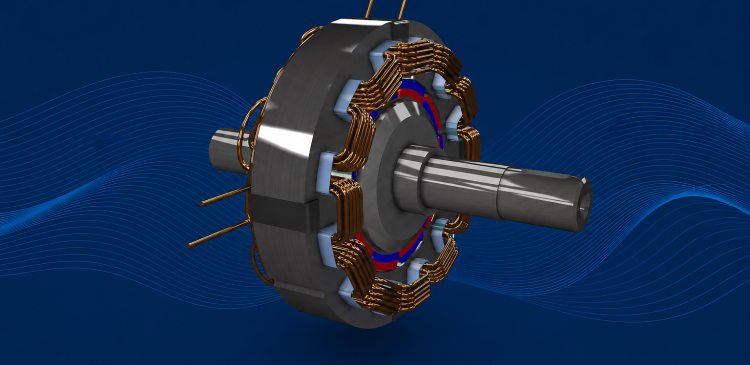
A small U.S. startup is rethinking electric motor design, drawing on centuries-old ideas about friction to eliminate ball bearings and gearboxes.
Orhont Magnetics, founded by Alex Dobjanski, provides fabrication services for electric machine prototypes and is developing what it calls a gapless rolling electric motor. Inspired by Leonardo da Vinci’s studies on friction, the design lets the rotor roll directly against the stator using static rather than dynamic friction, while magnetically driving torque multiplication within the same housing in a way that aims to reduce mechanical wear.
To refine the concept, Orhont uses Ansys multiphysics tools, including the Maxwell electromagnetic solver and Mechanical structural software, accessed through the Ansys Startup Program with support from SimuTech Group. Coupling electromagnetic and thermal analysis lets the team trace how EM losses translate into heat, guiding design decisions before prototypes are built.
With backing from the Department of the Navy’s Small Business Innovation Research program, the design could eventually find use in defense, aerospace, and industrial machinery—showing that an old idea about friction may still have something to teach modern engineering.
Click to read the original article..
Product News

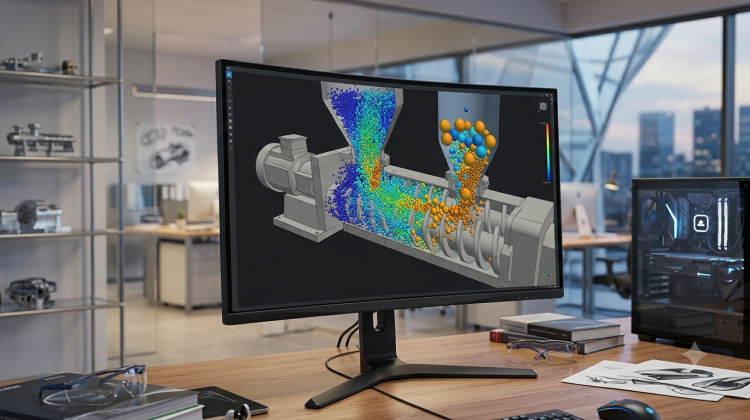
Unified CPU/GPU Custom Model API
JSON-Based Simulation Automation
Faster Coating Thickness Analysis

ANSA MB Validation
META Post-Processing Fixes
SPDRM MySQL 8.4 Support

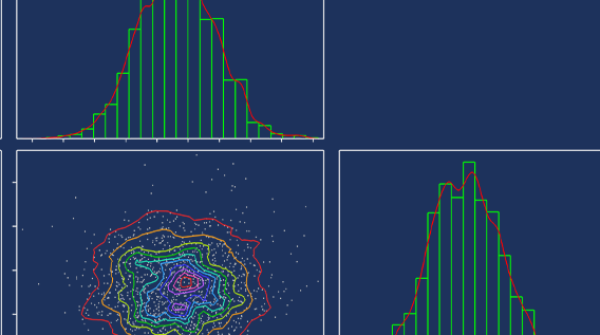
Experimental Data Calibration
Bayesian Parameter Estimation
Forward Uncertainty Propagation

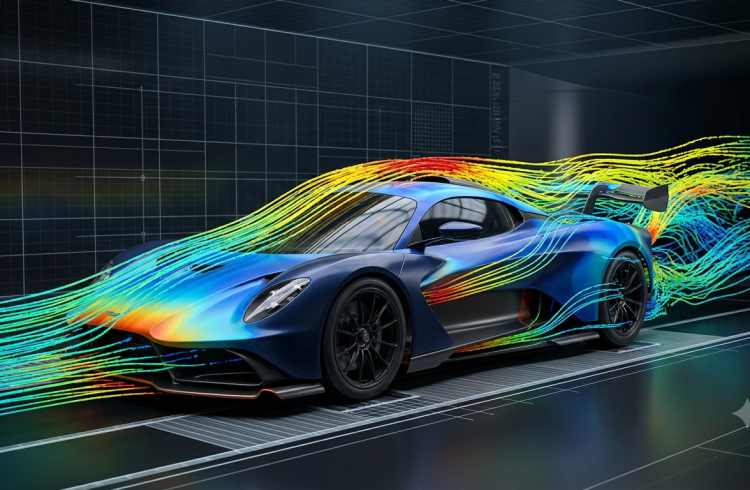
Bug fixes & stability
Adjoint & Coupled updated
Linux & Windows support


Simulations Plus has entered a definitive agreement to be acquired by Altaris, LLC in an all-cash deal. Altaris plans to combine the simulation software company with Chemical Computing Group, aiming to strengthen offerings in model-informed, AI-accelerated drug development. Closing is subject to stockholder and regulatory approvals.
Click to read more..

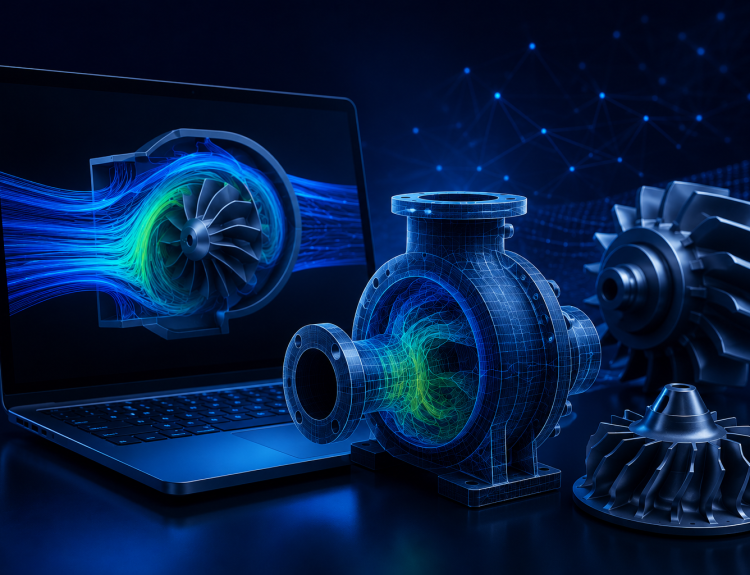
SimScale has expanded access to its Simerics-MP mesher and solver by making them available through its Community plan for non-commercial use. The move aims to give engineers an opportunity to explore high-fidelity computational fluid dynamics simulations for rotating machinery applications, including pumps, compressors, valves, electric motors, and turbines.
Click to read more..

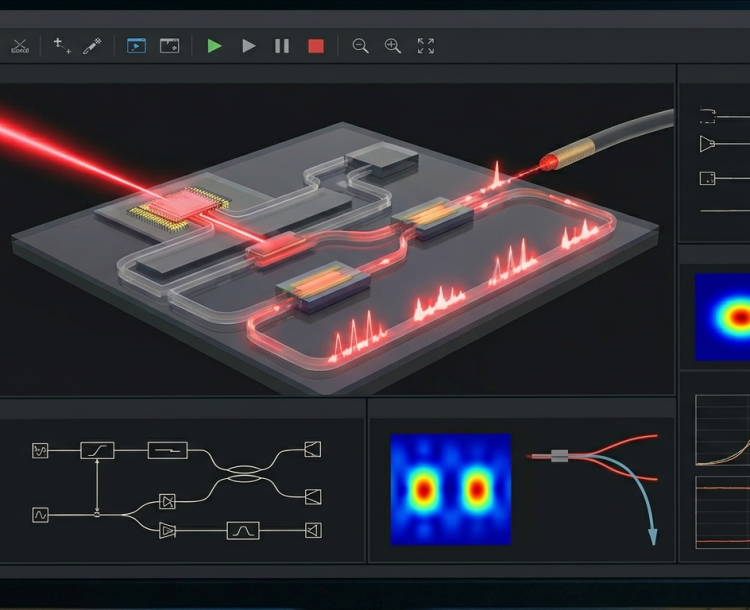
Keysight Technologies has completed its acquisition of VPIphotonics, adding system-level simulation to its photonic design automation portfolio. The move aims to let optical and electrical engineers evaluate designs from device physics through full link performance within a single, connected workflow.
Click to read more..

NVIDIA supported the National Science Foundation’s NAIRR pilot program by providing dedicated cloud-based DGX resources and technical guidance to researchers. The initiative aims to advance projects in protein prediction, energy storage, infectious disease detection, and physical simulations across universities .
Click to read more..
Industry Events
Developing reliable navigation algorithms for aerospace and autonomous systems requires accurate sensor modeling and rigorous validation before deployment. This webinar examines MATLAB-based workflows for generating synthetic IMU, GPS, and optical sensor data, implementing sensor fusion and pose estimation algorithms, and integrating navigation models into closed-loop simulations for performance testing.
🗓️ July 14, 2026
🕥 22:30 – 23:30 IST
As semiconductor designs shift to heterogeneous 3D-IC architectures, securely sharing accurate thermal models has become critical. This webinar explores how Ansys Icepak’s Boundary Condition-independent Surrogate Thermal Models convert detailed 3D CFD simulations into encrypted, system-level models, enabling reliable thermal prediction, streamlined collaboration, and IP protection across diverse operating environments.
🗓️ July 14, 2026
🕚 11:00 – 12:00 IST
This webinar introduces fluid flow and heat transfer modeling in COMSOL Multiphysics®, covering conjugate heat transfer fundamentals, meshing, solver settings, and laminar/turbulent flow regimes through live demonstrations of industrially relevant, real-world simulation applications and workflows.
🗓️ July 14, 2026
🕚 11:00 – 12:00 EDT
As EV battery trays become larger and thinner, preventing casting defects while maintaining structural integrity has become a critical manufacturing challenge. This webinar explores how FLOW-3D CAST simulates free-surface filling, oxide entrainment, and solidification shrinkage in gravity sand casting to optimize gating and riser design for high-quality battery enclosures.
🗓️ July 15, 2026
🕐 13:00 – 14:00 ET
In FOCUS
Company in Focus

Who they are
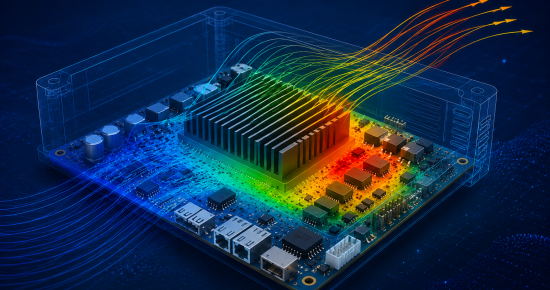
SimYog is a Bengaluru-based deep-tech startup that helps engineering teams identify and resolve EMI/EMC (Electromagnetic Interference, Electromagnetic Compatibility) issues during the design stage, before physical prototypes are built. It does this through simulation software that acts as a “virtual EMI/EMC laboratory,” letting hardware teams test and fix electromagnetic compliance issues on a computer instead of waiting for costly lab cycles. Founded in 2017 as an IISc-incubated startup by Prof. Dipanjan Gope, Anant Devi, and Harikiran Muniganti, the company today is led by Gope as CEO, with Dr. Krishnan Ramaswami serving as CTO. SimYog runs on one mission: “Agile for Hardware Design.” Backed by Bosch and deep-tech investors.
Solutions & Technology
SimYog’s product suite spans the full EMC simulation stack, from component-level analysis to system-wide compliance:
- Compliance-Scope: a “virtual EMI/EMC laboratory” that analyses PCB-level designs against standards like CISPR 25 and ISO 11452-4, replicating lab behaviour before hardware exists.
- Max-Scope: a general-purpose 3D electromagnetic simulation solver for full electromagnetic extraction.
- SEM-Scope and SEM-Scope-Modeller: system- and subsystem-level EMI/EMC modelling that links component behaviour to overall compliance.
- SahAI: an AI assistant that configures EMC tests, assists PCB imports, guides simulation setup, and interprets diagnostic results.
Applications:
- Automotive electronics and ECUs
- Power and switching converters
- Semiconductor and IC design
- Tier-1 and OEM system-level compliance
Did you know?
SimYog raised ₹20 crore (~$2.4M) in a pre-Series A round in December 2023, led by Mela Ventures along with 1Crowd, with participation from existing investor IdeaSpring — funding aimed at accelerating the company’s global expansion in EMI/EMC simulation.”
Solutions Focus:
Rather than replacing certified EMC testing, SimYog complements it by providing lab-correlated simulation results early in the design cycle. This enables engineers to identify and resolve compliance issues before prototype fabrication, reducing costly redesigns and improving the chances of first-pass EMC certification.
Technology Focus
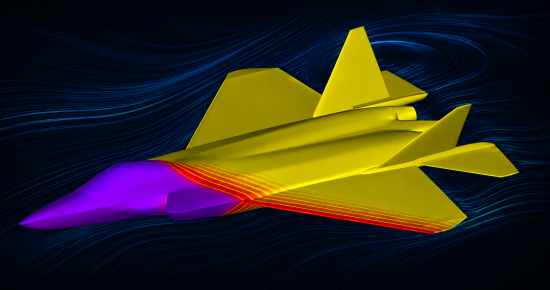
Modern military aircraft are becoming increasingly dependent on advanced electronic systems to perform tasks such as communication, navigation, surveillance, radar operation and electronic warfare. Rather than operating as standalone platforms, they are expected to exchange information with other aircraft, unmanned systems, ground stations and defence networks across multiple operational domains. As this level of connectivity grows, engineers must ensure that the many onboard electromagnetic systems work together reliably without interfering with one another. This has made electromagnetic engineering an important consideration throughout the aircraft design process, rather than only during final testing.
A modern aircraft contains a dense network of electromagnetic components, including:
- Radar apertures and communication antennas
- Navigation receivers and tactical data links
- Electronic warfare systems
- Cable harnesses and avionics bays
- Radomes and conductive airframe structures
Since these systems share both physical space and the electromagnetic spectrum, their interactions can influence communication, detection, survivability and electromagnetic compatibility.
The blog by Marco Kunze, highlights that SIMULIA CST Studio Suite is used to create detailed electromagnetic models of an aircraft, allowing engineers to analyse how antennas, radar, cables and electronic systems behave once installed rather than as individual components. The simulations can be used to evaluate antenna placement, identify electromagnetic interference, study radar cross-section, and assess the impact of lightning, electromagnetic pulses and high-intensity radiated fields on aircraft systems. When used with the 3DEXPERIENCE platform, these simulation results can remain connected to design and engineering data as the aircraft evolves. As aircraft evolve into highly connected mission platforms, electromagnetic simulation is playing an increasingly important role in revealing how complex electronic systems interact, helping engineers address integration challenges long before an aircraft reaches the flight line.