



Your weekly sync on the pulse of the simulation industry
Industry News

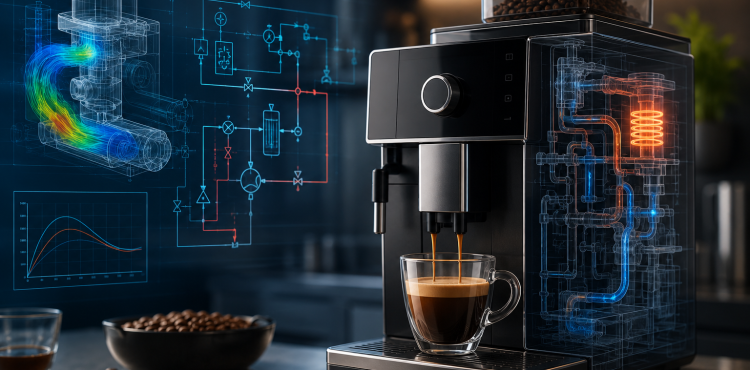
Engineering a coffee machine that consistently delivers on taste, energy efficiency, and sustainability is more complex than it may seem. BSH Home Appliances, a Bosch Group subsidiary whose brand portfolio includes Bosch, Siemens, Gaggenau, and Neff, has been using simulation technologies to better understand and manage that complexity.
Behind every cup of coffee is a complex interaction of water flow, temperature, pressure, and control systems. Small changes in any of these variables can affect brewing performance, energy consumption, and overall machine behavior. While physical testing remains essential, it can be difficult to fully capture the transient conditions that occur during startup, heating, and pumping cycles.
To address this, BSH has incorporated Siemens’ Simcenter STAR-CCM+ and Simcenter Amesim into its development workflow. Engineers use STAR-CCM+ to analyze fluid flow and heat transfer within individual machine components, while Amesim is used to model the behavior of the complete system and evaluate different operating and control strategies. The simulation environment is also used to assess the impact of production changes, such as modifications to hose length, before they are introduced into physical products.
Through this approach, BSH is able to explore how changes in temperature, pressure, and system design influence brewing performance before committing to physical prototypes, providing engineers with greater insight into the factors that ultimately shape the quality of the final cup.
Click to read the original article..
Product News


- Agentic AI Orchestration Across Solvers
- Open Execution Infrastructure
- Native Third-Party Solver Integration


- Fully Autonomous Chip Design & Verification
- Self-Directed Decision Making
- Secure Deployment

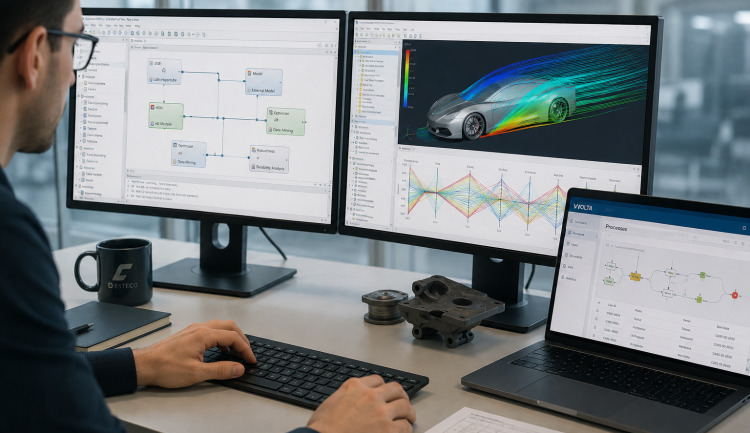
connectorSTUDIO for modeFRONTIER
Data Manager Business Projects
nD Modeler 0D/1D/3D Support

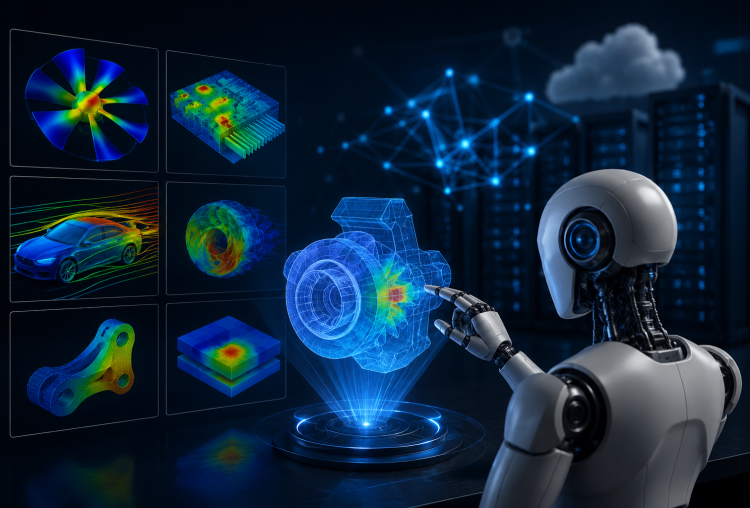
AI Agent-Driven Simulation Setup
Large-Scale Parallel Simulation Studies
- Simulation as Reusable Code


PhysicsX has raised $300 million in a Series C round, valuing the company at approximately $2.4 billion. The funding aims to support wider adoption of its physics-based AI technology across aerospace, automotive, semiconductors, and energy sectors.
Click to read more..

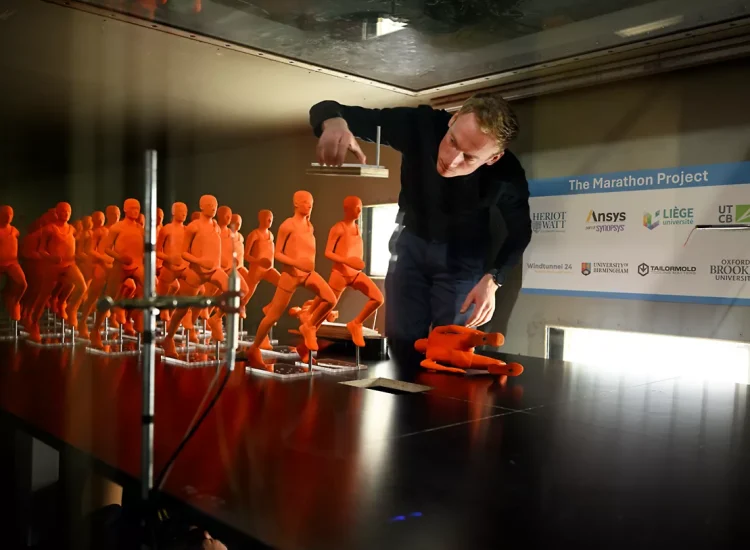
Researchers at Heriot-Watt University used Ansys Discovery and Ansys Fluent CFD simulation software, validated by wind tunnel testing, to study how optimized running group formations aim to reduce aerodynamic drag through strategic pack positioning, helping marathon athletes conserve energy and potentially improve race times.
Click to read more..

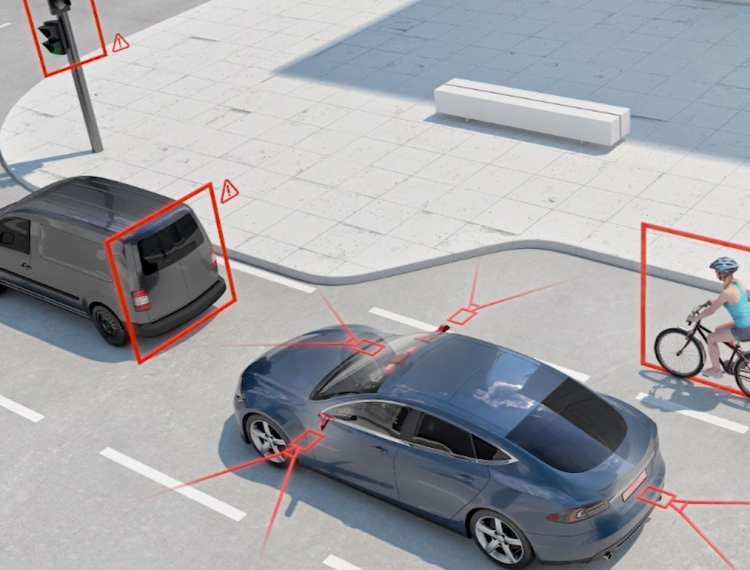
Rosenberger, a manufacturer of connectivity solutions, is using SIMULIA‘s Abaqus and CST Studio Suite to create virtual prototypes of connectors. The simulations help engineers assess electrical, mechanical and manufacturing requirements early in development, incorporate material tolerances before tooling, and reduce reliance on physical prototypes.
Click to read more..

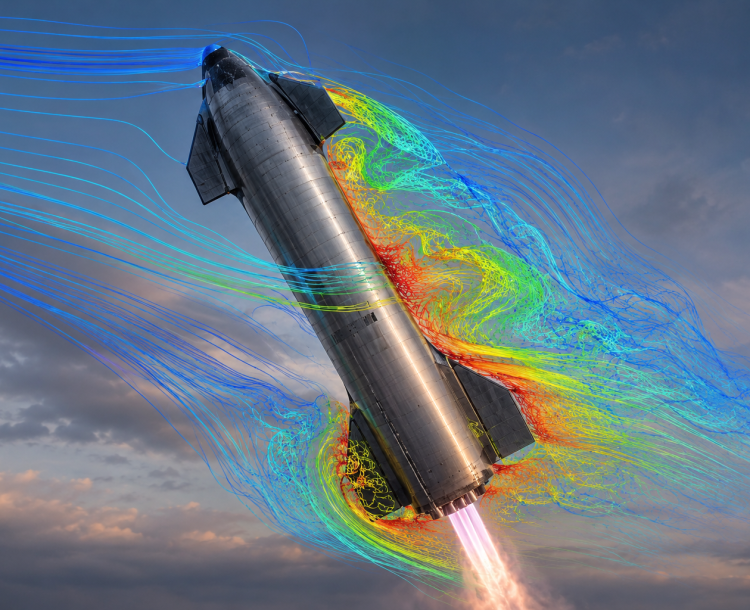
Flexcompute has showcased a simulation of SpaceX Starship’s landing flip using Flow360, employing Nested Sliding Interfaces instead of traditional overset meshes, aiming to give aerospace engineers accurate aerodynamic force data to refine reusable rocket landing control systems.
Click to read more..
Industry Events
Agentic AI is beginning to find its way into engineering simulation tools. This webinar discusses COMSOL’s built-in chatbot for modeling assistance and API code generation, alongside Cosmon’s Nexus agent, which is designed to support simulation setup, CAD workflows, troubleshooting, and postprocessing tasks.
📆 June 16, 2026
🕚 11:00 – 12:00 EDT
This webinar presents practical methods for improving efficiency in AVL EXCITE M workflows. Topics include model setup, data handling, postprocessing, and result evaluation, along with time-saving features and workflow techniques that can help reduce repetitive simulation tasks.
📆 June 17, 2026
🕜 13:30 – 14:00 IST
Thermal management in electric motors involves complex cooling configurations and rotating geometries that are difficult to simulate accurately. This hands-on training explores how engineers can model air, oil, and water-jacket cooling in CONVERGE, covering rotational motion approaches, conjugate heat transfer, and electromagnetic coupling.
📆 June 17, 2026 🕑 14:00 – 18:00 IST
📍 IndiQube Unity Tower, 4th floor, Survey No 148/1+2, Balewadi Phata, Baner, Pune, Maharashtra – IN
Mobility engineers often face pressure to evaluate designs faster without sacrificing accuracy. This webinar explores how Ansys Discovery’s real-time 3D multiphysics environment supports early-stage design exploration, covering structural analysis, thermal and fluid behaviour, topology optimization, and geometry iteration across automotive, EV, aerospace, and UAV applications.
📆 June 18th, 2026
🕦 11:30 – 12:30 IST
In FOCUS
Company in Focus

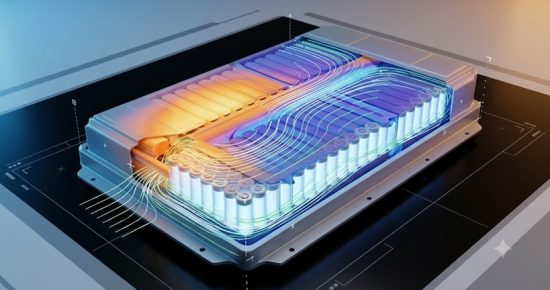
Who they are
Fawkes Energy is an Indian battery intelligence startup based in Bengaluru, founded by a team of scientists, engineers, and entrepreneurs. The company is built on a deep understanding of the entire battery value chain—from initial materials science and computational fluid dynamics (CFD) to end-of-life recycling. Their core mission is to unlock high-quality battery intelligence to resolve the data accessibility gap holding back the electric vehicle (EV) and battery energy storage system (BESS) ecosystems.
Solutions & Technology
Fawkes Energy blends physics-based electrochemical modeling with machine learning to build digital twins of battery systems. This “physics-based AI” ensures predictions are grounded in actual chemical reality rather than just data correlation. Their hardware-software product stack includes:
- FawkesLink: A universal hardware interface that plugs directly into battery systems to stream high-fidelity performance data in real time.
- FawkesCore: An AI-powered engine that analyzes streamed data to deliver predictive analytics, State-of-Health (SoH) monitoring, and life-extension strategies.
- FawkesArc: A dedicated design and simulation software tool that helps BESS manufacturers design storage infrastructure and run techno-economic, health, and thermal performance simulations.
- FawkesLoop: A data-driven circular marketplace that uses health metrics to seamlessly connect spent first-life batteries with second-life applications and certified recyclers.
Applications:
The technology addresses risks and operational bottlenecks across several crucial sectors:
- EV OEMs & Fleet Operators: Reducing high warranty/recall costs by predicting battery degradation and identifying uncharacteristic failures early.
- Battery Energy Storage Systems (BESS): Helping operators simulate real-world thermal behaviors and degradation paths to secure the economic backbone of large-scale storage projects.
- Insurance & Risk Management: Providing deep visibility into actual battery health to help insurers calculate and manage EV asset risks accurately.
- Charge Point Operators (CPOs) & Clean-Tech R&D: Accelerating R&D prototyping cycles using real-world field data instead of relying entirely on slow, traditional laboratory testing cycles.
Did you know?
A major roadblock in the EV revolution isn’t just making batteries—it’s knowing when they are actually spent. Without accurate State-of-Health (SoH) data, millions of electric vehicle batteries are stripped and recycled far too early, missing out on a massive ‘second-life’ opportunity where they could perfectly power stationary clean-energy grids for years!”
Solutions Focus:
The core focus of their engineering workflow centers on Digital Prototyping and Thermal-Electrochemical Simulation. Utilizing CFD, thermal validation, and open-source machine learning models, the platform bridges the gap between initial digital engineering design and real-world field analytics. This dual approach allows engineers to build safer, optimized thermal management systems capable of handling extreme operating conditions.
Technology Focus
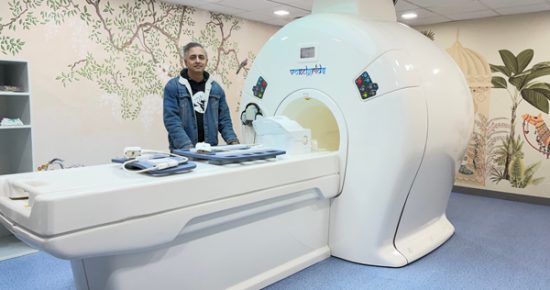
Voxelgrids Innovations, founded in 2017 by Dr. Arjun Arunachalam, has developed India’s first locally manufactured commercial 1.5 Tesla (T) MRI scanner, with the machine already deployed at Chandrapur Cancer Hospital in Chandrapur, Maharashtra.
The key challenge in MRI development lies in the conventional reliance on large volumes of liquid helium to cool superconducting magnets — a process that is both expensive and can take several weeks. Voxelgrids aimed to address this by developing a conduction-based cooling system using a mechanically coupled cryocooler (cold head), which extracts heat directly from the magnet through conduction, eliminating the need for liquid helium entirely.
To validate and refine this cooling design without repeated physical prototyping, the team used COMSOL Multiphysics® software with its Heat Transfer Module. The model incorporated thermal contact resistance at mechanical joints, radiative heat exchange inside the vacuum chamber, and complex two-stage cooling behaviour — creating a virtual replica closely resembling real-world conditions.
Key outcomes of the simulation-led approach include:
- Virtual cooldown analysis completed in a matter of hours, enabling evaluation of multiple cold head configurations, interface materials, and mechanical layouts
- Detailed temperature contours and gradient plots helped identify areas of trapped heat and poor thermal pathways, guiding mechanical design iterations
- Critical failure modes safely simulated, including accidental overlap of first and second stage temperatures, confirming thermal isolation under real-world conditions
- Simulation predictions closely matched experimental cooldown results, with observed differences attributed to factors not included in the initial model
- Significant reduction in overall product development time, compressing months of trial-and-error into days of virtual experimentation
The resulting MRI scanner is compact, lightweight, and aims to make MRI diagnostics accessible and affordable in settings with challenging installation conditions across India.