


Your weekly sync on the pulse of the simulation industry
Industry News

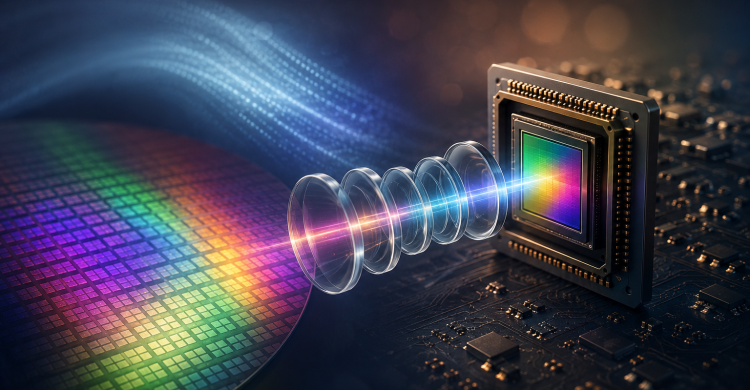
For more than a century, ams OSRAM has been involved in the development of lighting and sensor technologies for applications across automotive, medical, industrial, and consumer electronics. Its portfolio includes ambient light sensors, spectral sensing solutions, depth sensing technologies, and photodetectors used in medical imaging systems, designed to help devices detect and process information such as colour, distance, motion, and infrared light accurately.
As sensing architectures become increasingly compact and heterogeneous, integrating optical, analog, RF, and digital components onto a single platform introduces additional engineering complexities. Signal integrity challenges, substrate noise coupling, and electromagnetic interference can influence overall device performance, particularly in high-density semiconductor designs.
To address these challenges, ams OSRAM utilises multiple Cadence solutions across its development workflow. Cadence Virtuoso Studio supports custom IC and mixed-signal design, while the Quantus Extraction Solution handles parasitic extraction and substrate noise analysis, modeling RF coupling paths via simplified RC networks and enabling back-annotation of noise data directly into SPICE netlists. The Spectre Simulation Platform supports circuit-level verification across electrical, thermal, and electromagnetic domains. Together, these tools aim to help ams OSRAM evaluate complex sensor behaviour comprehensively during the design stage.
Click to read the original article..
Product News

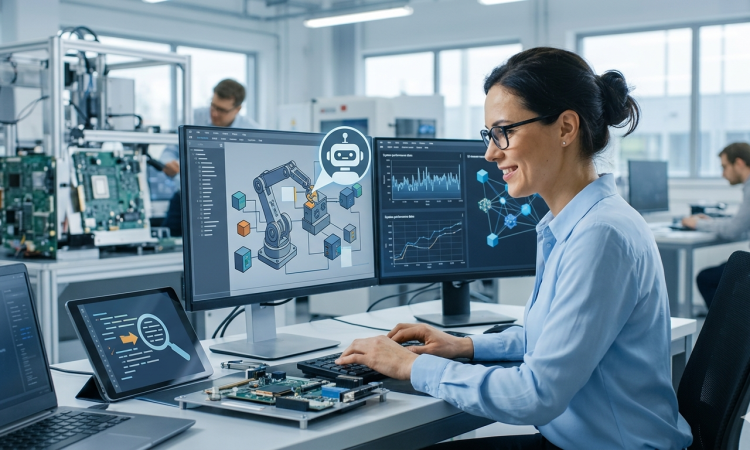
- Simulink AI Copilot
- Polyspace code assistant
- Wireless Network Toolbox

- Quantum CFD algorithm
- Nonlinear flow simulation
- Multi-step quantum workflows

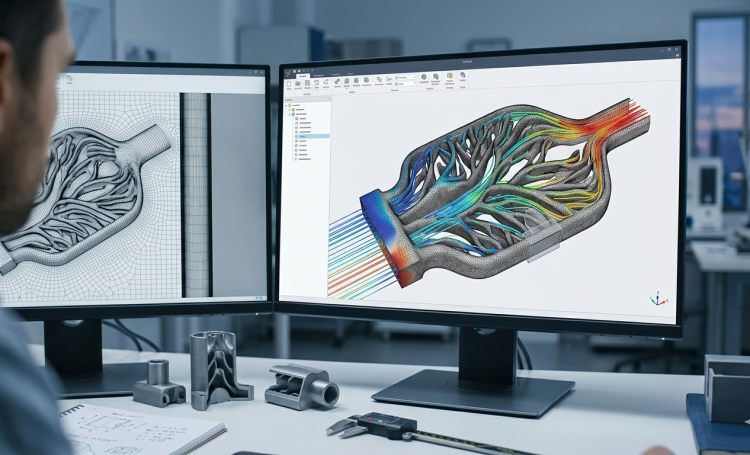
- Finer mesh control
- Simulation run queueing
- Two-factor authentication

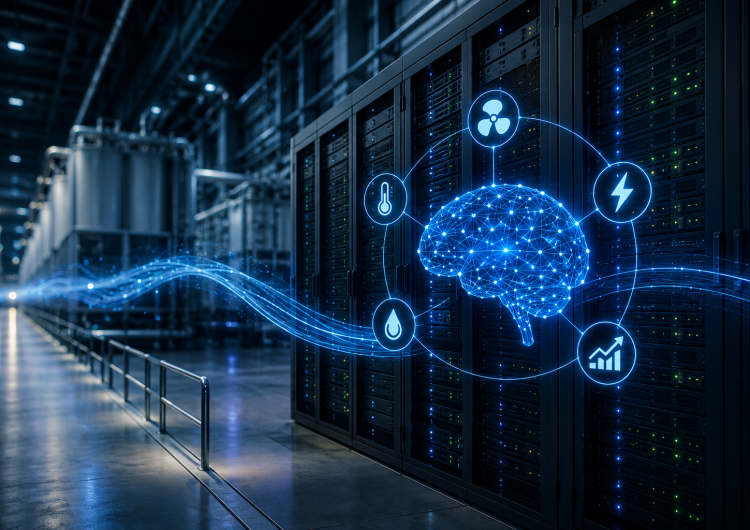
- AI platform for AI factories
Closed-loop AI control
Reliability-first framework

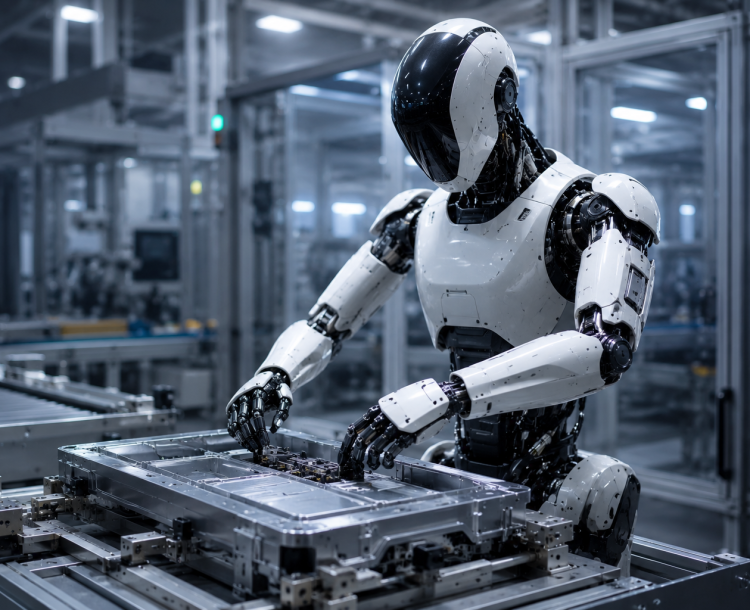
Siemens and UK-based Humanoid tested the HMND 01 Alpha humanoid robot at Siemens’ electronics factory in Erlangen, Germany, where it carried out autonomous logistics tasks using NVIDIA’s physical AI stack. The project, integrated through Siemens Xcelerator, aims to explore how humanoid robots could support adaptive manufacturing and industrial automation environments.
Click to read more..

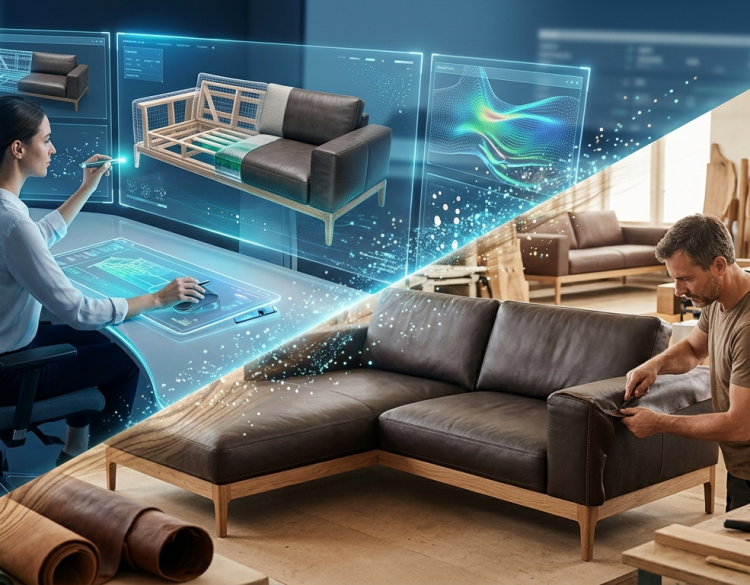
Rolf Benz, a manufacturer of premium upholstered seating and living room furniture, is using Dassault Systèmes’ 3DEXPERIENCE platform to digitally manage furniture design, simulation and visualization workflows. The company deploys CATIA for product development, SIMULIA for virtual performance testing, and 3DEXCITE to create configurable 3D product visualizations aimed at reducing physical prototyping and material waste.
Click to read more..
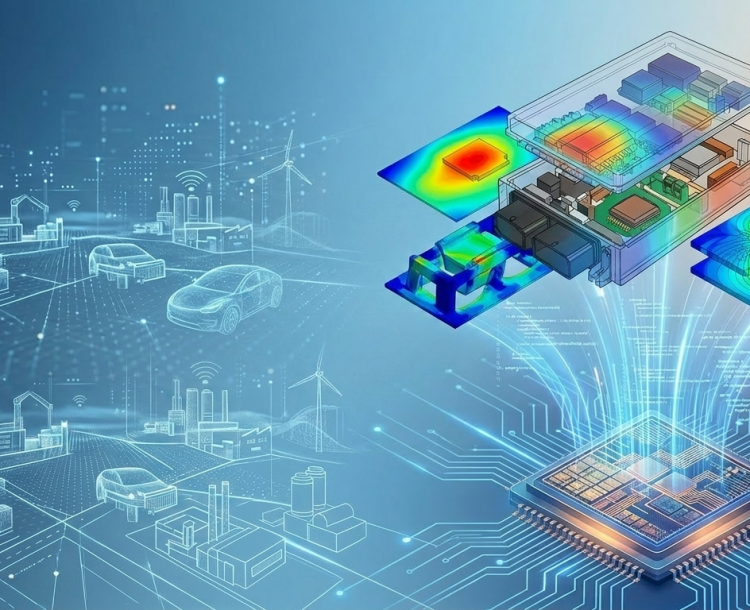
STMicroelectronics, a global semiconductor manufacturer serving automotive, industrial and electronics sectors, is using PyAnsys to streamline RF chip design workflows. The company developed an automated process called VLE2EMS that connects circuit layouts with electromagnetic and thermal simulations, enabling engineers to transfer design data between tools with limited manual rework and maintain consistency across simulation stages.
Click to read more..
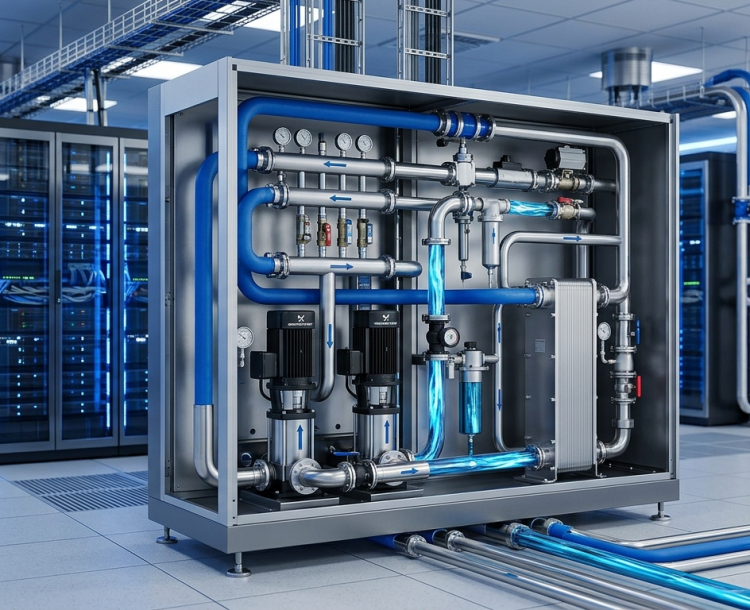
Rising AI workloads are increasing the need for efficient data center cooling solutions. Gamma Technologies has developed a GT-SUITE model of Google’s OCP Project Deschutes CDU, a 2MW liquid-cooling reference design, aimed at simulating thermal and hydraulic performance, evaluating components and fluids, and supporting digital twin and operational analysis for high-density computing environments.
Click to read more..
Industry Events
This session focuses on approaches for validating and testing Soft PLC control logic using simulation-based workflows.
Join the webinar to explore:
- Co-simulation methods for verifying controller behavior before hardware deployment
- Integration of IEC 61131-3 and C/C++ logic with machine and process models
- OPC UA-based communication between controllers and simulation environments
- Structured text generation and simulation-driven PLC testing workflows
🗓️ May 19, 2026
🕜 13:30 – 14:30 IST
This webinar explores the use of COMSOL Multiphysics to generate synthetic data for AI training. It covers simulation workflows and datasets from structural mechanics, CFD, electromagnetics, acoustics, chemical, and electrochemical engineering applications, while discussing how multiphysics simulations can support physics-based AI development when experimental data is limited.
🗓️ May 19, 2026
🕚 11:00 – 12:00 EDT
This webinar examines dynamic EMC testing approaches for EV and ADAS environments under real-world operating conditions.
Join the webinar to explore:
- EMC validation methods during acceleration, deceleration and varying drive states
- Analysis of electromagnetic emissions and system behaviour under dynamic loads
- Use of virtual testing and automated workflows for ADAS/AD electromagnetic assessment
🗓️ May 19, 2026
🕜 13:30 – 14:30 IST
This webinar will examine how automation can be applied to cabin comfort simulation workflows in TAITherm and CoTherm. The session aims to demonstrate methods for reducing repetitive manual set-up and post-processing tasks through tools such as Human Thermal Clothing Manager (HTCM), Thermal Comfort Analysis Tool (TCAT), journals, and automated thermal reporting, while outlining approaches for managing occupant comfort analysis and simulation data across multiple vehicle scenarios.
🗓️ May 21, 2026
🕘 09:00 – 10:00 EDT
In FOCUS
Company in Focus

Who they are
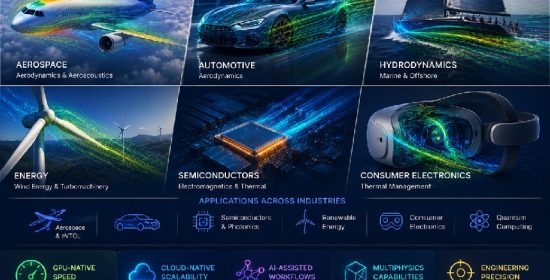
Flexcompute is a US-based simulation technology company founded by researchers from MIT and Stanford. The company focuses on high-performance physics simulation software built for GPU and cloud computing, helping engineers accelerate product development cycles.
Solutions & Technology
Flexcompute’s major platforms include:
- Flow360 – A GPU-native CFD solver for high-speed aerodynamic and aeroacoustic simulations.
- Tidy3D – A fast electromagnetic and photonics simulation platform based on FDTD technology.
- PhotonForge – A photonic design and layout platform for integrated photonics workflows.
Their technology stack combines:
- GPU-native simulation
- Cloud-native architecture
- AI-assisted workflows
- Large-scale multiphysics computing
Applications:
Flexcompute solutions are used across:
- Aerospace & eVTOL design
- Automotive aerodynamics
- Semiconductor & photonics development
- Wind turbine simulations
- Consumer electronics thermal analysis
- Quantum computing and optical device design
Did you know?
- Flow360 claims simulations up to 100x faster than traditional CFD solvers.
- Tidy3D is used by companies working in advanced photonics, AR/VR displays, and quantum computing.
- Flexcompute positions itself as “The Physics Company,” aiming to make hardware development as agile as software development.
Solution Focus
Flexcompute focuses on making engineering simulation dramatically faster and more accessible through GPU acceleration and cloud computing. Their platforms are designed to reduce simulation turnaround time from days to hours while enabling large-scale, high-fidelity analysis.
Technology Focus
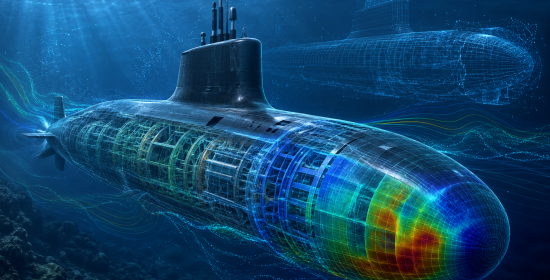
Ensuring the structural integrity of submarines is one of the most complex challenges in naval engineering, given the extreme underwater conditions these vessels must endure. The Virtual Twin Experience on Dassault Systèmes’ 3DEXPERIENCE platform aims to address this challenge by supporting structural integrity analysis through advanced simulation capabilities.
Submarines operate in some of the most hostile environments on earth, enduring immense water pressure at significant depths and the sudden shockwaves generated by underwater explosions. Most submarine vessels are military in nature, making structural resilience a critical engineering priority. The virtual twin approach aims to replicate real-world submarine behaviour digitally, allowing engineers to study structural performance before commencing physical prototyping or sea trials which reduces the risk of costly rework during later stages of development.
Using structural simulation on the virtual twin platform, marine engineers aim to assess performance across three key areas:
- Static Structural Integrity — Finite Element Analysis (FEA) aims to evaluate stresses and deformations at operational depths. The study highlights the importance of detailed mesh modelling, particularly at stiffener-bulkhead intersections, where simplified models risk missing areas of significant stress concentration.
- Pressurisation Cycle Fatigue — Repeated dive cycles subject the submarine hull to varying strain, which can lead to fatigue cracking over time. Fatigue analysis tools aim to calculate cracking points and assess long-term hull durability across numerous pressurisation cycles.
- Underwater Explosion (UNDEX) Survivability — Acoustic FEA aims to model shockwave propagation and cavitation effects on the submarine structure, accounting for fluid-structure interaction to assess survivability under explosion scenarios.
By integrating unified Modelling and Simulation (MODSIM), the platform aims to bridge the gap between CAD design and simulation, enabling engineers to identify and address structural vulnerabilities well before physical prototyping or sea trials, a critical step in advancing safer and more resilient submarine development.
Click to read the original article..