This article discusses how artificial intelligence is being used to speed up the engineering design process by working alongside traditional physics-based solvers. Instead of replacing established methods like finite element analysis or fluid dynamics, AI acts as a tool to handle repetitive tasks and explore larger sets of design variations more quickly.
The text highlights specific techniques, such as neural operators and reduced-order models, which can provide near-instant predictions once they are trained on existing data. This allows engineers to filter through many design options and only run high-fidelity, time-consuming simulations on the most promising candidates. It also touches on the importance of human oversight and validation to ensure that these AI-generated results remain accurate and grounded in real-world physics.
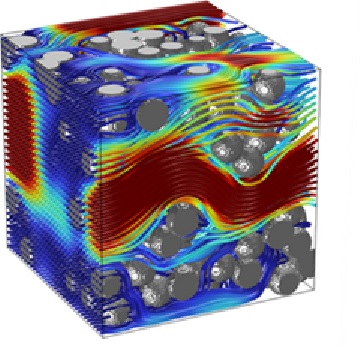
This paper, presented by T. Paris, focuses on the macroscopic modeling of fluid flow and thermal diffusion in porous materials. The research centers on calculating equivalent properties, such as permeability and effective thermal conductivity, by analyzing realistic 3D microstructures.
The study examines how different flow regimes—specifically Darcy, transitional, and inertial—behave at the pore scale.
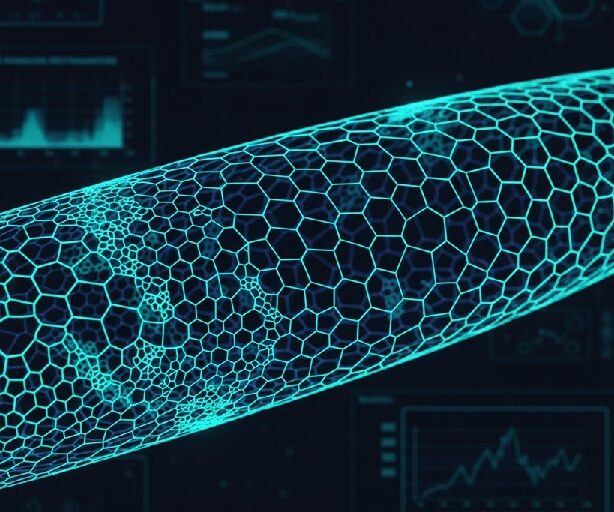
This white paper discusses a meshing technique called Clipped Voronoi Diagrams, designed to address the difficulties of preparing complex geometries for high-fidelity fluid simulations. In large eddy simulations (LES), traditional meshing often requires significant manual effort and high cell counts to achieve accuracy.
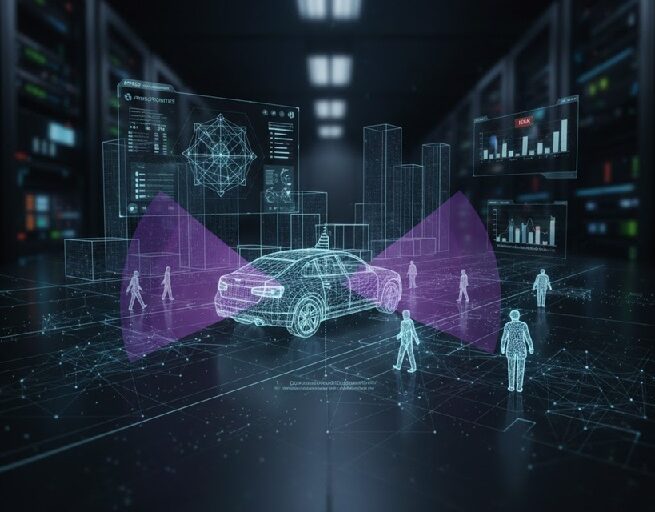
ESTECO, Keysight Technologies, IPG Automotive, and TNO have developed a framework to automate the validation of Advanced Driver Assistance Systems (ADAS). The process integrates modeFRONTIER for optimization with CarMaker for vehicle simulation and Keysight’s Radar Scene Emulator for hardware testing. TNO provides probabilistic models to analyze the resulting data.
This beginner-friendly webinar introduces the fundamentals of Computational Fluid Dynamics (CFD), covering the core physics, governing equations, meshing strategies, and boundary condition setup. Participants will also learn practical tips to reduce computational time and gain insights into post-processing and flow visualization—making it an essential starting point for mechanical and aerospace engineering graduates.
This SIMULIA Fluids Enhancements R2026x webinar showcases the latest advancements in Dassault Systèmes’ fluid simulation tools, highlighting improvements across aerodynamics, heat transfer, aeroacoustics and multiphase flows under a unified MODSIM paradigm.
This webinar which is part of the प्रवाह -Pravaha – NAFEMS India Webinar Series, explores how AI and machine learning can be integrated into engineering simulation workflows to accelerate concept development and shorten product development timelines—especially in sectors like automotive and aerospace.
Revolution in Simulation has introduced a learning program focused on the integration of Artificial Intelligence (AI) and Machine Learning (ML) within engineering simulation. The initiative provides educational resources for various skill levels, ranging from fundamental concepts to advanced applications in Computer-Aided Engineering (CAE)
Who they are Phimeca is an engineering services company founded in 2001 in Clermont-Ferrand, France. The company works in the areas of numerical simulation, applied mathematics, and data analysis, supporting industrial and research organizations across design, analysis, and maintenance activities.
Solutions & Technology
PHIMECA provides engineering services and develops tools that combine physics-based simulation with probabilistic methods. Its work focuses on studying variability, uncertainty, and reliability in engineering systems, alongside conventional numerical simulation approaches.
Their offerings include:
Mechanical simulation, CFD, and multiphysics studies
Uncertainty quantification and probabilistic analysis
Reliability and risk assessment
Model calibration and data-based studies
Development and support of tools such as OpenTURNS and Persalys
Integration with commercial and open-source solvers including Abaqus, Ansys, and OpenFOAM
“Did you know?” “PHIMECA was among the early industrial users of uncertainty quantification in engineering simulation, applying probabilistic approaches alongside numerical models to assess system behaviour under variability rather than relying solely on deterministic results.”
Applications
Energy and nuclear systems
Transportation and mobility
Civil engineering and infrastructure
Industrial manufacturing
Solution Focus PHIMECA’s work is centered on supporting engineering teams in accounting for uncertainty and variability in simulation-based decision-making across design, assessment, and maintenance of complex systems.
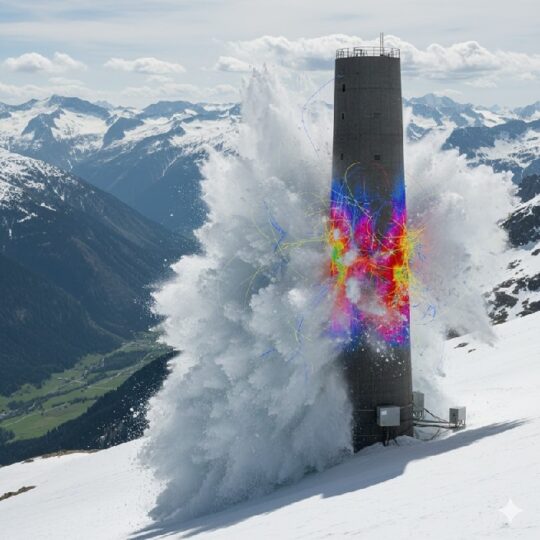
Avalanches pose a constant threat to mountain communities and infrastructure, with “white tsunamis” reaching speeds of 300 km/h and destroying concrete structures in seconds. To mitigate these risks, the WSL Institute for Snow and Avalanche Research (SLF) uses Siemens Simcenter technology at a Swiss test site to capture the velocity and impact pressure of naturally occurring events.
“The integration of high-fidelity field data with digital simulation allows engineers to bridge the gap between unpredictable natural forces and the design of life-saving infrastructure.”
Data collection relies on Simcenter SCADAS RS hardware, engineered for extreme environments. These units are integrated into research obstacles and feature:
Environmental Resilience: Stable operation from -40°C to +60°C with IP66/67 protection.
Impact Durability: High shock resistance to maintain data integrity during massive snow impacts.
Autonomous Operation: Remote, sensor-based triggers that activate recording without human presence.
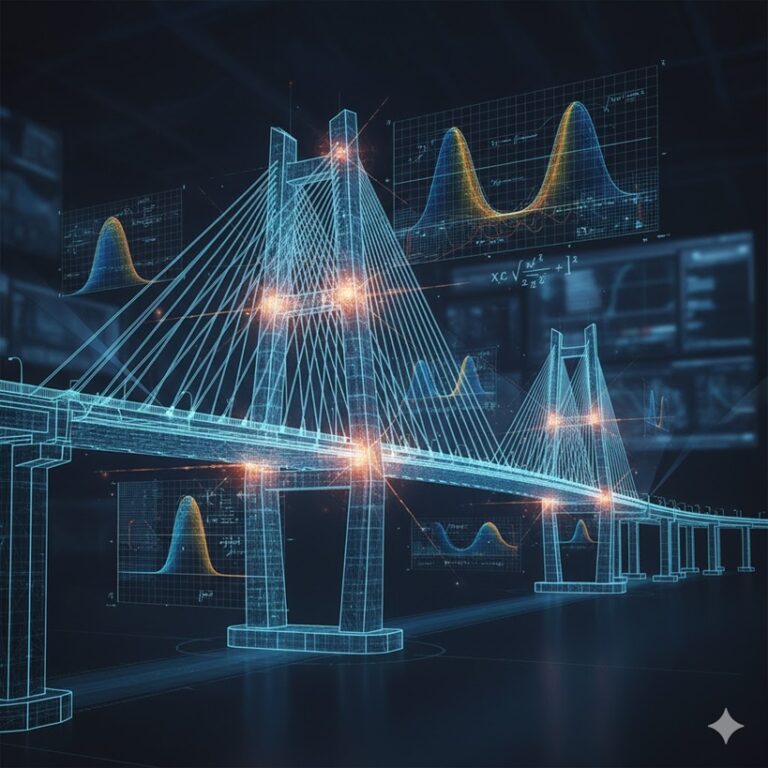
Because the site is inaccessible during winter, these autonomous systems transmit measurements to a central bunker via fiber-optics. This field data serves as the primary validation source for digital simulation models. By integrating real-world impact measurements into virtual environments, engineers can accurately predict run-out distances and design more resilient snow sheds and bridges.