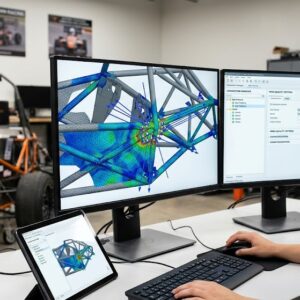

Consumer packaged goods (CPG) manufacturers are increasingly focused on lightweight packaging as a way to reduce material usage while maintaining product protection and performance. Designing lighter packaging often requires extensive simulation and testing to ensure structural integrity. Traditional engineering simulations can take significant time, which can slow down product development and limit the number of design alternatives engineers can evaluate.
The blog by Kinetic Vision discusses how artificial intelligence-driven simulation technologies are helping address these challenges. Kinetic Vision is a technology consulting firm that works across engineering, artificial intelligence, and advanced simulation to help organizations analyze product performance and improve design processes.
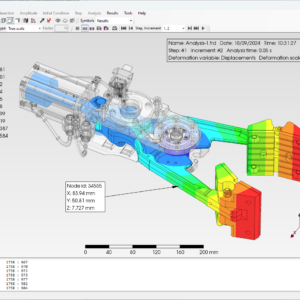
The blog highlights the role of Simcenter™ PhysicsAI™, an AI-based engineering tool by Siemens that learns from physics-based simulation data. By training machine learning models on results generated from traditional simulations, the tool can predict structural behavior of packaging designs much faster than running full simulations each time.
According to the blog, this approach can support packaging development by:
- Allowing engineers to quickly evaluate multiple design variations
- Helping identify opportunities to reduce material usage early in the design stage
- Enabling faster iteration before physical prototyping and testing
As discussed above, integrating tools such as Simcenter™ PhysicsAI™ into packaging development workflows provides another way for engineers to analyze design possibilities. This capability can support ongoing industry efforts to develop lighter packaging while considering sustainability in manufacturing processes.
Image generated by: ChatGPT