


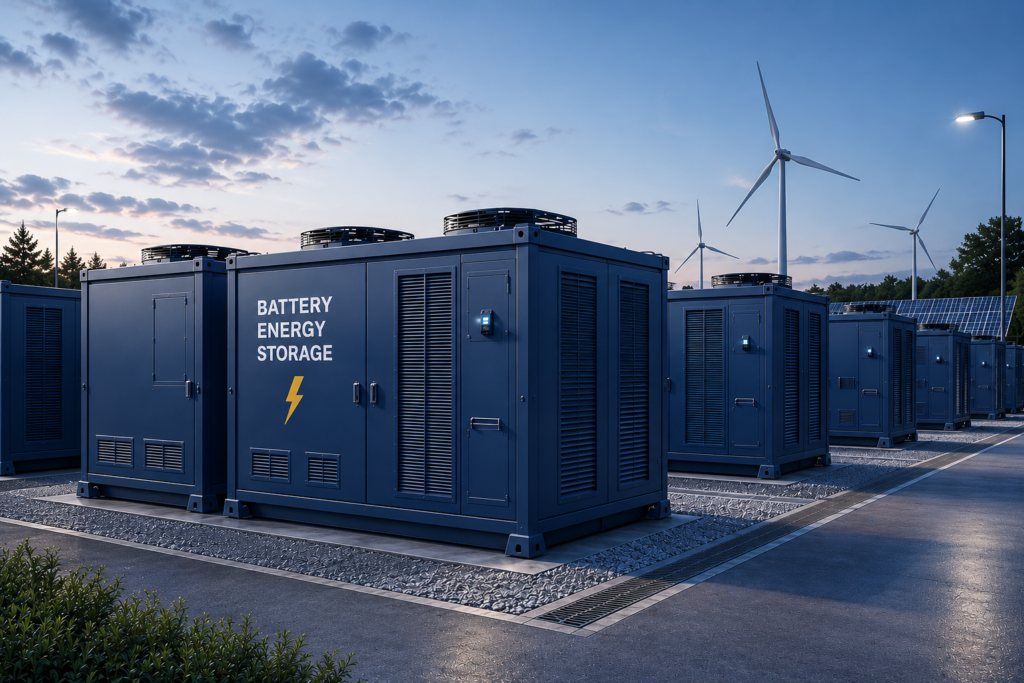
Data centers face rising power demands, driving interest in repurposed EV batteries as a lower-cost storage option.
A blog by Joe Wimmer, Gamma Technologies explains that unlike new batteries, second-life batteries carry an unknown history of driving, fast-charging, and temperature exposure. This makes it difficult to predict a sudden decline in performance, known as the aging cliff, or to know how much internal resistance has built up, which affects cooling needs and complicates battery management across packs.
To address this, GT uses two tools together:
- GT-AutoLion models internal chemical processes such as SEI layer growth, electrolyte dry-out, and lithium-plating to estimate a battery’s remaining life, even without prior vehicle data
- GT-SUITE builds on this with system-level modeling covering thermal management, safety against thermal runaway, control validation for battery management systems, and techno-economic modeling to predict remaining useful life before purchase
Together, these tools aim to help engineers confidently reuse second-life batteries for sustainable, circular-economy data center storage.
Image generated by: ChatGPT