


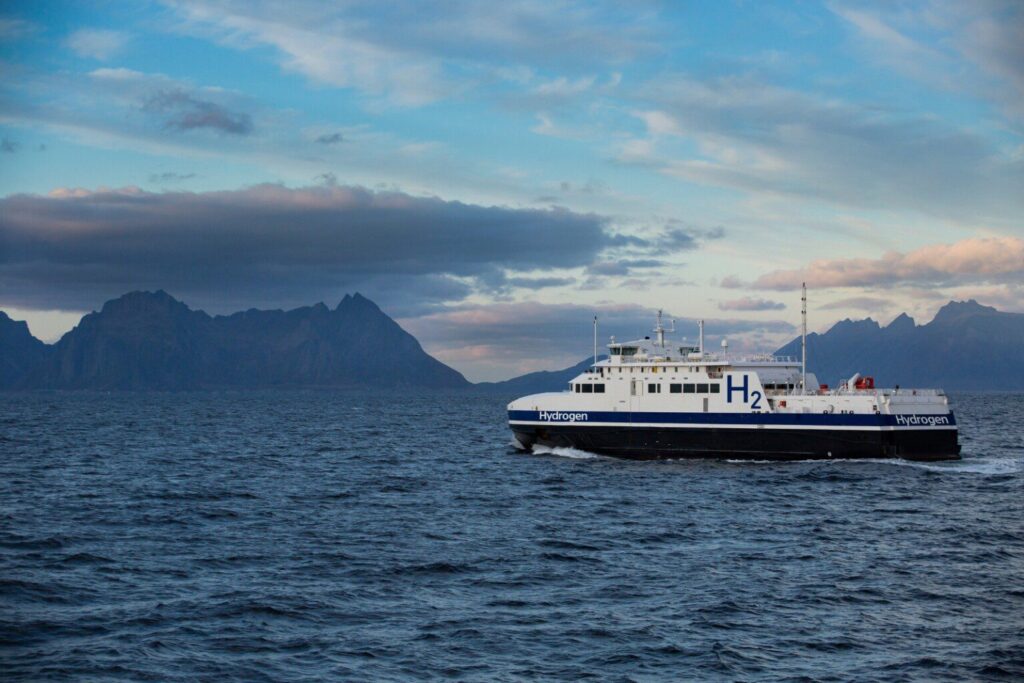
As hydrogen emerges as a promising marine fuel, its potential comes with an equally critical question—how do you design for safety when the risks are largely invisible?
This case study by Gexcon explores how advanced CFD simulations were applied to support the safe design of a hydrogen-powered passenger ferry during the Approval in Principle (AiP) phase. Given hydrogen’s high diffusivity, low ignition energy, and wide flammability range, traditional design approaches are not sufficient to fully capture associated hazards.
To address this, FLACS was used to simulate a range of accidental release scenarios, enabling a detailed understanding of hydrogen behaviour under realistic operating conditions. The study focuses on identifying potential risks and evaluating mitigation strategies early in the design process.
Key elements of the analysis include:
- Hydrogen dispersion studies: CFD simulations examined how leaked hydrogen disperses across enclosed and semi-enclosed ferry spaces, highlighting zones where gas accumulation could occur.
- Explosion and fire modelling: The software assessed ignition scenarios, flame acceleration, and overpressure effects, helping quantify potential consequences.
- Ventilation and layout assessment: Different design configurations were tested to understand how ventilation systems and equipment placement influence safety outcomes.
- Design-stage risk evaluation: Insights from simulations supported safer placement of hydrogen systems and informed protective measures.
By combining dispersion, fire, and explosion modelling within FLACS, the study illustrates how CFD enables a scenario-based, risk-informed design approach. It underlines the growing role of simulation in ensuring that hydrogen-powered vessels are not only efficient but also aligned with evolving safety expectations.
Image courtesy: Gexcon