
Light
Dark
Loading
*to close search form press ESC or close toggle
Tag: Simulation
12 events found.
Simulation
Events
-
-
Ansys webinar: Battery Innovation with Materials Simulation
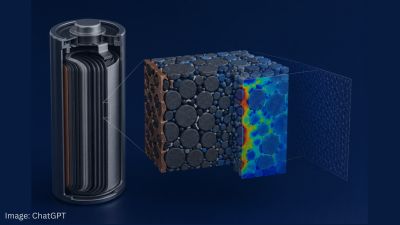
The webinar "Accelerating Next-Generation Battery Innovation with Materials Simulation" aims to explore how atomistic materials simulation supports the discovery and optimization of next-gen battery materials for denser, safer batteries in industrial applications. Discussion will cover material properties, transport, electrochemical stability, degradation mechanisms, and SEI formation, along with simulation strategies for solid-state, lithium-metal, lithium-sulfur, and alternative-ion […]
-
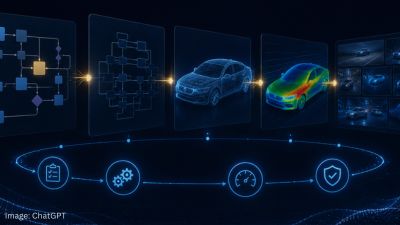
Mathworks webinar: Model-Based Design Meets Agentic AI
This webinar examines how Model-Based Design supports validation of AI-assisted engineering, using Simulink for requirements traceability, simulation, and production-ready verification. It aims to show how AI agents can automate test harness creation, scenario generation, and embedded integration tasks, while explaining how simulation and code generation workflows preserve repeatability and accountability for complex, safety-relevant systems. For […]
-
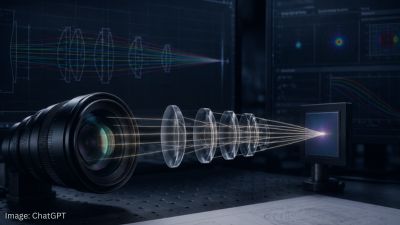
Keysight webinar: CODE V Discovery Training
This CODE V Discovery Training introduces an optical design software used to design, analyze, and optimize systems including camera lenses, telescopes, and photonics devices. It aims to familiarize participants with ray tracing, diffraction analysis, optimization, tolerancing, key considerations in imaging system design, and the software's interface and workflow. No prior CODE V experience is required. […]
-
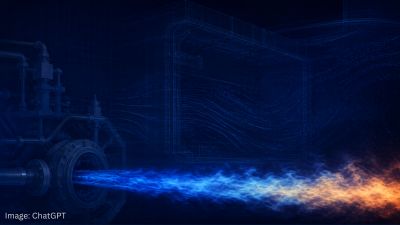
Convergent Science webinar: Industrial Burner-Furnace Modeling
The webinar, "Computational Modeling of Industrial Burner-Furnace Assembly," explores the use of three-dimensional computational simulations to analyze an industrial regenerative burner-furnace assembly. It aims to cover the modeling of combustion, fluid flow, heat transfer, and radiation, while examining key considerations in industrial-scale simulations, including thermal boundary conditions, NOx prediction, radiation modeling, and computational efficiency. For […]
-
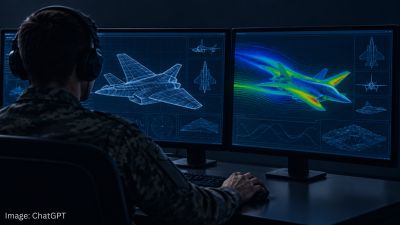
SAE: AI Military & Defense Summit
This digital summit by SAE International examines how artificial intelligence is being applied across design and simulation processes within the military and defense sector. Discussions aim to cover autonomous systems, sensor and perception technologies, digital engineering, and human-machine teaming, bringing together perspectives from the U.S. Army, defense contractors, and technology providers to explore current approaches […]
-
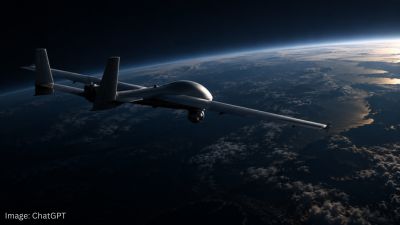
Keysight webinar: Optics for Aerospace Imagers
The webinar aims to examine optical engineering workflows for earth observation systems, aerial drones, and airborne imagers across a variety of applications, focusing on telescope and imager architectures, optical system requirements and architecture development, stray-light control, and multispectral performance. It also discusses compute-driven design, GUI and script-based software workflows, and AI-assisted tools, with CODE V, […]
-
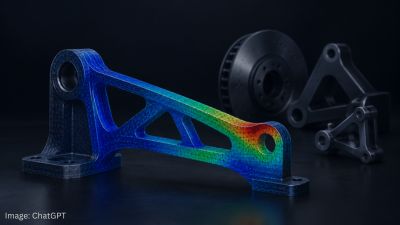
Ansys webinar: FEA Tips & Tricks for Student Teams
This webinar aims to help student competition teams develop their design and analysis skills through practical guidance on Finite Element Analysis. Topics include mesh generation and quality, geometry simplification and CAD preparation using Discovery, material properties, boundary conditions, common FEA mistakes, and result validation techniques, providing guidance for applying FEA in engineering competition projects. For […]
-
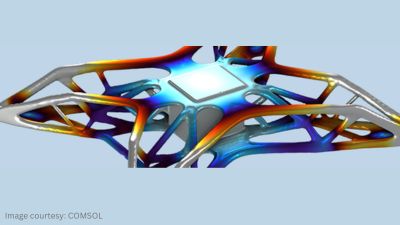
COMSOL webinar: Design Optimization for Engineering Problems
This webinar aims to provide an overview of design optimization using computational modeling, covering parameter, shape, and topology optimization. It will discuss available optimization solvers in COMSOL Multiphysics and how they can support different engineering design objectives. A demonstration will also illustrate how to set up and run a design optimization problem. For registration click […]
-
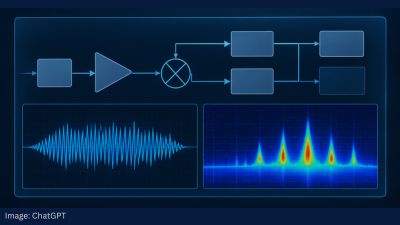
Mathworks webinar: Connecting Requirements, Architecture, & Simulation
This webinar addresses how disconnected workflows can increase implementation risk, delay decisions, and create rework in radar development. Using a radar Transmit/Receive Module as a case study, it aims to show how model-based systems engineering connects requirements, architecture, simulation, and verification through a unified workflow and digital thread. Topics include System Composer, linking requirements from […]
-

Ansys webinar: Turning CFD Results into Design Direction
The session aims to examine the interpretation of CFD simulation results for Formula SAE vehicle aerodynamics. Using a real simulation from HyTech Racing, Georgia Tech’s Formula Student team, it covers flow behavior around wings, undertray, sidepods, and ducts, along with aerodynamic balance, pressure distribution, drag sources, and flow structures. It also discusses post-processing and applying […]
-

Ansys webinar: Scaling and Optimizing Data Center Cooling
This webinar explores a "chip-to-rack" approach to thermal management in AI data centers, covering the shift from air to liquid cooling. It aims to cover direct-to-chip, cold plate, immersion, and two-phase cooling methods, along with multiphysics simulation tools such as Ansys Icepak, Fluent, Thermal Desktop, RedHawk-SC ET, and TwinBuilder. Real-world applications involving AI GPUs, liquid-cooled […]
-
Mathworks webinar: Probabilistic Power Flow using MATLAB, MATPOWER
This webinar aims to explore probabilistic power flow using MATLAB and MATPOWER to assess power system performance under uncertainty. It covers moving from static planning cases to scenario-based analysis, including data preparation, uncertainty modelling, large-scale power flow simulations, and interpretation of constraint violations and risk exposure. Applications include renewable variability, electrification, data centers, network reinforcement, […]