

Light
Dark
Loading
*to close search form press ESC or close toggle

Tag: CFD and Thermal
12 events found.
CFD and Thermal
Events
-
-

Ansys webinar: Efficient Preprocessing of Electronics Assemblies
The webinar Efficient Preprocessing of Complex Electronics Assemblies Using Ansys Stacker Meshing will discuss the Stacker Meshing workflow in Ansys Mechanical for handling layered 2.5D geometries used in electronics assemblies such as PCBs, BGAs and semiconductor packages. The session aims to explain how layer-based meshing can capture thickness and material variations while reducing dependence on […]
-
-

Webinar: Under-Relaxation Steady Solver in CONVERGE
This webinar examines the Under-Relaxation Steady (URS) solver in CONVERGE for steady-state computational fluid dynamics (CFD) simulations, focusing on its numerical approach, convergence monitoring, and variable-omega functionality. It also covers fluid-solid thermal coupling for conjugate heat transfer and reviews engineering applications involving internal flows, turbomachinery, electric motor cooling, aerodynamics, wind energy, and combustion modelling. For […]
-

Mathworks webinar: Data Center Cooling Power Reduction with MPC
This webinar aims to address the challenge of managing data center cooling amid rising AI-driven thermal demands using Model Predictive Control (MPC). Join the webinar to explore: Building data-driven thermal prediction models using the Reduced Order Modeler app Designing multi-zone cooling controllers with MPC Toolbox Validating energy savings via closed-loop simulations with Simscape Fluids For […]
-
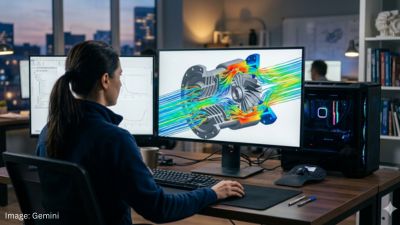
Training: Post-Processing Tools in CONVERGE Studio
This hands-on online training session covers the post-processing capabilities within CONVERGE Studio's Line Plotting and Post-Processing 3D modules. Topics include plot generation and report creation, combining output files from multiple simulation restarts, Fast Fourier Transform (FFT) for frequency-domain analysis and engine knock assessment, Apparent Heat Release Rate (AHRR) calculation, engine performance metrics such as IMEP, […]
-
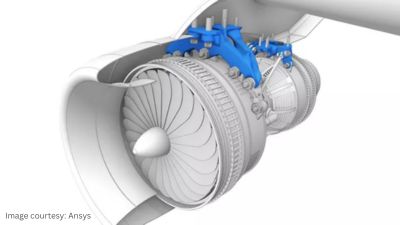
Webinar: Ansys Discovery for Mobility Innovation
The webinar Ansys Discovery for Mobility Innovation: Faster Simulation and Smarter Designs explores the application of Ansys Discovery in mobility engineering, covering real-time simulation for structural analysis, thermal-fluid behavior, and topology optimization. Engineers working in automotive, EV, aerospace, and UAV sectors will gain insights into direct modeling for rapid geometry iteration and the role of […]
-
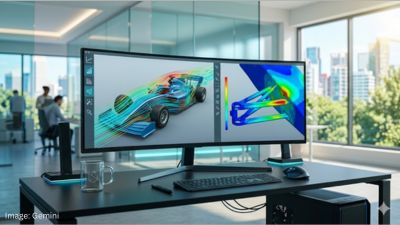
Webinar: What’s New in SimScale – Summer 2026
This webinar provides an overview of SimScale's latest Summer 2026 platform updates, covering new Engineering AI capabilities, including a headless AI Agent API, file import into Agent conversations, automated PDF report generation, AI-assisted CAD preparation, and bulk screenshot creation. It also explores new electromagnetics features, such as motion-coupled transient magnetic field simulation and a Time-Harmonic […]
-
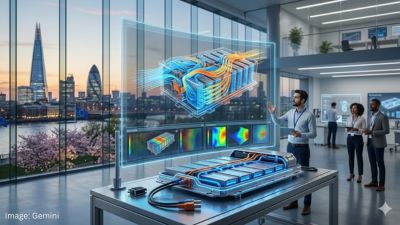
Training: CONVERGE for Battery Systems
This training session examines the use of CFD for battery system modeling and thermal management. Topics include conjugate heat transfer simulations for air- and liquid-cooled battery packs, battery heat generation modeling, thermal runaway analysis, vent gas combustion, and propagation studies. The program also covers simulation coupling techniques and includes hands-on exercises using CONVERGE Studio. For […]
-
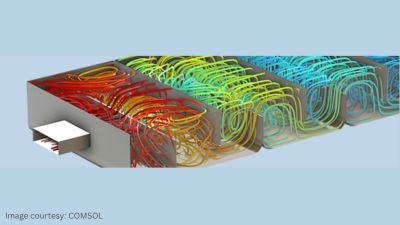
Website: CFD Modeling with COMSOL® in 18 Minutes
This webinar provides an overview of computational fluid dynamics (CFD) modeling using COMSOL Multiphysics. The session outlines how fluid flow phenomena can be analyzed within a multiphysics environment and demonstrates the setup and evaluation of a CFD model using a water treatment basin example. The presentation also highlights how CFD can be combined with other […]
-

Training: CONVERGE for Wind Energy
This hands-on online training course aims to guide participants in modelling wind energy applications using CONVERGE CFD software. It covers wind turbine rotor simulation through blade-resolved meshing and actuator rotor models, floating offshore wind turbines encompassing wind-wave generation, fluid-structure interaction, and mooring systems, and wind turbine aeroacoustics with practical sessions in CONVERGE Studio. For registration […]
-
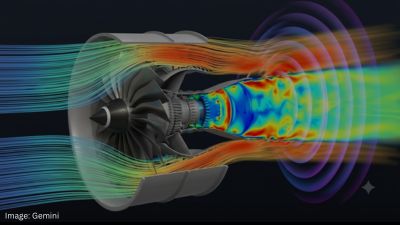
Webinar: Aeroacoustic Modeling with Ansys Fluent GPU Solver
This webinar aims to cover aeroacoustic modeling capabilities available in the Ansys Fluent GPU Solver as part of the 2026 R1 release. It introduces Computational Aeroacoustics (CAA) via direct CFD modeling and the Ffowcs Williams-Hawkings (FW-H) acoustic analogy. The session also addresses non-reflecting boundary conditions for compressible flows, sponge layer modeling, Proudman's Formula for steady-state […]
-
-
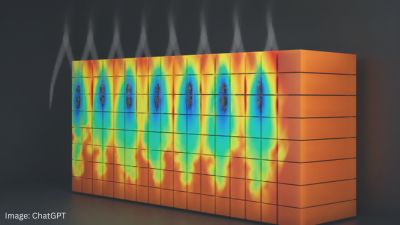
Webinar: Simulating BESS Ventilation and Deflagrations in CONVERGE
The webinar Simulating Battery Energy Storage Ventilation and Deflagrations in CONVERGE, aims to examine CFD-based simulation approaches for battery energy storage system (BESS) ventilation and deflagration scenarios using CONVERGE. It will cover modeling of vent gas dispersion, ignition and pressure development, ventilation strategies, and explosion behavior, highlighting how simulation can support the evaluation of safety […]
-
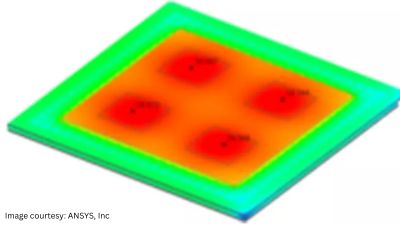
Webinar: Surrogate Thermal Models using Ansys Icepak
As semiconductor designs shift to heterogeneous 3D-IC architectures, securely sharing accurate thermal models has become critical. This webinar aims to explore how Ansys Icepak’s Boundary Condition-independent Surrogate Thermal Models convert detailed 3D CFD simulations into encrypted, system-level models, enabling reliable thermal prediction, streamlined collaboration, and IP protection across diverse operating environments. For registration click here..