

Light
Dark
Loading
*to close search form press ESC or close toggle
Tag: CFD and Thermal
12 events found.
CFD and Thermal
Events
-
-
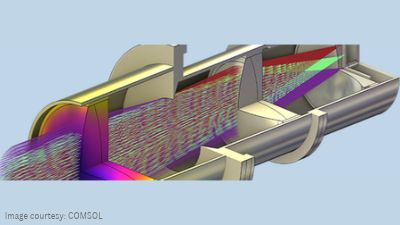
Comsol webinar: Modeling Structural-Thermal-Optical Performance
Optical systems at high altitudes, in space, underwater, and high-power laser and nuclear applications face structural loads and extreme temperatures. This webinar aims to show how COMSOL Multiphysics® couples ray-tracing with structural and thermal analyses in a self-consistent structural-thermal-optical performance (STOP) model, accounting for thermal stress, deformation, and temperature-dependent refractive index effects on ray trajectories, […]
-
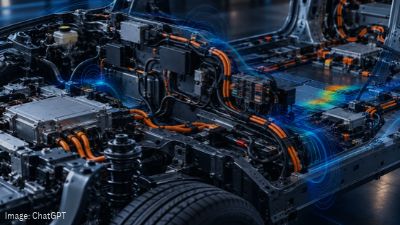
Ansys webinar: Power Electronics Digital Twins
This webinar aims to demonstrate how Saber enables virtual prototypes, or digital twins, of power electronics and motor drive systems, integrating electrical, thermal, magnetic, hydraulic, mechanical, and control domains in one environment. It covers modeling of semiconductors, motors, cooling systems, and mechanical loads, digital control validation, system-level performance, stress, and margin analysis, optimization, reliability, functional […]
-
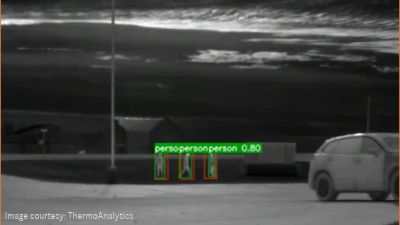
ThermoAnalytics webinar: Synthetic Imagery for Human Detection
The webinar “Accelerating Human Detection Algorithm Development with Synthetic EO/IR Imagery in MuSES” explains how physics-based simulation in MuSES, with target models and CoTherm, aims to create synthetic EO/IR images of people in varied clothing, poses, environments, and sensor views. These images are used with YOLO11 to train and test detection algorithms, reducing the need […]
-

Mathworks webinar: MATLAB Interface for Cantera
The webinar introduces Cantera, an open-source software package for modeling chemically reacting systems, and its modern MATLAB interface. It aims to demonstrate reproducible thermochemical, kinetic, and reactor-network simulations directly within MATLAB, including integration with MATLAB analysis and visualization. The session also covers interface installation, practical chemical engineering examples, and development aspects such as testing, documentation, […]
-
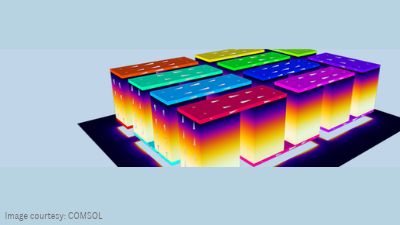
Comsol webinar: Equation-Based Modeling
The webinar aims to explain how to formulate and solve custom equations in COMSOL Multiphysics® using equation-based interfaces, independently or alongside built-in physics interfaces. It will explore coupling custom partial differential equations with physics such as structural mechanics, electromagnetics, and heat transfer, while keeping models simple yet relevant. Examples include the classical convection-diffusion equation, followed […]
-
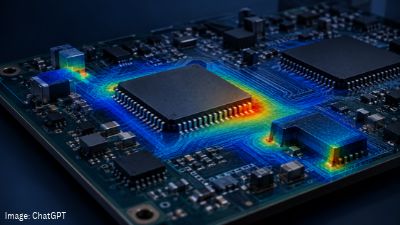
Workshop: PCB Reliability Basics with Ansys Sherlock
This virtual hands-on workshop aims to introduce PCB reliability analysis using Ansys Sherlock, covering ECAD import, component and stackup configuration, and life cycle analysis. Participants will explore solder fatigue, natural frequency, harmonic and random vibration studies, and cumulative damage calculations. Recent capabilities include the Sherlock App in Ansys Mechanical, thermal rainflow cycle counting, thermal-mechanical BGA […]
-
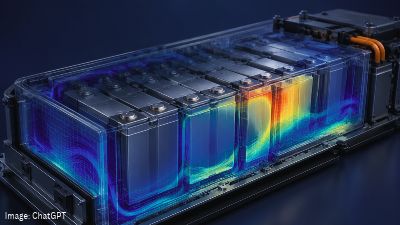
Training: CONVERGE for Battery Systems
This online training aims to introduce battery modeling using CONVERGE through hands-on exercises in CONVERGE Studio. Topics include air- and liquid-cooled battery pack simulations using conjugate heat transfer, heat generation modeling approaches, and SAGE detailed chemistry for vent gas combustion. The training also covers thermal runaway propagation and coupled vent gas generation modeling using user-defined […]
-
-
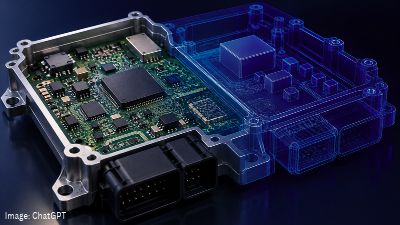
Dassault Systèmes Webinar: From ECAD to MCAD
The webinar aims to explore workflows for transferring chip, package, and printed circuit board (PCB) design data from electronic computer-aided design (ECAD) to mechanical computer-aided design (MCAD) for simulation. It examines streamlined geometry preparation for electromagnetic analysis in CST and structural and thermal analysis in Abaqus, aiming to reduce manual cleanup and errors for semiconductor […]
-
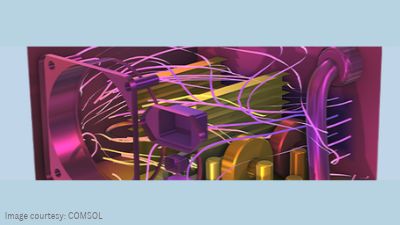
Webinar: Heat Transfer Modeling with COMSOL®
The webinar aims to introduce the fundamentals of heat transfer modeling using COMSOL Multiphysics. Through a live software demonstration, participants will explore heat transfer mechanisms, including conduction, convection, and radiation. The session will walk through the complete modeling workflow, building a model from scratch and covering the key steps involved in setting up a heat […]
-
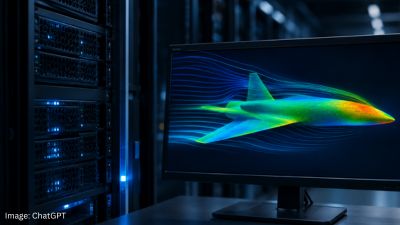
Webinar: Speed Up Ansys Fluent with Intel® Xeon® 6
The webinar examines Ansys Fluent performance across three generations of Intel® Xeon® processors, using official benchmarks covering models from 2 million to 280 million cells. It aims to explain the influence of core count, memory bandwidth, per-core efficiency and MRDIMM memory, alongside comparisons with AMD EPYC systems, to guide CPU selection based on simulation workloads, […]
-

Convergent Science webinar: Direct Oil Cooling of E-Motors
The session examines a multiscale modelling strategy for direct oil cooling of electric motors, based on IFPEN research with industrial and academic partners. It aims to cover benchmark heated-plate jet studies, high-fidelity simulations and experiments used to develop and validate reduced-order near-wall models for high-Prandtl-number fluids, their integration into large-scale CFD aiming to lower computational […]
-
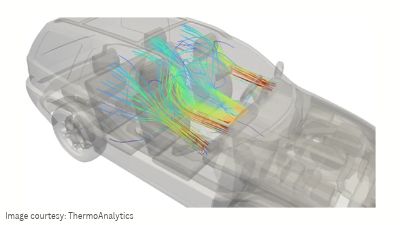
ThermoAnalytics webinar: Next-Gen Cabin Climate
This webinar aims to present a comparative simulation study of sensation-based and conventional air-temperature-based cabin HVAC controllers, evaluating occupant thermal comfort and vehicle energy consumption. Using a co-simulation workflow integrating TAITherm, GT-SUITE, and RapidFlow, it examines human thermal perception, HVAC energy requirements, and the role of heated seats and steering wheels in reducing system loads. […]