

Light
Dark
Loading
*to close search form press ESC or close toggle

Archives: Events
12 events found.
Events
-
-
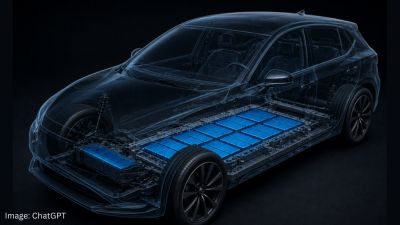
Flow Science webinar: Improving EV Battery Tray Design
The webinar Zero Defects, Full Charge: Improving EV Battery Tray Design, explores the structural and thermal demands of producing large, thin-walled EV battery enclosures through gravity sand casting, prone to turbulence, oxide film entrainment, misruns, and shrinkage porosity. It aims to demonstrate how FLOW-3D CAST simulation captures fill behavior, tracks oxide formation, and predicts solidification […]
-
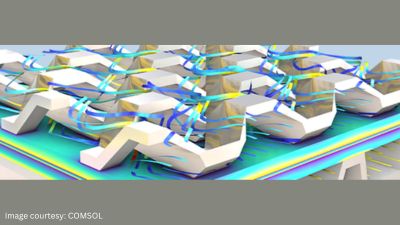
Webinar: Advancing Fuel Cell Technologies Using COMSOL Multiphysics®
This webinar aims to examine simulation-driven design approaches for proton exchange membrane fuel cells (PEMFCs) using COMSOL Multiphysics®, covering high-temperature and open-cathode configurations. It explores three-dimensional multiphysics modeling of flow fields, reactant transport, thermal behavior, and electrochemical reactions, validated experimentally through polarization, pressure-drop, thermal, and impedance analyses to support scalable hydrogen energy systems. For registration […]
-

Webinar: Basics of Nonlinear Analyses in Ansys Mechanical
This webinar aims to introduce the fundamentals of nonlinear analyses in Ansys Mechanical, covering nonlinear material definition, contact interactions, commonly used contact settings, and essential nonlinear solver configuration. It also explores monitoring simulation progress, postprocessing results, and large deformation simulations, helping participants understand and set up nonlinear structural simulations effectively. For registration click here..
-
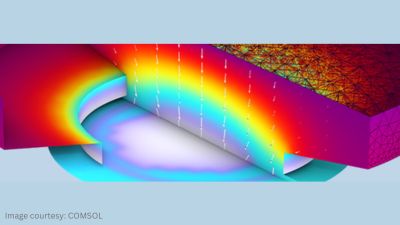
Webinar: Electrodeposition Modeling with COMSOL Multiphysics®
Electrodeposition is widely used in semiconductor processing, electronics manufacturing, metal refining, and surface coatings. This webinar aims to demonstrate how COMSOL Multiphysics® predicts current distribution, deposition rate, and coating uniformity across complex geometries. It also explores how coupling flow, temperature, and deformed geometry effects help guide cell design and optimize electrodeposition processes. For registration click […]
-

Mathworks webinar: From 5G‑Advanced to 6G
The webinar, From 5G‑Advanced to 6G: Waveforms, Networks, ISAC, and Agentic AI in MATLAB, covers MATLAB capabilities for 5G-Advanced standards and 6G exploration, including the 6G Exploration Library for modeling candidate waveforms. It aims to address waveform generation, link-level and system-level simulation, Integrated Sensing and Communication (ISAC) using 5G waveforms, and an agentic AI workflow […]
-
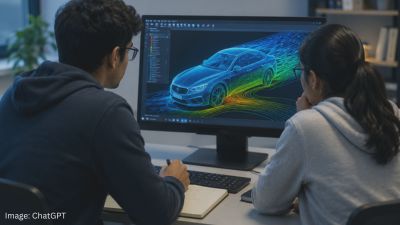
Webinar: CONVERGE Academic Program
This webinar spotlights the CONVERGE Academic and Explore Programs, which provide free licenses, training resources, and technical support to students, researchers, and educators. Join the webinar to explore how students built CFD careers using CONVERGE, and learn from professors advancing hydrogen combustion, renewable energy, and aerodynamics research. For registration click here..
-
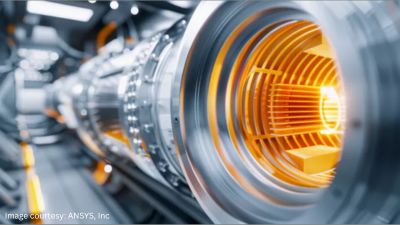
Ansys webinar: Heat Transfer & Thermal Management 2026 Update
The webinar, Ansys Simulation Solutions for Heat Transfer and Thermal Management – 2026 Update, provides an overview of updates to Ansys simulation tools supporting heat transfer and thermal management, from R&D through in-service troubleshooting. It covers CFD-based thermal analysis using Ansys Fluent, FEA-based conduction and radiation modelling using Ansys Mechanical, and 0D/1D system-level simulation using […]
-
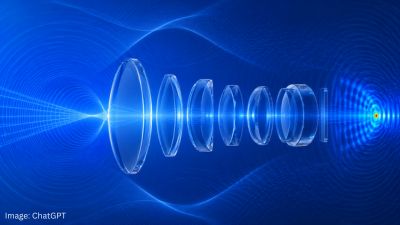
Ansys webinar: Optics for Healthcare Innovation
The webinar, Optics for Healthcare Innovation: Simulation Solutions with Ansys, part of Synopsys, aims to explore simulation-driven optical design workflows for healthcare applications using Ansys Optics. It covers imaging and diagnostics, wearable biophotonics, and surgical/therapeutic solutions, combining ray optics, wave optics, and multiphysics simulation. Attendees will learn how integrated tools like Zemax OpticStudio, Lumerical, and […]
-
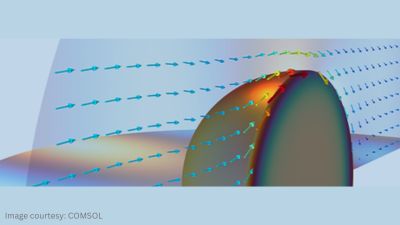
Webinar: Modeling Thermoplasmonics of Gold Nanoparticles in COMSOL®
This webinar explains how clusters of gold nanoparticles absorb light and generate heat, a process useful for medical treatments. It aims to show how particle arrangement, ordered or random, affects light absorption and heat output. It also covers how COMSOL Multiphysics® software, supported by numerical and experimental studies, is used to model these effects. For […]
-
GT webinar: Inside the AI Factory
The webinar Inside the AI Factory: Simulating High-Fidelity Electrical Dynamics, aims to explore the role of high-fidelity system simulation in addressing the dynamic electrical challenges of AI data centres. It aims to demonstrate how engineers can evaluate 800 V DC power architectures under scenarios such as fluctuating AI workloads, power outages, and startup or shutdown […]
-

ThermoAnalytics webinar: Accelerating Synthetic Data Pipelines
The webinar, Accelerating Synthetic Data Pipelines: Rapid Scene Creation & Image Compositing with CoTherm and MuSES, aims to explore how CoTherm and MuSES can be integrated to support synthetic data generation through automated scene creation and image compositing. The session covers building simulation-ready thermal environments from satellite and topographical data, generating composite Electro-Optical/Infrared (EO/IR) imagery, […]
-
Mathworks webinar: Modeling Next-Gen Connectivity Networks
The webinar, Modeling Next-Gen Connectivity Networks: Wi-Fi 8 & BT-HDT, and Agentic AI in MATLAB, aims to demonstrate how MATLAB can be used to model, simulate, and test next-generation Wi-Fi and Bluetooth systems, including Wi-Fi 8 (IEEE 802.11bn). It covers standard-compliant waveform generation, link-level simulation, coexistence and interference analysis, and an agentic AI workflow to […]