


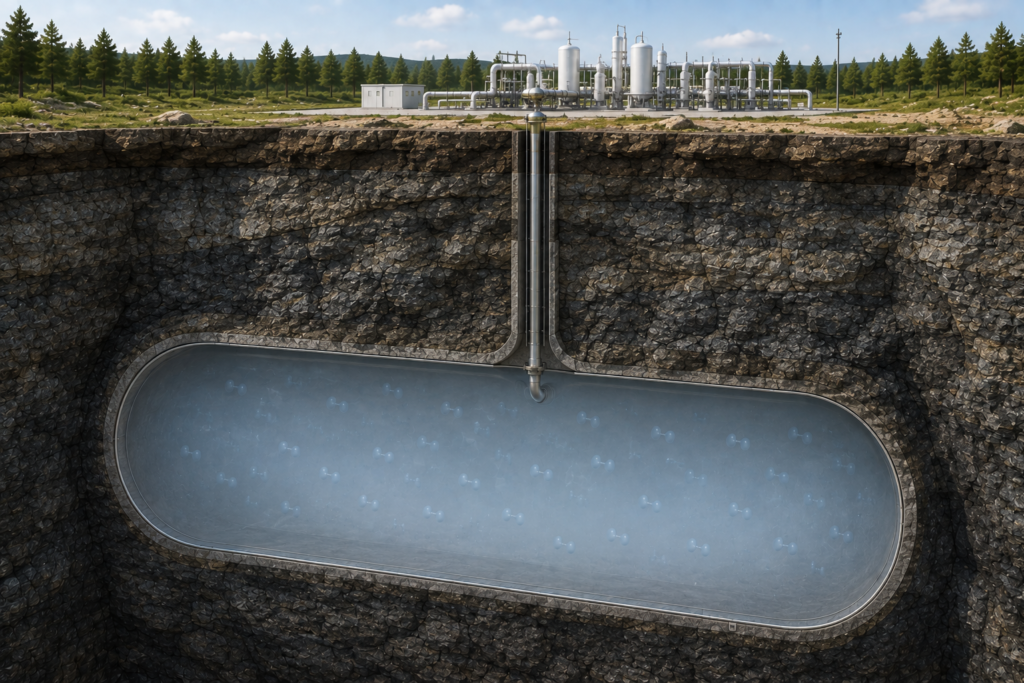
Underground hydrogen storage is emerging as a key part of the clean energy transition, and lined rock caverns (LRCs) are gaining attention as a flexible way to store hydrogen underground. Because these caverns combine steel linings, reinforced concrete, and fractured rock, their safety depends on how these materials behave together under repeated hydrogen pressurization.
A blog by COMSOL highlights how a researcher from Uppsala University is using COMSOL Multiphysics® software to study this behavior. Using the Solid Mechanics interface, the model captures how rock, concrete, and steel deform under pressure. The concrete lining is analyzed with the Mazars’ damage model to track cracking, while rock fractures are modeled directly to study slip and opening. A second, smaller-scale model examines the steel lining, using a customized interface built with the Physics Builder tool to see how hydrogen moves through it and weakens it over time. Where water pressure matters, the Darcy’s Law interface and Poroelasticity coupling show how fluid flow and rock deformation interact. Together, these simulation models offer insight into how lined rock caverns may respond structurally to repeated hydrogen pressurization, and how fracture patterns and hydrogen exposure could influence their long-term durability.
Image generated by: ChatGPT