


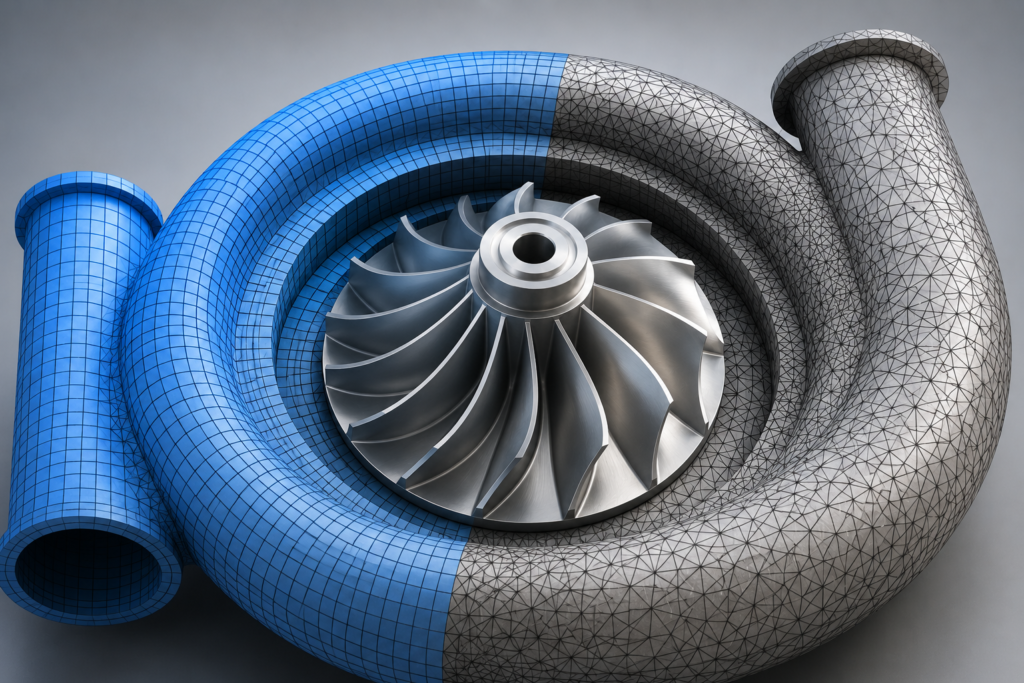
In computational fluid dynamics (CFD), a mesh divides a component’s geometry into small cells for analysis, and mesh type affects simulation accuracy and setup effort for turbomachinery blades with complex geometries. A blog by Veena Parthan, Cadence explains a study comparing structured and unstructured meshing on a turbine’s runner and distributor.
- Fidelity Autogrid builds a structured mesh with cells in an organized grid, the conventional approach.
- Fidelity Hexpress creates an unstructured surface-to-volume (S2V) mesh with hexagonal-dominant cells, refined near blade edges without a fixed grid.
Simulations with the Fidelity Flow solver across operating conditions produced efficiency hill charts. The findings indicate that unstructured S2V meshing aims to offer comparable accuracy to structured meshing, presenting it as a viable alternative for turbomachinery CFD workflows.
Image generated by: ChatGPT