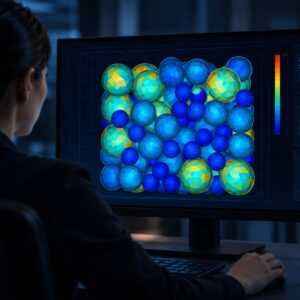



Executable digital twins (xDTs) are simplified, executable versions of simulation models that run with real-time data and can be used directly in operations. A Siemens blog by Shawn Wasserman, explains that executable digital twins (xDTs) are emerging as a practical extension of simulation by converting detailed engineering models into deployable applications that can run with live operational data.
The article outlines five key reasons for their expected growth:
- Technology maturity: Advances in reduced-order modeling, IoT connectivity, and AI make xDTs practical and scalable beyond expert users.
- Shift to operations: Simulation is no longer limited to design; xDTs are used with live data to monitor performance and predict behavior during operation.
- Accessibility: Models are packaged as applications, enabling operators and non-experts to use simulation in daily workflows.
- Virtual sensing: xDTs combine physics and data to estimate internal parameters that cannot be directly measured.
- Industrial validation: Examples such as RAMPF optimizing resin dispensing, aerospace applications supporting condition-based maintenance, and energy systems predicting turbine issues demonstrate real-world adoption.
Overall, executable digital twins aim to bring simulation out of specialist environments into everyday operational use, supporting more informed decisions with real-time insights.
Image generate by: Gemini